
TPO Roof Installation
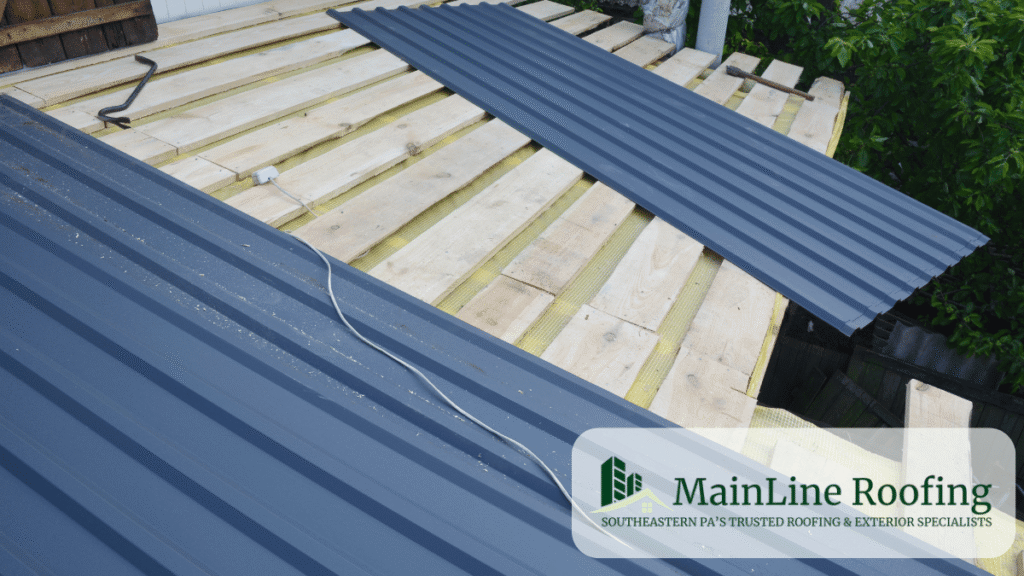
If you have a flat or low-slope roof on your home, your garage, your porch, or a commercial building, someone has probably mentioned TPO. It is one of the most commonly installed flat roofing materials in the country right now, and for good reason.
But most homeowners hear “TPO” and have no idea what it is, how it gets installed, whether it holds up, or what it actually costs. This guide covers all of it. By the end you will have a solid understanding of TPO roof installation and be able to have an informed conversation with any contractor you bring out to look at your roof.
We work on flat and low-slope roofs across Havertown, Bryn Mawr, Media, and throughout the Main Line and Delaware County. TPO comes up constantly on porch roofs, rear additions, garage roofs, and commercial properties. Here is everything you need to know.
What Is TPO?
TPO stands for thermoplastic polyolefin. That is a mouthful, so most people just call it TPO. It is a single-ply roofing membrane, meaning it comes in large rolls and gets installed as a single continuous sheet across the roof surface.
The membrane is made from a blend of rubber, filler, and a reinforcing polyester or fiberglass scrim in the middle layer. That scrim is what gives it its strength and helps it resist tearing. The top layer is UV-resistant and reflects heat. The underside bonds to the roof deck or insulation below.
Most TPO membranes are white or light gray, though tan and other colors exist. The white surface is intentional. It reflects solar energy rather than absorbing it, which reduces cooling costs, especially in summer. In states with hot summers like Pennsylvania, that reflectivity is a real benefit over darker materials like EPDM rubber.
TPO is available in three thicknesses: 45 mil, 60 mil, and 80 mil. The number refers to how thick the membrane is in thousandths of an inch. Thicker membranes cost more but resist punctures, foot traffic, and wear better over time. For most residential applications, 60 mil is the standard recommendation. 80 mil is used on commercial roofs that see more maintenance foot traffic or harsher conditions.
Where TPO Is Used
TPO is designed for flat and low-slope roof surfaces. It needs a minimum slope of about 1/4 inch per foot to drain properly. Below that, water pools and sits on the membrane, which shortens its life regardless of material quality.
On residential properties across the Main Line and Delaware County, TPO shows up most often in these situations:
- Flat porch roofs on older twins and rowhomes
- Rear additions with flat or low-slope sections
- Detached and attached garage roofs
- Bay window roof caps
- Dormers with low-slope roofs
- Commercial and mixed-use buildings
- Low-slope sections that connect to a steeper main roof
On steeper roofs, TPO is not the right material. Asphalt shingles, cedar, slate, or synthetic materials are used there. TPO belongs on the flat and low-slope areas where shingles would not perform correctly. If you want to understand the pitch threshold where shingles stop being appropriate, our guide on minimum roof pitch for asphalt shingles covers that in detail.
How TPO Compares to EPDM and Modified Bitumen
There are three flat roofing materials that come up most often on residential and light commercial projects: TPO, EPDM, and modified bitumen. Each one has its place. Here is how they compare.
| Material | Color | Installation | Energy Efficiency | Lifespan | Best For |
|---|---|---|---|---|---|
| TPO | White / light gray | Heat-welded seams | High — reflective surface | 20 to 30 years | Energy-conscious owners, commercial, larger flat areas |
| EPDM | Black (white available) | Glued or mechanically fastened seams | Lower — absorbs heat | 20 to 25 years | Simpler repairs, smaller roofs, lower budgets |
| Modified Bitumen | Black / granule surface | Torch-applied or self-adhered | Lower — dark surface | 15 to 20 years | Older homes with existing bitumen, layered systems |
TPO has taken significant market share from EPDM in recent years because of its heat-welded seams. EPDM seams are glued together. Over time, that adhesive can dry out and the seams can separate, letting water in. TPO seams are fused together with hot air at temperatures around 1,000 degrees Fahrenheit. The result is a seam that is actually stronger than the membrane itself. There is no adhesive to fail.
Modified bitumen is still used in certain applications, particularly when layering over an existing system or on very small areas. But for most new installations, TPO or EPDM is the more common choice. TPO is preferred when energy efficiency matters or when the roof gets significant sun exposure.
Have a Flat Roof That Needs Attention?
Mainline Roofing Pros installs and repairs TPO, EPDM, and modified bitumen roofs across the Main Line, Delco, Montco, and Chester County.
How TPO Roof Installation Works
This is where a lot of homeowners have questions. What actually happens on installation day? What should a proper TPO installation look like? Here is the full process from tear-off to finished roof.
Step 1: Remove the Old Roofing Material
Before any new material goes down, the old roof comes off. On a residential porch or garage, that usually means pulling up failed EPDM, old modified bitumen, or degraded built-up roofing. Everything gets stripped down to the roof deck.
This is the step where the real condition of your roof reveals itself. Old flat roofs hide rot, soft decking, and moisture damage under layers of material. A thorough roofer walks the full deck after tear-off and checks every square foot for soft spots. Any damaged decking gets replaced before anything else happens. Skipping this step is how new roofs end up failing in two years.
Step 2: Inspect and Repair the Roof Deck
The deck is the structural foundation the membrane sits on. For most residential flat roofs, that is either plywood or OSB (oriented strand board). The deck needs to be dry, flat, and structurally sound before installation begins.
Any soft or spongy areas indicate moisture damage underneath. Those sections get cut out and replaced with new material that matches the thickness of the existing deck. All fasteners are driven flush or below the surface so there are no protrusions that could create weak points in the membrane above.
Step 3: Install the Insulation Layer (If Applicable)
Most TPO installations on commercial roofs include a layer of rigid insulation between the deck and the membrane. This is typically polyisocyanurate (polyiso) board, which is one of the highest R-value rigid insulation options available.
On residential jobs like a porch roof or garage, insulation is sometimes already built into the ceiling below rather than installed at the roof deck. Whether insulation goes in at the roof level depends on the construction of the building and whether the space below is conditioned. Your roofer should walk through this with you so you understand what’s being installed and why.
The insulation boards are fastened mechanically to the deck, or in fully adhered systems, bonded with adhesive. Joints between boards are staggered to avoid creating a continuous seam line that could become a weak point.
Step 4: Install the TPO Membrane
This is the main event. TPO membrane rolls are typically six feet or ten feet wide, though wider rolls exist for large commercial applications. The rolls get rolled out across the roof surface and positioned carefully to minimize the number of seams and ensure every seam falls in a manageable location away from drains and penetrations.
There are three ways to attach TPO membrane to the substrate below.
Mechanically fastened: The membrane is secured to the deck using screws and large round plates called batten bars or fastening plates. These get installed along the edges of each sheet. The next sheet laps over those fasteners, covering them completely. This is the most common installation method for wind-prone areas because the fasteners provide direct pull-out resistance.
Fully adhered: The entire underside of the membrane bonds directly to the insulation or deck below using a bonding adhesive. This creates a smooth, low-profile installation with no fasteners penetrating the deck. Fully adhered systems handle wind uplift well when the adhesive is applied correctly and perform better aesthetically.
Ballasted: The membrane is loose-laid and held in place by river stone or pavers spread across the surface. This method is mostly used on large commercial roofs where the weight of the ballast can be properly distributed. Not commonly seen on residential jobs.
For most residential flat roofs in the Philadelphia suburbs, mechanically fastened is the standard approach. It is faster, costs less labor, and performs well. Fully adhered is used when appearance matters, when the substrate is not suitable for fasteners, or when the roofing system requires it.
Step 5: Weld the Seams
This is the step that sets TPO apart. Where one sheet of membrane overlaps the next, the two layers get fused together using a hot-air welding gun or an automated welding machine. The welder blows air heated to around 1,000 degrees Fahrenheit between the two membrane layers, melting the surfaces together. A roller tool presses the seam flat immediately after to ensure a complete bond.
Done correctly, a welded TPO seam is stronger than the membrane itself. If you were to pull on a properly welded seam, the membrane would tear before the seam would open. This is the fundamental advantage TPO has over EPDM, where seams depend entirely on adhesive and tape.
Seam quality is everything on a TPO roof. A welder who moves too fast creates cold seams that look fine but are not fully fused and will fail. A welder who moves too slow burns through the membrane. Proper technique, calibrated equipment, and experienced hands are what separate a 25-year roof from one that leaks in five.
After welding, a roofer should probe every seam with a blunt instrument to check for cold spots. Some contractors also run a pull test on seam samples. This quality check is not optional on a job done right.
Step 6: Flash All Penetrations and Edges
Every pipe, vent, HVAC unit, drain, and wall termination that interrupts the flat membrane needs flashing. This is where most flat roof failures start, not in the field of the membrane, but at the transitions where water has somewhere to go if the detail is not done correctly.
TPO flashing details include:
- Pipe boots and collars around plumbing vents and exhaust stacks
- Inside and outside corner details where the membrane turns up a wall
- T-joint covers where three membrane sheets meet at a single point
- Edge metal and drip edge terminations at the roof perimeter
- Drain flashing where water exits the roof surface
- Wall flashing where the membrane terminates against siding, brick, or stucco
All of these details use the same TPO membrane material, cut into shapes and heat-welded to the field membrane below. There should be no exposed lap sealant or caulk holding a critical detail together. If a contractor is relying on caulk where welded TPO should be, that detail will fail.
Wall terminations typically get covered with a metal termination bar that is screwed into the wall and then caulked at the top edge. The caulk here is a secondary seal, not the primary one. The primary seal is the welded membrane below the bar.
Step 7: Install Edge Metal and Gutters
The perimeter of a TPO roof needs metal edge trim. This serves two purposes. It holds the membrane down at the edges where wind uplift is highest, and it gives water a clean edge to drip off into gutters. The edge metal gets installed over the membrane at the perimeter, and the seams in the metal are sealed.
If gutters are part of the project, they go on after the edge metal is secured. The slope of the roof and the placement of the drains determine where gutters need to be positioned to catch runoff effectively.
Step 8: Final Inspection
Before any crew leaves the site, a good roofer walks the entire finished roof. They check every seam, every flashing detail, every penetration, and all edge conditions. Any bubbles in the membrane, any areas where the material is not lying flat, any seam that does not feel fully bonded gets addressed before the job is called complete.
This walkthrough is also when the homeowner should be invited up if they want to see the work. You should feel comfortable asking to inspect what was done.
How Long Does TPO Installation Take?
For a typical residential flat roof section, like a 400 to 800 square foot porch or garage, the installation usually runs one to two days. That includes tear-off, deck inspection, membrane installation, all flashing details, and cleanup.
Larger or more complex jobs take longer. A commercial building with multiple HVAC units, drains, and large surface area might take several days to a week depending on crew size and access conditions.
Weather is a real factor. Adhesives and sealants need temperatures above 40 degrees to cure properly. Most TPO installations should not happen in rain or when temperatures are dropping toward freezing. Pennsylvania winters mean installation scheduling matters. If you are thinking ahead about timing, our guide on the best time of year for roofing work covers the seasonal considerations in detail.
TPO Roof Cost: What to Expect
TPO roof cost depends on several factors: the size of the roof, the thickness of the membrane you choose, whether insulation is being added, the complexity of the flashing details, and local labor rates.
For reference, here are realistic cost ranges for the Philadelphia suburban market as of 2025 and 2026:
| Project Type | Approximate Size | Estimated Cost Range |
|---|---|---|
| Small porch or bay window roof | 100 to 300 sq ft | $800 to $2,200 |
| Residential garage or addition roof | 400 to 800 sq ft | $2,500 to $5,500 |
| Larger residential flat section | 800 to 1,500 sq ft | $5,000 to $10,000 |
| Light commercial building | 1,500 to 5,000 sq ft | $9,000 to $30,000+ |
These ranges include material, labor, tear-off of the existing roof, basic flashing details, and disposal. They do not include deck replacement if significant rot is found, which adds cost based on how much decking needs to go.
The biggest variable beyond size is membrane thickness. Upgrading from 45 mil to 60 mil adds modest cost but meaningful performance. Upgrading to 80 mil is worth it on commercial roofs that see regular foot traffic. On a residential porch, 60 mil is usually the right call.
Be cautious of bids that come in significantly lower than these ranges. Low bids on TPO work usually mean a thinner membrane, fewer layers of insulation, shortcuts on flashing details, or a crew without the equipment to do proper heat-welded seams. Those shortcuts show up as leaks in two to five years.
How Long Does a TPO Roof Last?
A properly installed TPO roof using 60 mil membrane should last 20 to 30 years with basic maintenance. Some manufacturers offer warranties in the 20-year range that cover both material defects and labor under certain conditions. 80 mil installations on commercial buildings can push beyond 30 years.
The factors that most affect lifespan are installation quality, membrane thickness, UV exposure, foot traffic, and how well the drainage is maintained. A TPO roof that sits under standing water because the drains are clogged will fail years before its time. Keeping drains clear and doing an annual walkover to check for debris or damage is the most useful maintenance habit for any flat roof owner.
What shortens TPO lifespan faster than anything else is poor seam quality from the original installation. A cold seam that looks fine at installation will begin to open within a few years as the roof expands and contracts with temperature changes. By then, the contractor is long gone and the homeowner is dealing with a leak that traces back to work that was never done right.
TPO Roof Maintenance and Repairs
TPO is relatively low-maintenance compared to older flat roofing systems. But “low maintenance” does not mean “no maintenance.” Here is what you should be doing to protect your investment.
Annual inspection: Walk the roof once a year or have a roofer do it. Look for areas where the membrane has pulled away from flashing details, any visible seam separation, bubbles or blisters in the field of the membrane, or debris and leaves building up around drains.
Keep drains clear: This is the single most important maintenance task. Clogged drains cause water to pond. Ponding water accelerates membrane degradation, stresses flashing details, and can work its way into the building through any imperfection in the system.
Address damage promptly: A small puncture or seam failure caught early is a straightforward repair. The same issue left for a season becomes water damage in the structure below, mold in the ceiling, and a much larger bill.
TPO repairs: Small punctures and tears in TPO membrane can be patched using a piece of matching membrane material heat-welded over the damaged area. This is not a job for roofing cement or caulk. A proper TPO patch uses the same welding process as the original installation and bonds the patch to the existing membrane permanently.
Seam repairs follow the same logic. If a seam begins to open, it needs to be re-welded or a cover strip welded over it. A caulked seam is a temporary fix that will need to be addressed again.
What to Ask a Contractor Before Hiring
Most homeowners get at least two or three estimates for a TPO job. The price matters, but the questions you ask matter more. Here are the ones worth getting clear answers to before you sign anything.
- What membrane thickness are you quoting? (Make sure it’s 60 mil for residential work.)
- What manufacturer’s membrane are you using? (Firestone, Carlisle, GAF, and Johns Manville are the main reputable brands.)
- How are the seams being installed? (The answer should be hot-air welded.)
- What attachment method are you using? (Mechanically fastened or fully adhered, and why?)
- Will you probe and pull-test the seams after welding?
- Does your price include full deck inspection and any needed deck replacement?
- What does your warranty cover, and for how long?
- Is this crew in-house, or are you subcontracting the flat roofing?
That last question matters more than it might seem. Some general roofing contractors sub out flat roofing work to whoever is available. The quality of a TPO installation depends heavily on the skill of the crew doing the welding. You want to know who is actually on your roof and whether they specialize in membrane roofing or just do it occasionally.
Get an Honest TPO Estimate
Our crew does the work. We use 60 mil Firestone or Carlisle membrane, heat-weld every seam, and inspect before we leave. Serving the Main Line, Delco, Montco, and Chester County.
TPO on Residential vs. Commercial Buildings
The installation process is the same, but the scale and complexity differ. On a residential job, you might be dealing with a 500 square foot porch roof with one drain and two pipe boots. On a commercial building, you could have 10,000 square feet of membrane, a dozen HVAC curbs, multiple drains, and complex parapet wall details.
Both demand the same standard of workmanship. A cold seam on a residential job leaks just as badly as a cold seam on a commercial one.
On commercial buildings, insulation is almost always part of the system. Building codes in Pennsylvania require flat roofs to meet minimum insulation values, and polyiso board installed under the membrane is the standard way to get there. For existing commercial buildings being re-roofed, energy code requirements may mean adding more insulation than the original system had.
If you are dealing with a commercial building or a mixed-use property in Conshohocken, Norristown, King of Prussia, or anywhere else in the region, the same principles apply. The membrane system needs to be properly specified for the size, drainage design, and occupancy of the building.
Common TPO Roof Problems and What Causes Them
TPO fails in predictable ways. Knowing what to look for helps you catch problems early.
Seam failures: The most common TPO problem. Either a cold seam from the original installation that was never fully bonded, or a seam that was welded correctly but has been stressed by foot traffic or extreme thermal movement over time. Leaks from seam failures usually show up at the seam location or nearby on the ceiling below.
Flashing failures at penetrations: Pipe boots, HVAC curbs, and wall terminations are under constant stress from thermal expansion and contraction. If these details were not welded properly or if the membrane was not given enough slack to move, they will eventually pull away. This is the second most common source of flat roof leaks.
Membrane punctures: Foot traffic from HVAC technicians, satellite dish installers, or anyone accessing the roof without care can puncture TPO membrane. Heavier membrane (80 mil) resists this better. A puncture left unrepaired lets water into the insulation or deck below, where it spreads silently before showing up inside.
Ponding water: This is not a membrane failure in itself, but it accelerates every other type of failure. Standing water that does not drain within 48 hours of a rain event indicates a drainage problem. Either the drain is clogged, the roof lacks sufficient slope, or the drain is in the wrong location. Chronic ponding will shorten TPO life significantly.
Membrane shrinkage: Some older or lower-quality TPO formulations can shrink over time, pulling flashing details away from walls and creating tension at seams. This is less common with modern membrane from reputable manufacturers, but it does happen. Any visible pulling or lifting at wall terminations is worth investigating.
Is TPO the Right Choice for Your Roof?
For most flat and low-slope applications in the Philadelphia area, TPO is an excellent choice. It performs well in our climate, handles hot summers and cold winters, reflects heat efficiently, and when installed correctly by a crew that knows what they are doing, it lasts decades.
EPDM is still a reasonable option, particularly on small or simple jobs where the cost difference matters and heat-welding equipment is not practical. Modified bitumen remains useful in certain overlay or repair scenarios. But for a new flat roof installation on a residential or commercial property, TPO is what most experienced roofers would recommend and install for their own buildings.
The most important variable is not the material. It is the installation. A mediocre crew installing TPO will give you a worse result than a skilled crew installing EPDM. Material quality matters. Workmanship matters more.
FAQs About TPO Roof Installation
What does TPO stand for?
TPO stands for thermoplastic polyolefin. It is a single-ply roofing membrane used on flat and low-slope roofs. The name refers to its chemical composition, which includes a blend of rubber compounds, reinforcing scrim, and a UV-resistant top layer. Most people just call it TPO.
How long does a TPO roof last?
A properly installed TPO roof using 60 mil membrane typically lasts 20 to 30 years. Lifespan depends on membrane thickness, installation quality, UV exposure, foot traffic, and how well the drainage is maintained. Keeping drains clear and addressing any damage quickly will extend the life of any TPO system.
Is TPO better than EPDM?
For most new installations, yes. TPO’s heat-welded seams are stronger and more reliable than EPDM’s glued seams. TPO’s white surface also reflects heat better than black EPDM, which lowers cooling costs. EPDM is simpler to repair and has a longer track record, but TPO has become the preferred choice for most roofers and building owners in recent years.
How is TPO installed?
The process starts with removing the existing roofing material and inspecting the deck. Then the membrane is rolled out, attached to the deck using mechanical fasteners or adhesive, and the seams between sheets are fused together with a hot-air welding tool. All penetrations and edges are then flashed with matching TPO material, also heat-welded. The perimeter gets metal edge trim, and the entire surface is inspected before the job is complete.
How much does a TPO roof cost?
On residential projects in the Philadelphia area, small porch and garage roofs typically run between $2,500 and $5,500. Larger flat sections can run $5,000 to $10,000 or more depending on size and complexity. Commercial buildings with large roof areas, multiple penetrations, and insulation requirements run higher. Deck replacement adds cost if rot or moisture damage is found during tear-off.
What thickness TPO should I use?
For residential applications like porch roofs, garage roofs, and low-slope additions, 60 mil is the standard recommendation. It provides good puncture resistance, handles thermal movement well, and is covered by most manufacturer warranties. 45 mil is thinner and less durable. 80 mil is worth the upgrade on commercial roofs that see regular foot traffic from HVAC or other maintenance crews.
Can TPO be installed in cold weather?
TPO membrane can be installed in cooler temperatures, but adhesives and sealants used in certain attachment methods and flashing details need temperatures above 40 degrees Fahrenheit to cure correctly. Most roofers avoid TPO installation during cold snaps or when temperatures are expected to drop overnight. Late spring through early fall is the ideal window in Pennsylvania.
Can you walk on a TPO roof?
Yes, but with care. TPO membrane is durable enough for occasional foot traffic during inspections or maintenance. Concentrated weight from sharp objects, tools, or heavy equipment can puncture the membrane. Anyone walking a TPO roof should wear soft-soled shoes and stay mindful of penetrations and seam locations. High-traffic commercial roofs should use 80 mil membrane or install protective walkway pads.
How do you repair a TPO roof?
Small punctures and tears are repaired by cleaning the damaged area and heat-welding a patch of matching TPO membrane over it. Seam failures are addressed by re-welding or welding a cover strip over the open seam. Caulk and roofing cement are not proper TPO repair materials. Any repair that lasts needs to use the same heat-welding process as the original installation.
Does a TPO roof need maintenance?
It needs less maintenance than older flat roofing systems, but it is not maintenance-free. Keeping drains clear is the most important task. An annual walk-over to check for membrane damage, seam separation, or pooling water costs little time and can catch problems before they become expensive repairs. Addressing any issues promptly extends the life of the system significantly.
More Helpful Roofing Guides from Mainline Roofing Pros
Serving homeowners and property owners across the Main Line, Delaware County, Montgomery County, and Chester County.
The Bottom Line on TPO Roof Installation
TPO is a strong, proven material for flat and low-slope roofs. It handles Pennsylvania’s temperature swings well, reflects heat better than the alternatives, and when the seams are heat-welded by someone who knows what they are doing, it holds up for decades.
The installation process is straightforward but detail-intensive. Deck preparation, seam quality, and flashing details are where a good job and a bad one separate. None of those things are visible from the ground once the roof is finished, which is why the questions you ask before hiring matter as much as the price on the estimate.
If you have a flat roof in Havertown, Broomall, Springfield, Upper Darby, or anywhere across the Main Line that needs attention, give us a call. We will come out, look at what you have, and give you a straight answer on what it needs.
Need a TPO Roof Installed or Repaired?
Mainline Roofing Pros installs TPO, EPDM, and modified bitumen roofing on residential and commercial properties across the Main Line, Delco, Montco, and Chester County. Get an honest estimate from a crew that does the work themselves.

Founder & Owner of Main Line Roofing Pros. 22+ years of local roofing expertise serving Main Line, Delco, Montco & Chesco homeowners with honest, high-quality work.