
Best Time for Roof Replacement in Main Line PA
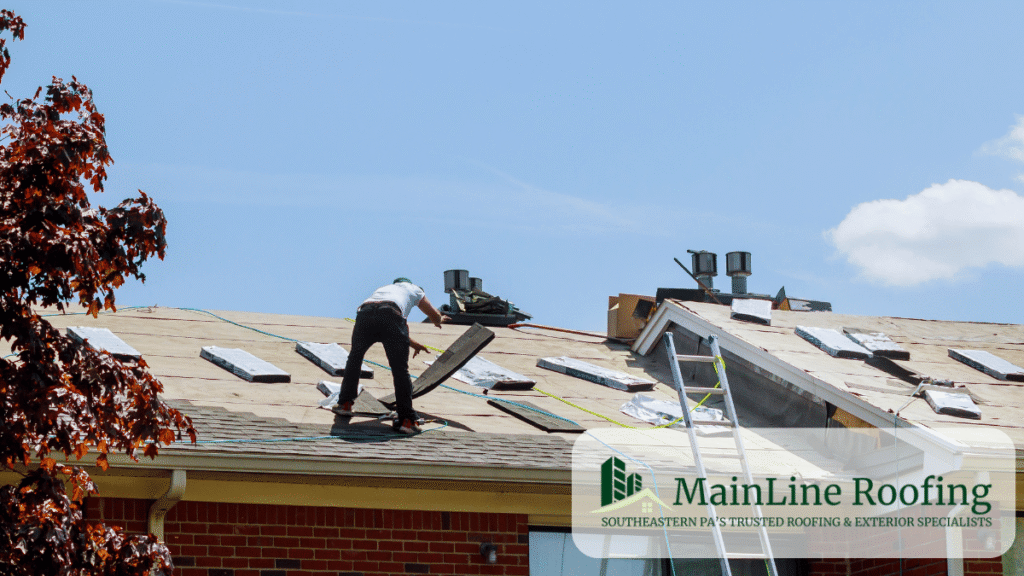
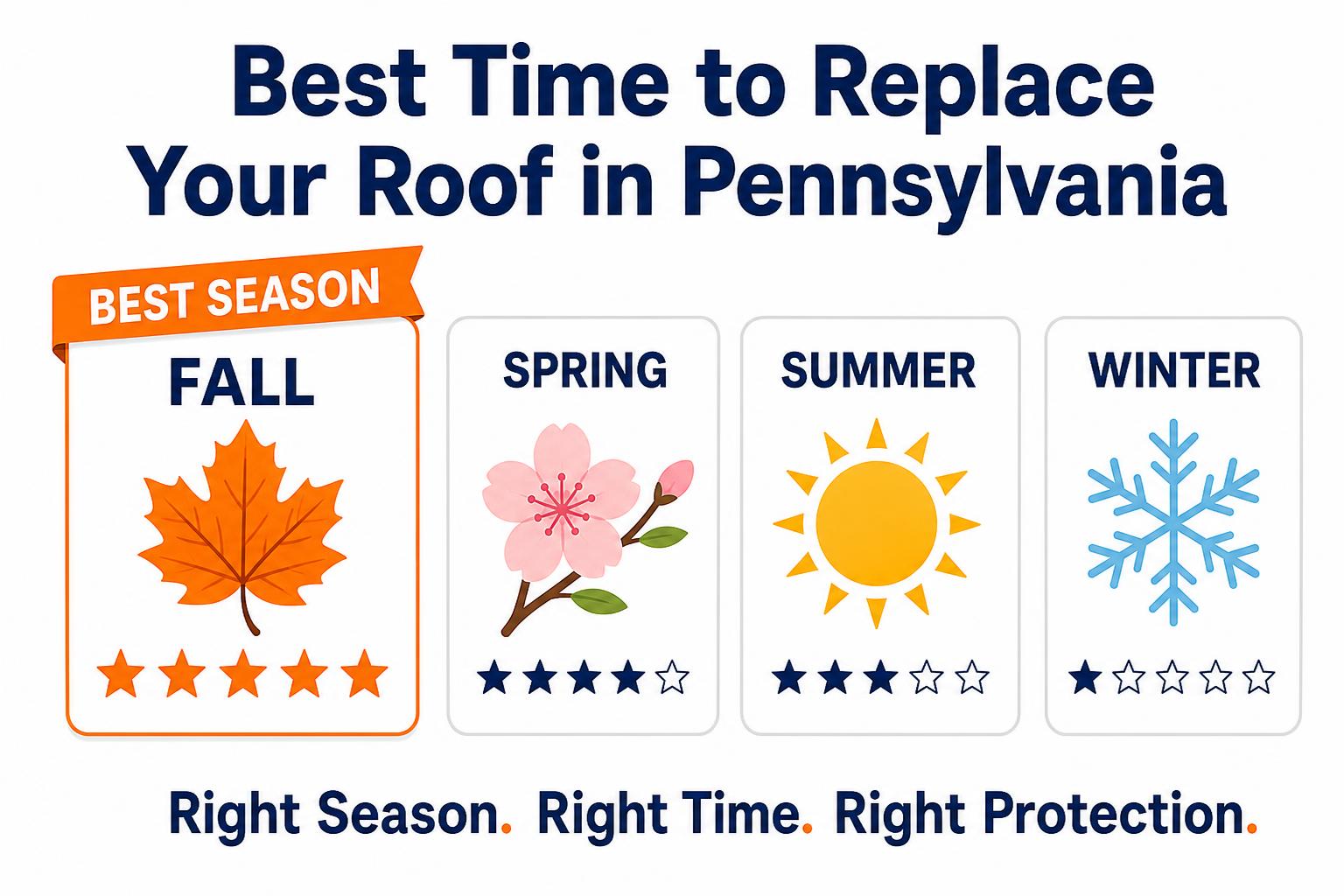
If you’re thinking about replacing your roof, the question almost everyone asks is simple: “When is the best time to do it?”
The honest answer is this: the best time for roof replacement is not only about the season. It is about the condition of your roof, the weather, the material being installed, your schedule, and how long you can safely wait.
For most homes around the Main Line, Chester County, and nearby areas, late spring through early fall is usually the best window. But if your roof is already leaking, missing shingles, or showing serious wear, the best time may be right now.
Want to Plan Your Roof at the Right Time?
Mainline Roofing Pros can inspect your roof, explain your timing options, and help you avoid waiting too long.
The Quick Answer: What Season Is Best?
In most cases, the best time for roof replacement is when the weather is mild, dry, and predictable. For asphalt shingles, moderate temperatures help materials seal correctly and make installation smoother.
That is why many homeowners aim for spring, late summer, or fall. Fall is often the most popular season because the extreme summer heat has passed, but winter weather has not arrived yet.
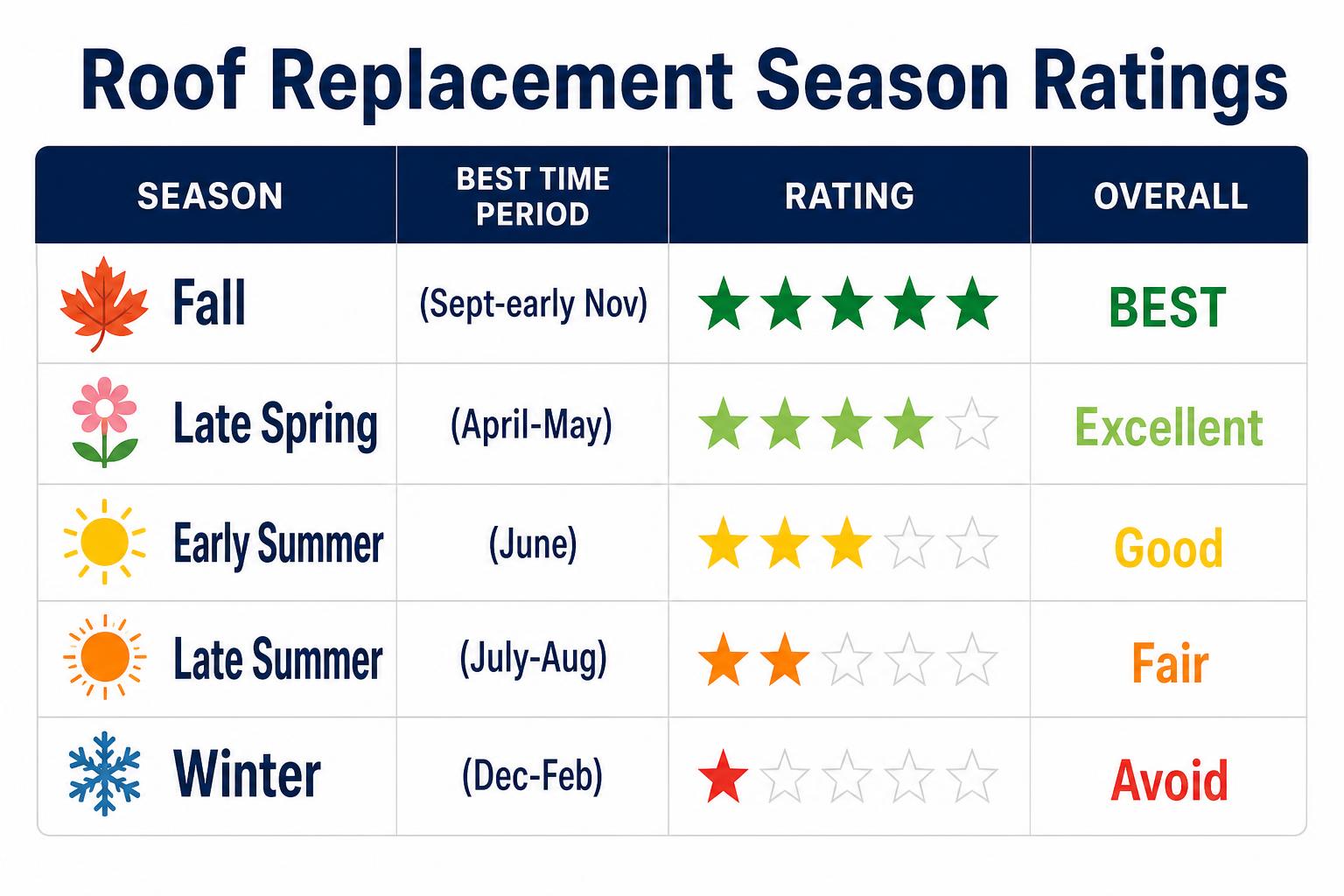
Spring
Very GoodGood weather, early scheduling, and a smart time to fix winter damage before summer storms.
Summer
GoodLong workdays help, but extreme heat can affect comfort, crew pace, and shingle handling.
Fall
BestCooler weather, better sealing conditions, and a chance to finish before winter.
Winter
Case by CasePossible when needed, but weather delays and cold temperatures make planning harder.
Why Temperature Matters During Roof Replacement
Temperature affects how roofing materials behave. Asphalt shingles can become stiff in colder weather and softer in extreme heat. That does not mean roof replacement is impossible outside the perfect range, but it does mean the installer needs to understand material handling and weather conditions.
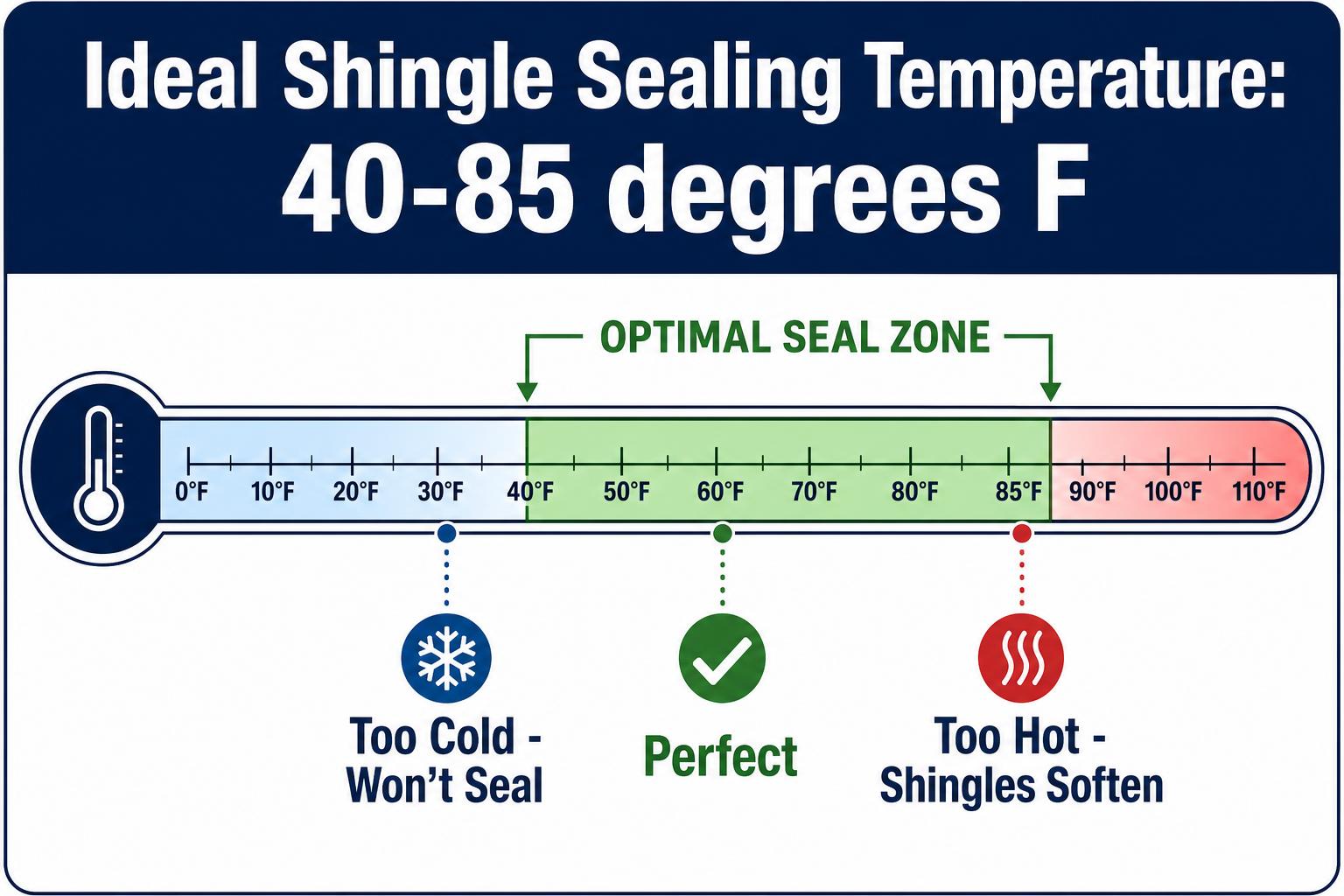
In plain language:
- Too cold can make shingles harder to handle and seal.
- Too hot can make shingles easier to scuff during installation.
- Mild weather gives the roof system the best chance to install cleanly.
Pitch matters too. If your roof has low-slope sections, material selection becomes more important. Our guide to the minimum roof pitch for asphalt shingles explains when shingles make sense and when another roofing system is safer.
When Waiting Is a Bad Idea
Sometimes homeowners want to wait for the “perfect season.” That can be smart if the roof still has life left. But waiting can be risky if the roof is already failing.
If you see warning signs, timing becomes less about the calendar and more about preventing damage inside your home.
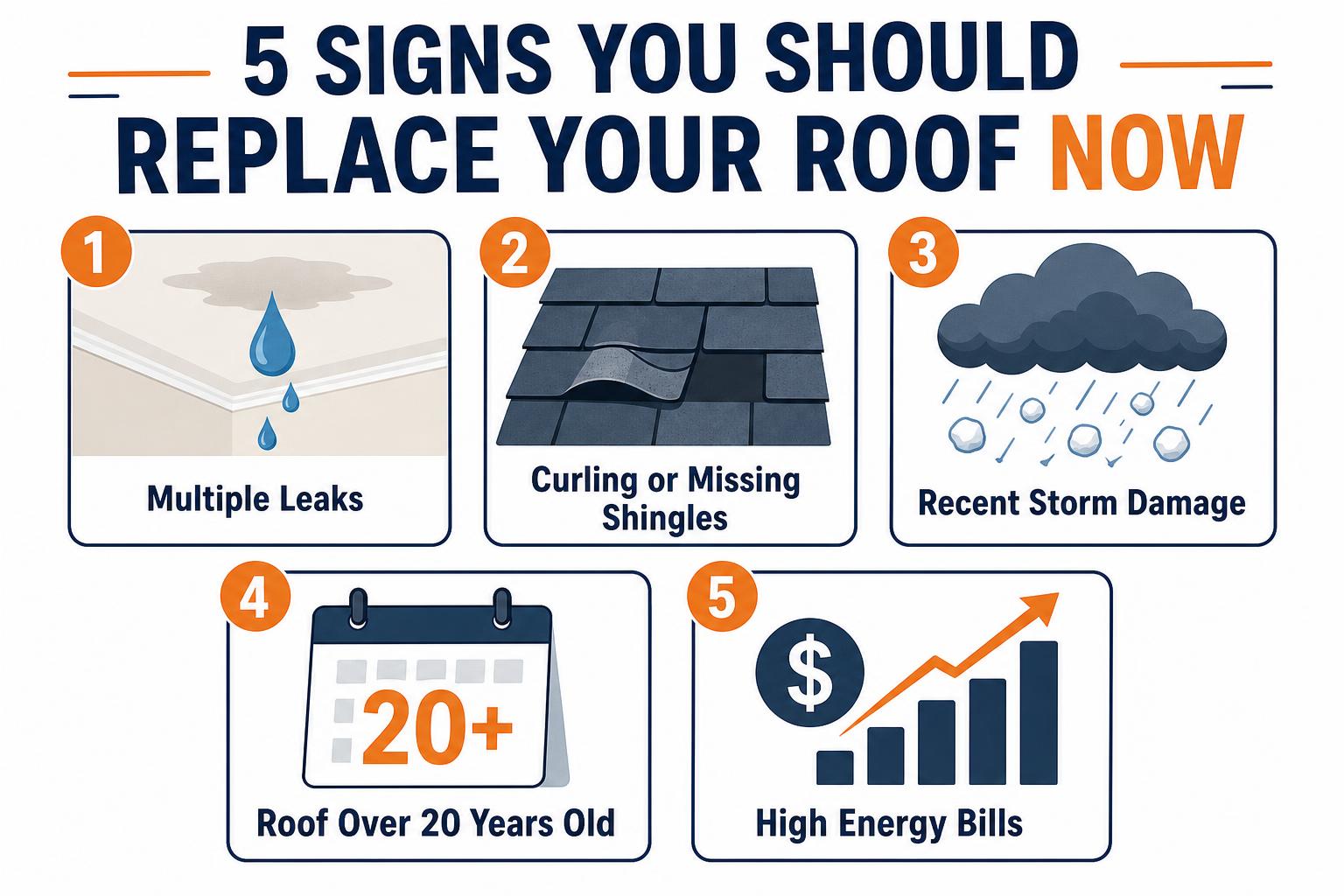
You should schedule an inspection soon if you notice:
- Water stains on ceilings or walls
- Drips during or after rain
- Missing, cracked, curling, or lifted shingles
- Heavy granules in gutters
- Soft spots, sagging areas, or signs of rot
- Leaks around chimneys, skylights, dormers, or valleys
If you are not sure whether the roof can be repaired or needs full replacement, read our guide on roof repair vs. roof replacement. It explains the decision in plain language.
Seeing Roof Warning Signs?
Do not wait for the perfect season if water is already getting in. Start with a clear inspection and estimate.
Best Month-by-Month Roofing Strategy
Here is a practical way to think about the year.
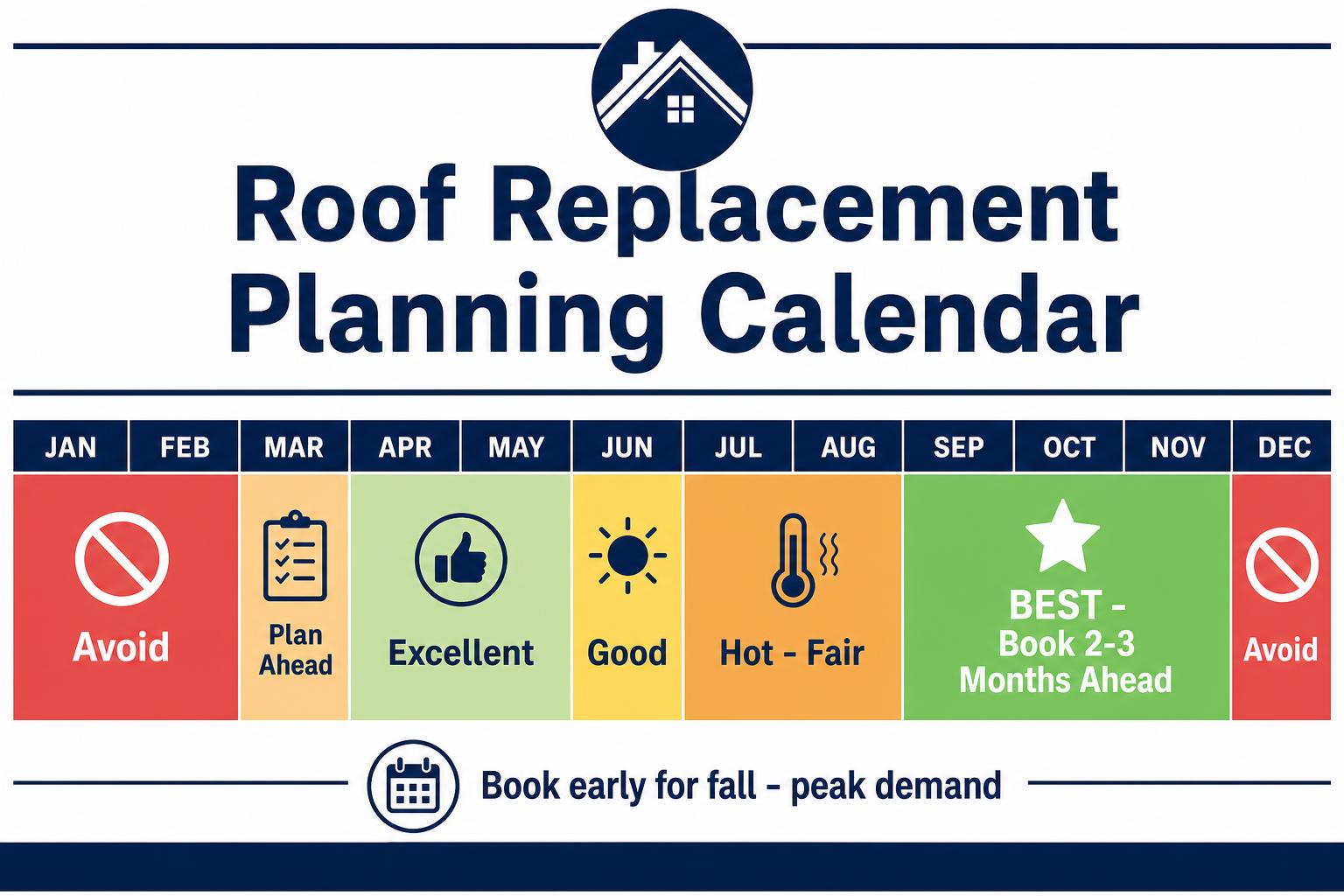
March through May
Spring is a strong time to inspect the roof and handle damage left behind by winter. If you had ice, wind, or leak issues, spring gives you time to fix them before summer storms.
June through August
Summer can be good for roof replacement because there are longer daylight hours and generally more workable days. The challenge is heat. On very hot days, shingles and crews need careful handling.
Heat also affects attic comfort. If your upstairs rooms feel hot or your attic seems extreme, read our guide on how hot an attic gets on a 100°F day.
September through November
Fall is often the best overall season for roof replacement. The weather is usually cooler, materials handle well, and you can complete the roof before snow, ice, and freeze-thaw cycles arrive.
December through February
Winter roof replacement can happen when needed, especially for leaks or urgent problems. But weather windows are shorter, and cold conditions can create delays. If your roof is failing, winter repair or replacement may still be better than letting water keep entering the home.
Spring vs. Fall: Which Is Better?
Spring and fall are both good. The better choice depends on your roof.
Choose spring if winter caused damage, you want to beat the busy season, or you need repairs before summer storms.
Choose fall if your roof is aging but stable, you want ideal temperatures, and you want the home protected before winter.
For homeowners in Bryn Mawr, Haverford, Villanova, and Gladwyne, this often comes down to whether the roof is merely aging or already causing problems.
Planning Ahead Can Save Money
The most expensive roof replacement is usually the one you are forced into during an emergency.
Planning ahead helps you:
- Avoid emergency tarping or temporary repairs
- Compare materials without feeling rushed
- Pick better colors and options
- Schedule around vacations, school, work, and pets
- Protect finished rooms, kitchens, bathrooms, and attic spaces
If budget is your first question, start with the instant roofing estimate calculator. It gives you a helpful starting point before an on-site inspection.
How to Prepare for a Roof Replacement
Once you choose a season and schedule the work, preparation makes the project easier.
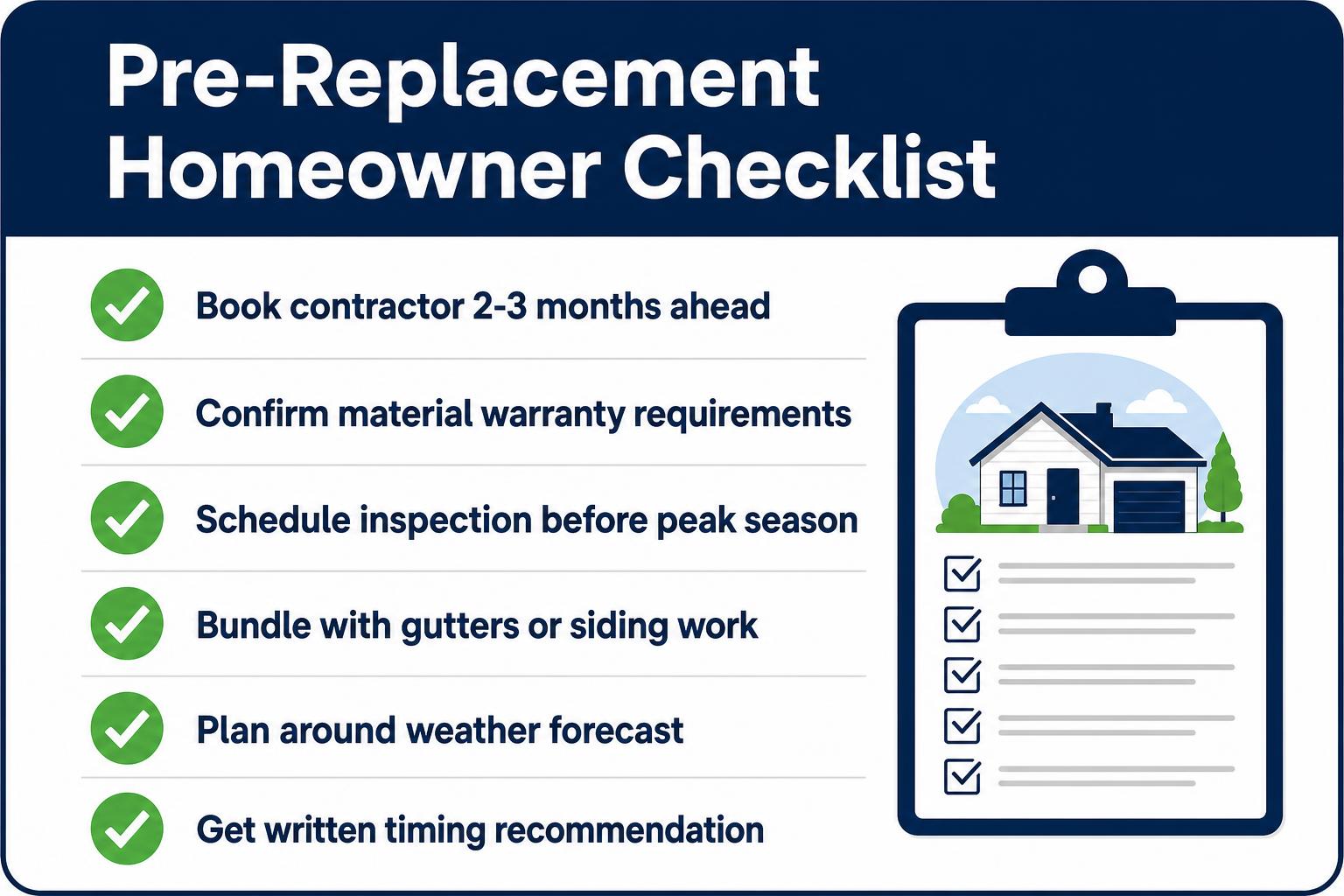
Before the crew arrives, it helps to:
- Move cars out of the driveway
- Clear patio furniture, planters, and fragile items near the home
- Protect items in the attic if dust or debris may fall
- Plan for noise during work hours
- Make a plan for pets, young kids, or anyone sensitive to noise
If you are wondering whether you should be home during the work, read Should I Stay Home During My Roof Replacement?. It walks through what roof replacement day actually feels like inside the house.
What About Specialty Materials?
Not every roof is a basic asphalt shingle roof. Main Line homes often include slate, cedar, copper, metal, flat sections, and premium synthetic materials like DaVinci.
Those materials make timing even more important because the roof system may involve more custom details, more careful staging, and more weather planning.
If you have an older or higher-end home in Merion Station, Gladwyne, Villanova, Haverford, Bryn Mawr, or nearby areas, the best time for replacement should include a full look at roof shape, flashing, ventilation, and material compatibility.
Bottom Line: The Best Time Is Before the Roof Forces You
So, what is the best time for roof replacement?
- Fall is often the best overall season.
- Spring is excellent for repairing winter damage and planning ahead.
- Summer can work well, but heat needs to be managed.
- Winter is possible when repairs or replacement cannot wait.
The real best time is before a small roof issue turns into interior damage, mold risk, rotten decking, ruined insulation, or emergency repairs.
If your roof is aging, leaking, or making you wonder whether another season is pushing your luck, start with an inspection. A good roofer should help you understand whether you can wait, whether you need a repair, or whether replacement is the better long-term move.
Helpful Roofing Resources
Use these guides and local pages to plan your next step.
Ready to Time Your Roof Replacement the Smart Way?
Mainline Roofing Pros can inspect your roof, review your timing options, and help you plan before small issues become expensive repairs.

Founder & Owner of Main Line Roofing Pros. 22+ years of local roofing expertise serving Main Line, Delco, Montco & Chesco homeowners with honest, high-quality work.