
Minimum Roof Pitch for Asphalt Shingles: 2:12 Rule Explained
If you’re planning a roof repair or replacement, one of the most important details is something most homeowners never think about until it becomes a problem: roof pitch.
Specifically, what’s the minimum roof pitch for asphalt shingles?
Here’s the straightforward answer: asphalt shingles should only be installed on roofs with a pitch of at least 2:12 – meaning the roof rises 2 inches for every 12 inches of horizontal run. :contentReference[oaicite:0]{index=0}
But that “minimum” comes with a lot of conditions. And if your roof is anywhere close to that limit, the details matter more than most homeowners realize.
What 2:12 Really Means (And Why It Matters)
A 2:12 pitch is considered the absolute cutoff. Anything flatter than that, and shingles simply aren’t designed to work properly.
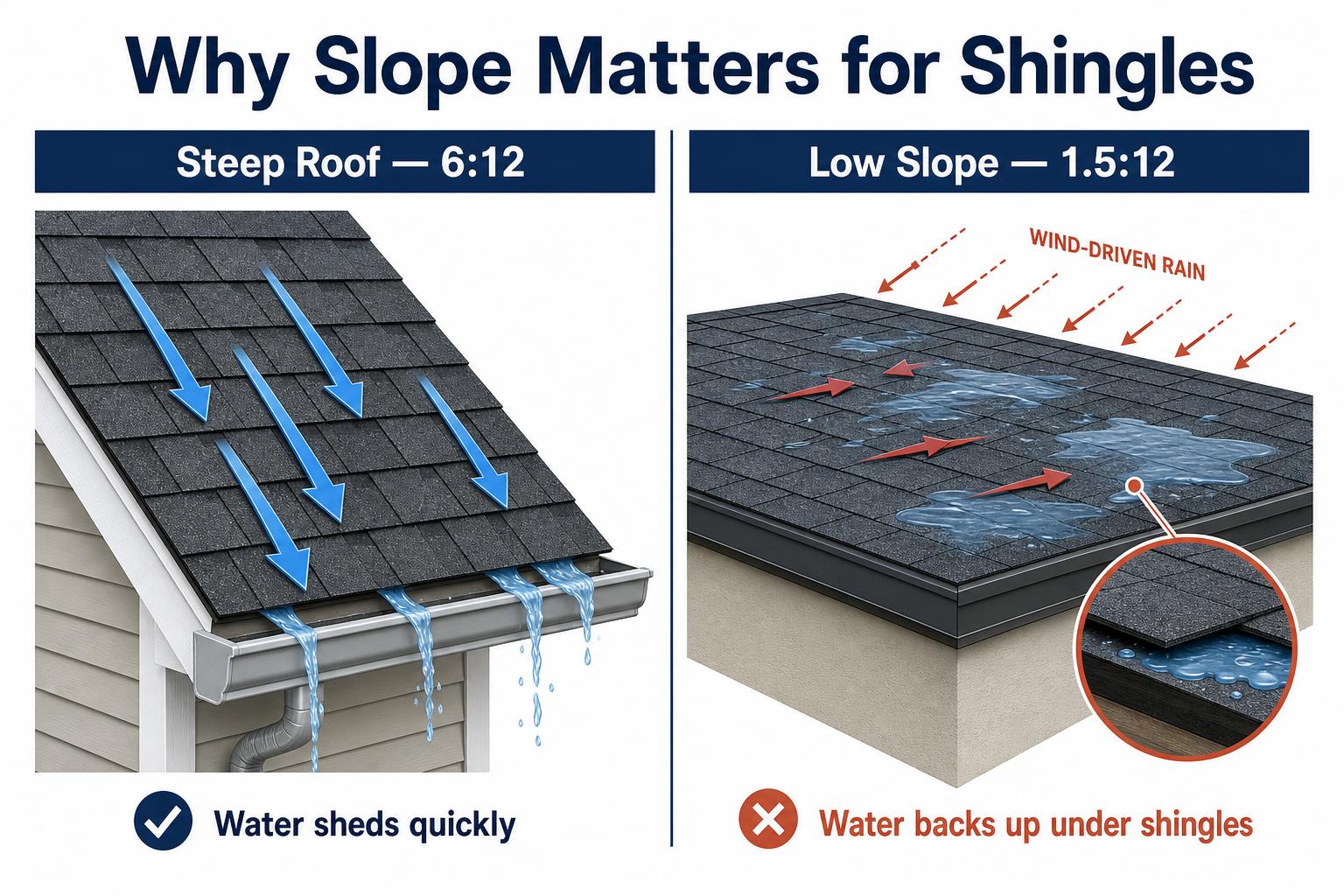
Here’s why:
- Shingles are built to shed water, not hold it
- Low slopes slow drainage significantly
- Wind-driven rain can push water underneath shingles
- Pooled water increases leak risk and material breakdown
That’s why building codes and manufacturers set the 2:12 minimum — anything below that creates long-term failure risks. :contentReference[oaicite:1]{index=1}
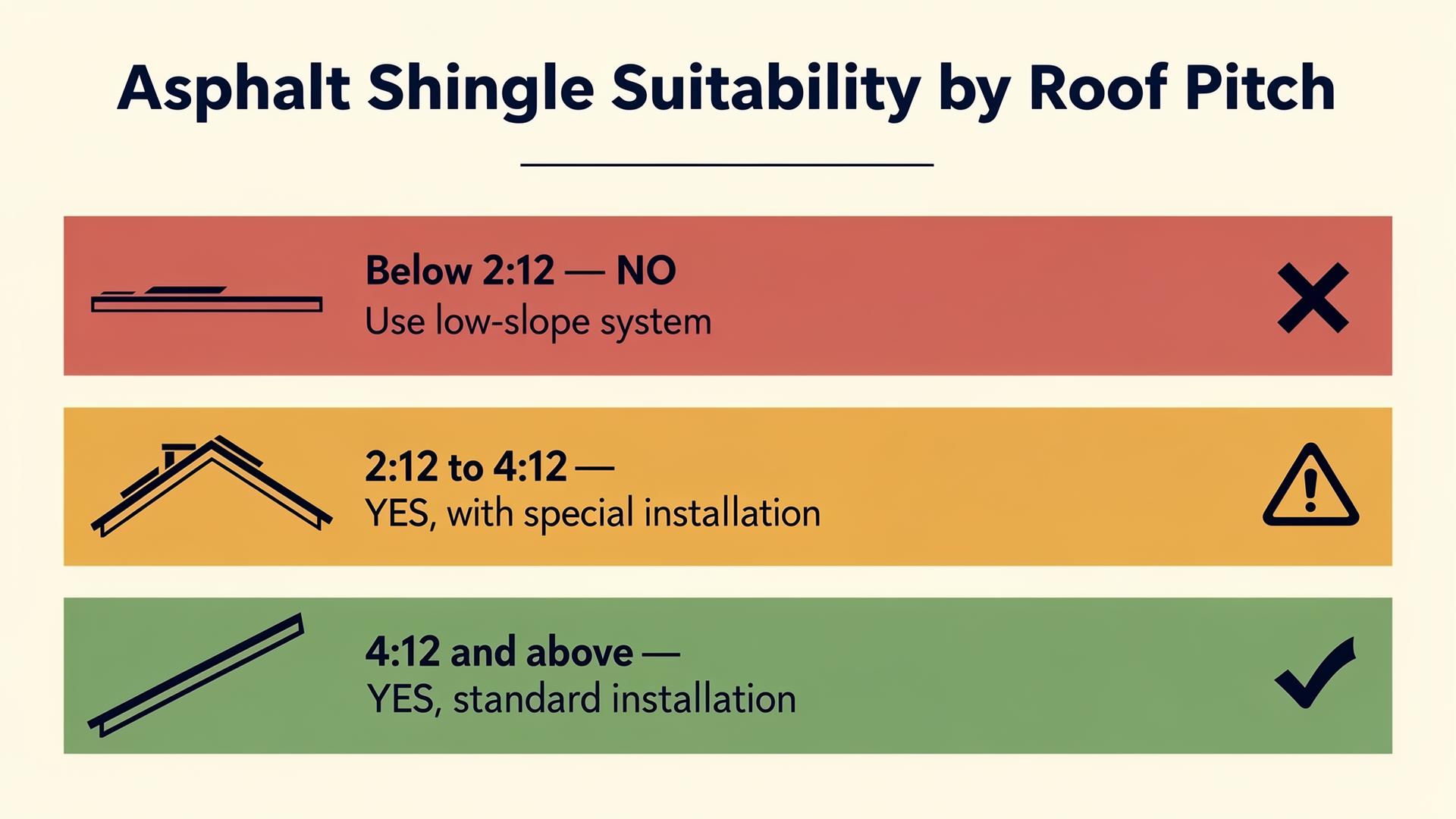
The 3 Roof Pitch Zones You Should Know
Not all “acceptable” pitches are equal. There are really three zones:
1. Below 2:12 → Not Allowed for Shingles
At this slope, water drains too slowly. Shingles will fail. Period.
2. 2:12 to 4:12 → Low Slope (High Risk Zone)
This is where things get tricky. Shingles can be installed — but only with special protection.
Most manufacturers require:
- Double underlayment OR full ice and water shield
- Precise installation techniques
- Strict adherence to specs (or warranties are void)
This is the zone where most roofing mistakes happen. :contentReference[oaicite:2]{index=2}
3. 4:12 and Above → Ideal for Shingles
This is where asphalt shingles perform the way they’re designed to. Water sheds quickly, and installation is more forgiving.
Warning Signs Your Roof Pitch Might Be Too Low
You don’t need to climb on your roof to spot problems. Here’s what I look for on Main Line homes:
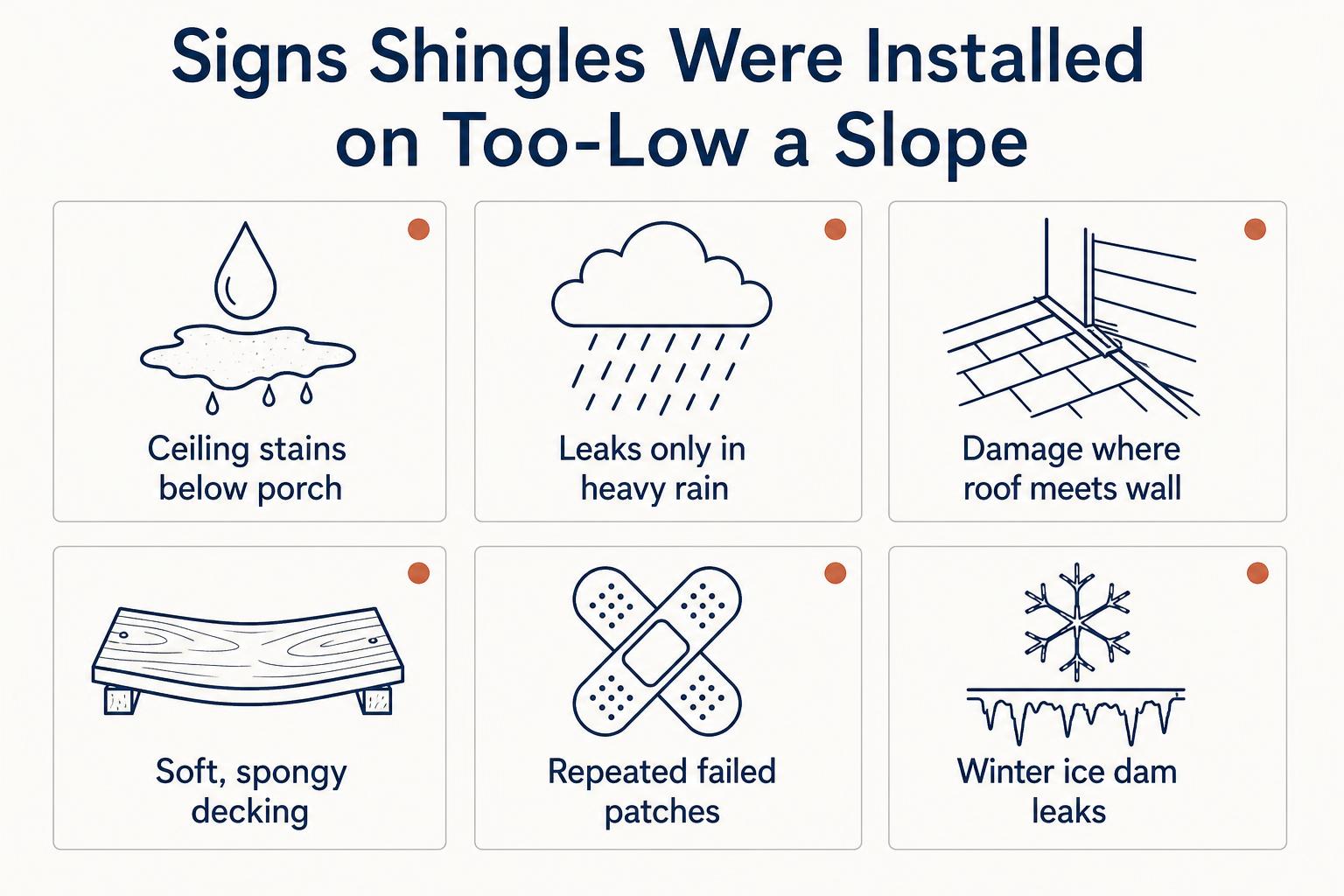
- Recurring leaks in the same area
- Water stains near eaves or transitions
- Shingles that look “flat” or sit too horizontal
- Granule loss or early aging
- Ice dam issues in winter
If this sounds familiar, it’s worth getting a full inspection. (Here’s how to decide if it’s repair or replacement → roofing inspection guide)
What Happens If You Install Shingles Below Minimum Pitch?
This is where homeowners get burned.
Installing shingles below 2:12 can lead to:
- Constant water intrusion
- Premature shingle failure
- Voided manufacturer warranty
- Structural damage over time
Even if it “looks fine” at first, it almost always fails earlier than expected.
Better Alternatives for Low-Slope Roofs
If your roof is below 2:12, shingles are not the right material. Instead, you should be looking at systems designed for low slope.
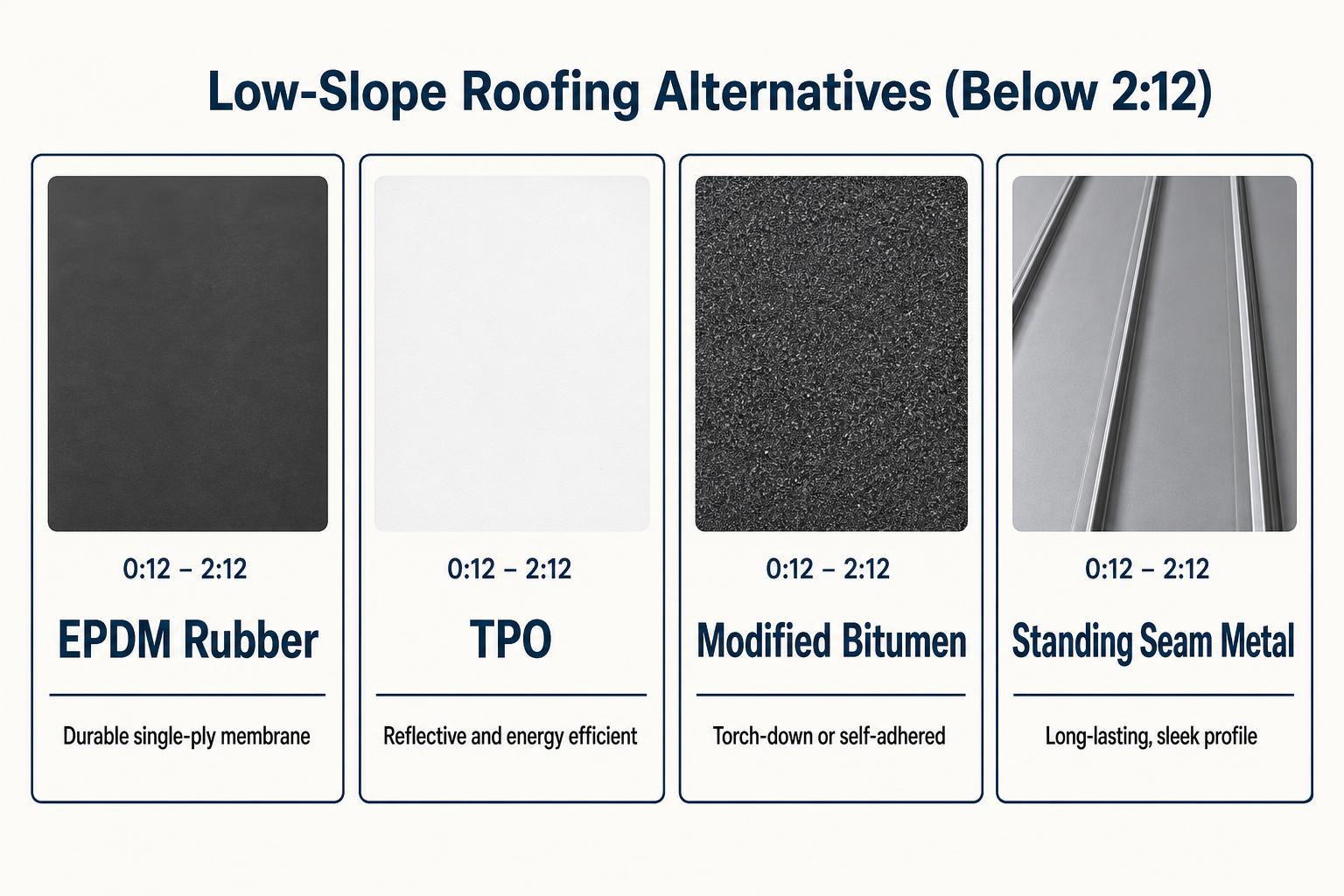
Common options include:
- EPDM rubber roofing
- TPO roofing systems
- Modified bitumen
- Standing seam metal (in some cases)
On many Main Line homes, we actually combine materials. For example:
- Shingles on the main roof
- Membrane roofing on porches or additions
If you’re dealing with a mixed roof like that, it’s worth looking at how heat and ventilation interact too (see attic temperature impact here).
How to Check Your Roof Pitch
If you want a rough idea before calling a roofer, here’s a simple method:
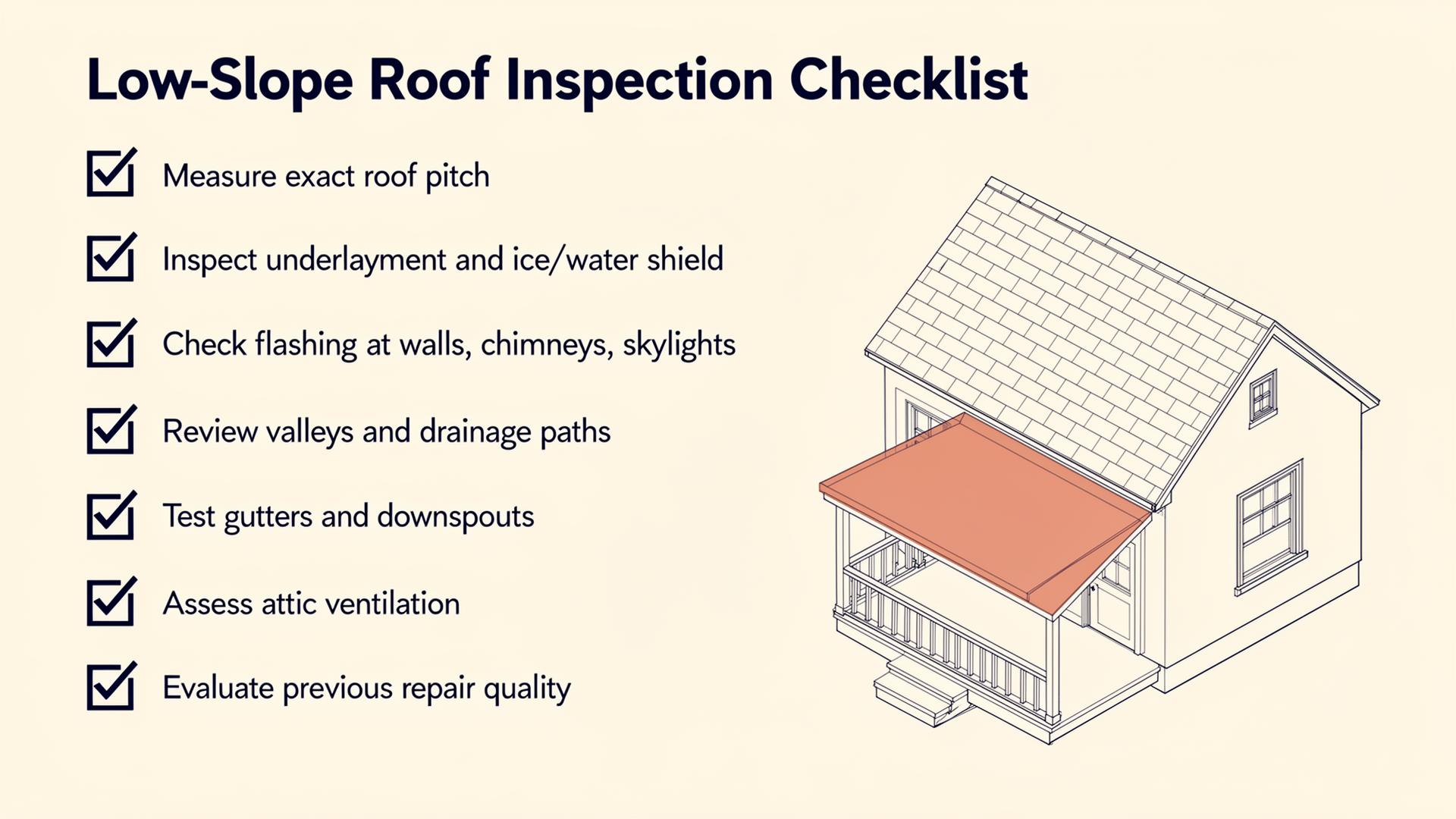
- Use a 12-inch level
- Measure how many inches the roof rises over 12 inches
- That number is your pitch (example: 4 inches = 4:12)
If you’re close to 2:12, treat it carefully. Even small measurement errors can change what’s allowed.
How This Applies to Homes on the Main Line
Across areas like Bryn Mawr, Haverford, Villanova, and Gladwyne, we see a mix of roof styles.
Common situations include:
- Older homes with steep roofs (great for shingles)
- Additions with low slope sections (problem areas)
- Porches and dormers where pitch changes
That’s why one-size-fits-all roofing doesn’t work here.
Bottom Line
The minimum roof pitch for asphalt shingles is 2:12. :contentReference[oaicite:3]{index=3}
But just because you can install shingles at that slope doesn’t mean you should treat it like a normal roof.
Here’s the real takeaway:
- 2:12 is the absolute minimum
- 2:12–4:12 requires special installation
- 4:12+ is where shingles perform best
- Below 2:12 → use a different roofing system
If your roof is anywhere near that minimum, the details matter more than anything else.
If you’re dealing with a low slope roof or trying to decide between repair and replacement, check out this next guide: Should You Stay Home During Roof Replacement?

Founder & Owner of Main Line Roofing Pros. 22+ years of local roofing expertise serving Main Line, Delco, Montco & Chesco homeowners with honest, high-quality work.