
Repair or Replace Your Roof? The Roofer’s Complete Checklist
When something is wrong with your roof, the real question on your mind is not what the issue is. It is: “Can we just repair this, or do I really need to replace the whole roof?”
Let me answer that directly.
If your roof is in good shape overall, the problem is in one small area, and the materials still have life left in them, then a repair is usually the smarter move.
If your roof is near the end of its lifespan, has problems in many different areas, or we see deeper damage like rotted wood, heavy granule loss, curling shingles, chronic leaks, or failing flashing in a lot of spots, then a replacement is almost always the better investment for your money and your peace of mind.
Another way to say it: repair makes sense when we are fixing a specific problem on a roof that is still healthy. Replacement makes sense when we are trying to stop many problems caused by a roof that is worn out or was built the wrong way.
Everything else is just details, and that is where I help. I walk you through what I see so you do not have to guess.
Not Sure If You Need Repair or Replacement?
Mainline Roofing Pros can inspect your roof, explain what we see, and help you compare your options clearly.
How I Decide: The Short Checklist
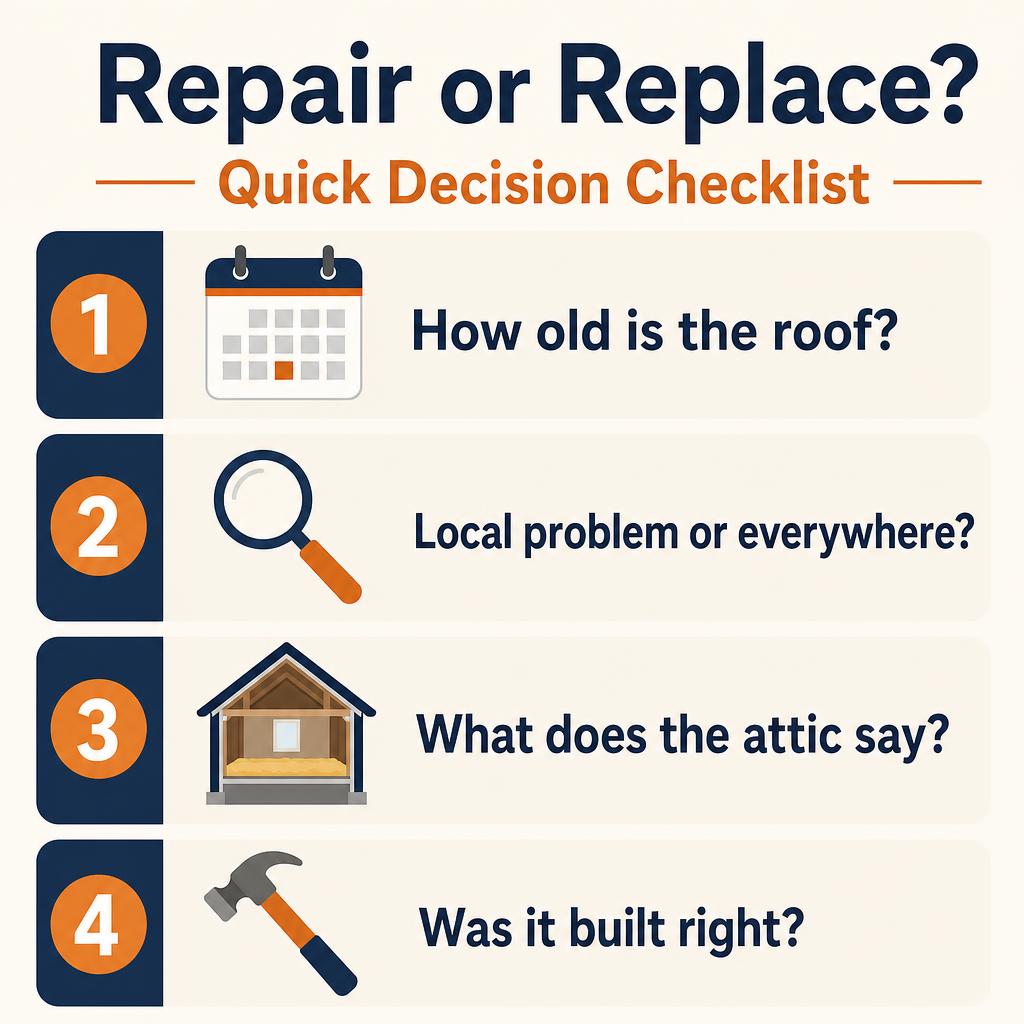
Here is the checklist I use when I am standing in your yard or attic, trying to answer that “repair or replace?” question with you.
How Old Is the Roof, Really?
Approximate lifespans, if the roof was installed correctly and has had normal conditions:
- Asphalt shingles: 18 to 30 years, with basic 3-tab shingles on the low end and better architectural shingles on the high end
- Cedar shake or shingle: 20 to 30 plus years with good care
- Synthetic roofing, like DaVinci: 40 to 50 plus years
- Metal roofing: 40 to 70 plus years, depending on type and environment
- Slate roofing: 75 to 100 plus years, though flashings and underlayment often need work sooner
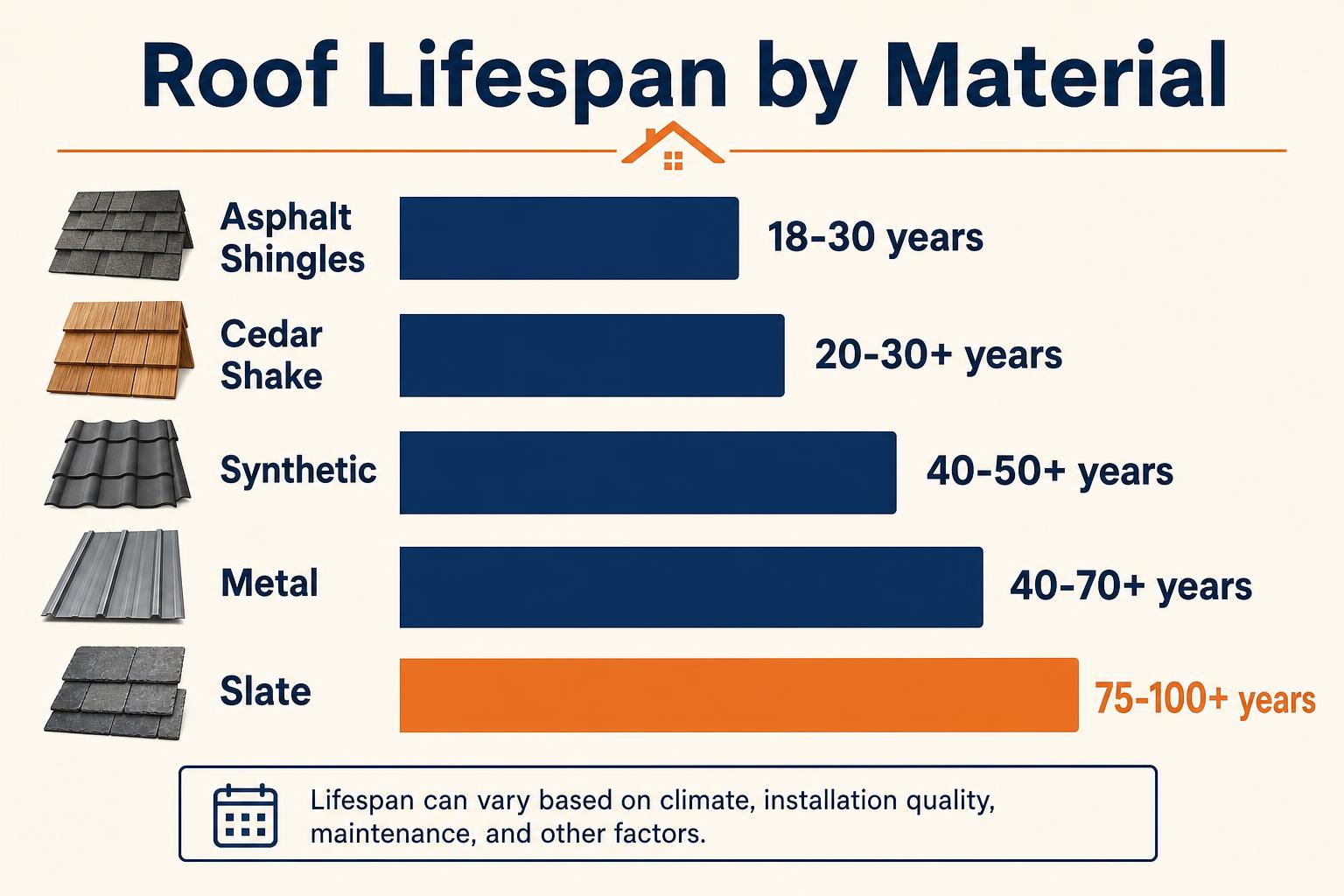
If your roof is well within its expected lifespan and we are looking at a small, clear problem, I lean toward repair.
If the roof is at or past that age range, and we also see several signs of aging, then we should talk seriously about replacement.
Are the Problems Local, Or Everywhere?
Good reasons to repair include:
- One or two missing or damaged shingles from wind
- A small, clear leak around a vent pipe, chimney, or one flashing area
- Isolated storm damage on a roof that is otherwise in good shape
Signs we are leaning toward replacement include:
- Leaks in several different areas over time
- Shingles curling, cracking, or bald in many sections from heavy granule loss
- A lot of past patch repairs that never seem to solve the bigger problem
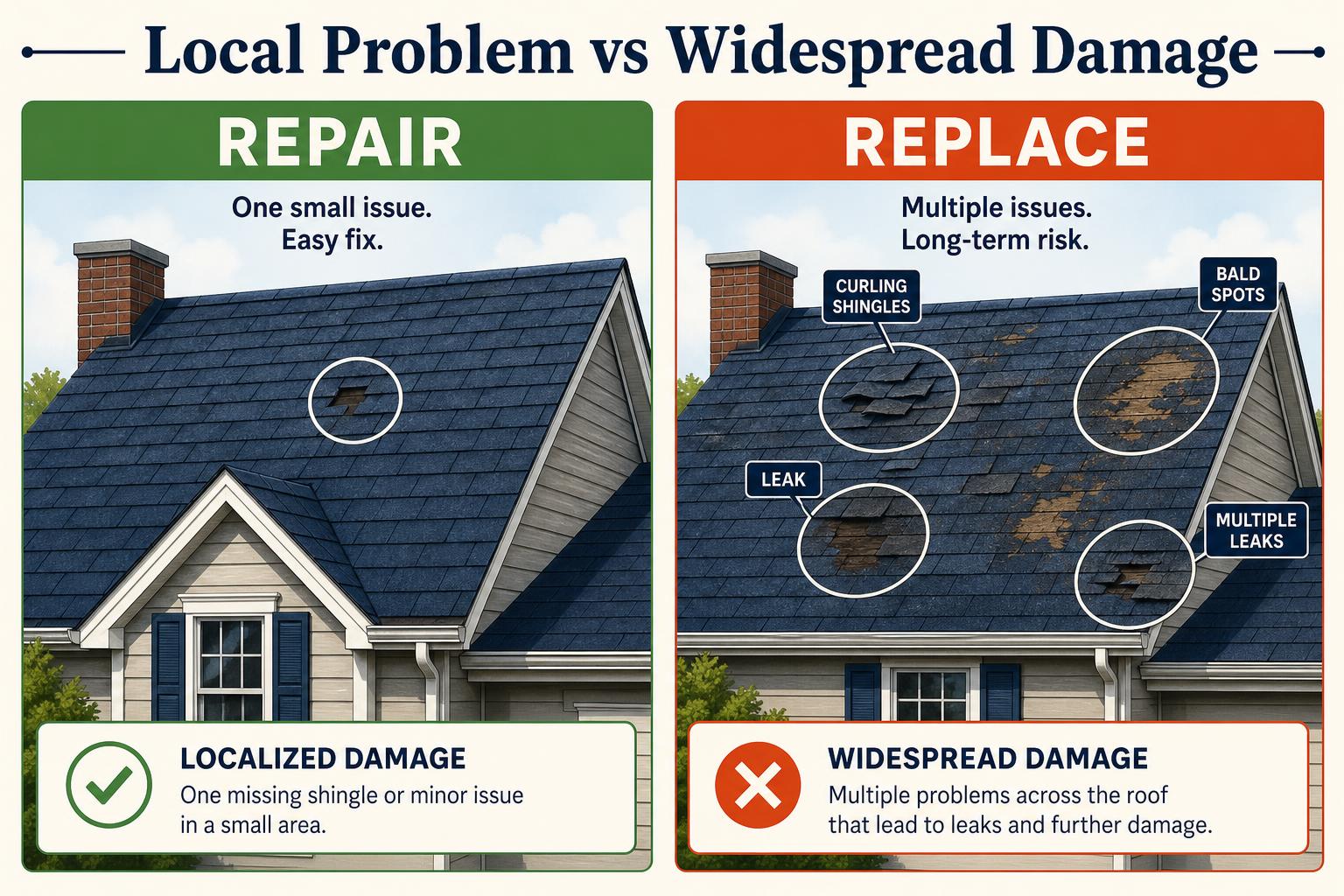
If I feel like we would be chasing issues all over the roof for the next few years, I will tell you that. At that point, repair can turn into an expensive band aid.
What Does the Attic Say?
The outside only shows part of the story. In the attic, I look for:
- Water stains or dark areas on the underside of the roof deck
- Soft or springy spots in the deck, which can mean rot
- Mold or mildew on wood or insulation
- Signs of long-term moisture from poor ventilation
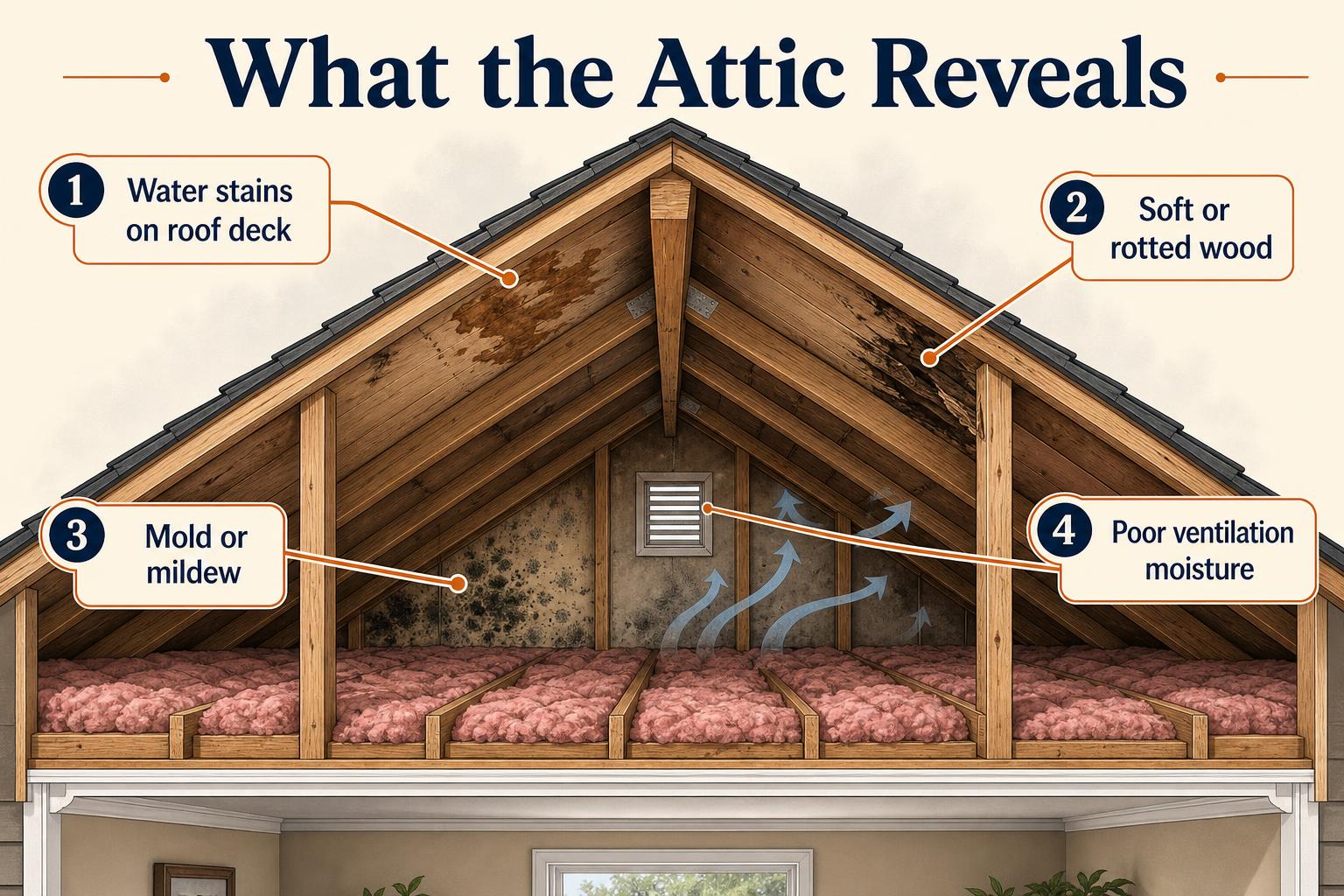
If the shingles look okay from the outside but the attic shows a long history of water and moisture problems, we may be dealing with a roof system that is failing from the inside out. That usually pushes us closer to replacement.
If attic heat is part of the concern, you may also want to read our guide on how hot an attic gets on a 100°F day.
Was the Roof Built the Right Way?
Sometimes I see fairly young roofs that still have lots of problems because of how they were installed. For example:
- New shingles installed over several old layers
- Poor quality or mismatched materials
- Flashing done the wrong way around walls, chimneys, and valleys
- Missing underlayment or missing ice and water shield where it should be
If the real problem is bad design or bad installation, constant repairs will not fix that. In those cases, a proper replacement is what actually solves the root issue.
When a Repair Is Usually the Right Call
Here are a few real-world situations where I often recommend repair.
Storm Damage on a Younger Roof
You have a fairly new asphalt roof, maybe 8 to 10 years old, and a windstorm tears off a small patch of shingles. The rest of the roof looks solid:
- No widespread curling or cracking
- Granules still cover most of the shingles
- Flashing and ridge look good
In that case, a targeted repair where we replace the damaged shingles and check the area around them is almost always the right move.
A Single Trouble Spot
Common examples include:
- A leaky vent pipe boot that has cracked or worn out
- A small flashing problem at one wall or one chimney
- One small area where ice dams caused local damage
If the rest of the roof is healthy, we fix that specific spot, document what we did, and keep an eye on it. There is no need to remove the entire roof for one small detail that failed.
Preparing to Sell When the Roof Still Has Life
If you want to sell in a few years and the roof still has a decent amount of life left, a repair can:
- Take care of obvious leaks or ugly areas
- Help you get through inspection
- Help you avoid a big upfront cost
I will still be honest about how many years I think the roof has left, because buyers and inspectors may ask.
Planning Ahead?
Use our calculator to get a starting budget range before you decide whether repair or replacement makes more sense.
Use the Roofing Cost CalculatorWhen a Full Replacement Makes More Sense
There are times when I will tell you, as kindly and clearly as I can, that repair is just delaying the inevitable.
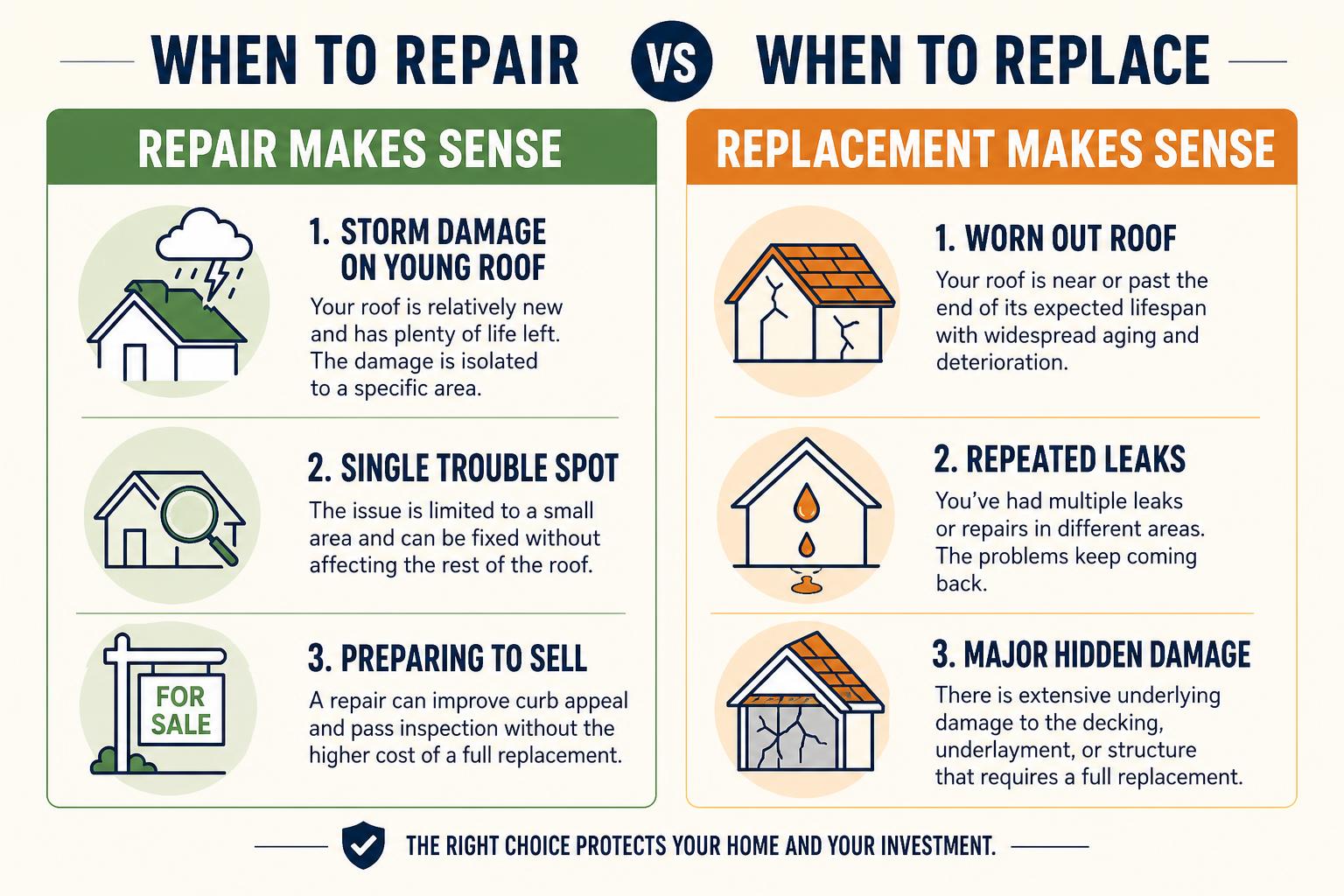
The Roof Is Worn Out
Signs that the whole roof system is close to the end include:
- Shingles are cracked, curled, or cupped across wide areas
- Heavy granule loss, bald spots, or lots of granules in the gutters
- Shingles that blow off easily in normal wind
- Sagging areas or soft spots in the roof surface
At this point, patching one leak may stop that one drip, but new issues are likely to show up somewhere else. The money spent on repairs starts to compete with the cost of a full replacement.
Repeated Leaks Over Several Years
Here is another pattern I watch for:
- Leak after leak over several years in different locations
- Evidence of many past repairs all over the roof
- Interior ceilings that have been patched and repainted more than once
That tells me the roof is not doing its job as a full system anymore. A replacement gives you a fresh start.
Major Hidden Damage
Sometimes when we open up a problem area, we find:
- Rotted roof decking over a large section
- Long-term water damage around chimneys, skylights, or valleys
- Structural issues from moisture over many seasons
When the damage is this deep, it is usually more cost-effective and safer to deal with everything the right way with a full replacement instead of trying to repair around serious problems.
You Plan to Stay in the Home Long Term
If this is your long-term home and the roof is aging, a well-timed replacement can:
- Stop the cycle of constant repairs
- Give you a chance to pick better materials, colors, and ventilation
- Protect big investments inside the home, like kitchens, baths, and finished attics
I always ask how long you plan to stay, because that has a big impact on what makes sense.
Cost Perspective: Repair vs. Replacement
Every home is different, but here is how I usually explain the money side.
Repairs
- Lower cost upfront
- Good for focused problems
- Make sense when the roof still has real life left
However, if you are spending hundreds or thousands every year or two on repairs, it is worth asking if that money would be better spent on a new roof.
Replacement
- Higher cost upfront
- Resets the clock on your roof system
- Can improve ventilation, curb appeal, and long-term protection
A well-done replacement, using materials that are right for your home, is one of those projects that helps protect almost everything else you own.
If you are comparing options in your area, these local pages may help: roofing in Bryn Mawr, roofing in Haverford, roofing in Gladwyne, roofing in Merion Station, and roofing in Villanova.
How I Talk Through This With Homeowners
When I am on your roof or in your attic, I am not just trying to find something wrong. I am really trying to answer three questions:
- Can a repair truly fix this without you chasing new problems next year?
- How much life does this roof have left if we do repair it?
- With your budget and how long you plan to stay, which choice will you feel better about in five years?
Sometimes the answers point to a simple repair. Sometimes they point to full replacement.
Either way, you should get a clear explanation and photos of what I am seeing, so this does not feel like guesswork.
Helpful Main Line Roofing Resources
Explore more roofing guides and local service pages from Mainline Roofing Pros.
If You Are Stuck Between Repair and Replacement
If you are on the fence right now, here are some good next steps:
- Get a full roof inspection, including the attic
- Ask for photos of any damage or signs of aging
- Ask your roofer to explain what they would do if this were their own home
My promise is to walk you through what I see, show you your options, and explain the trade-offs so you can make a choice that feels right, not rushed or pushed.
And if all you want at first is an honest opinion on whether your situation looks like a repair job or a replacement job, that is a perfectly fine place to start.
Need Help Deciding Between Roof Repair and Replacement?
Mainline Roofing Pros can inspect your roof, attic, flashing, ventilation, and materials so you can make a clear decision.
Founder & Owner of Main Line Roofing Pros. 22+ years of local roofing expertise serving Main Line, Delco, Montco & Chesco homeowners with honest, high-quality work.
One thought on “Repair or Replace Your Roof? The Roofer’s Complete Checklist”