
Should a 20-Year-Old Roof Be Replaced?
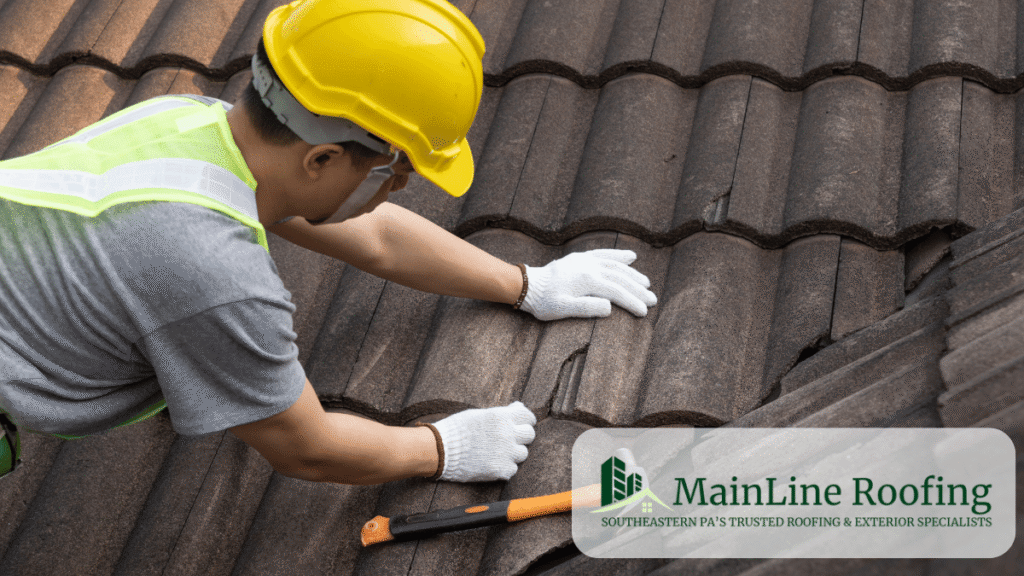
A 20-year-old roof sits right at the edge of a decision. For most asphalt shingle roofs in southeastern Pennsylvania, 20 years is the beginning of the replacement window, not the end of it. Whether yours needs replacing now or has a few good years left depends less on the number and more on what the roof actually shows when you look closely.
This guide gives you a direct answer, explains how long different roofing materials really last, and walks through exactly what to check before deciding whether to replace now or wait.
The Short Answer
A 20-year-old asphalt shingle roof should be inspected now and replacement should be budgeted for. Most standard architectural shingle roofs last 20 to 30 years, so at 20 years you are entering the replacement window.
Replace now if you see widespread curling, granule loss, multiple leaks, or damaged decking. Wait and monitor if the roof is in good condition with no active problems. Either way, at 20 years you should stop reacting and start planning.
Is 20 Years Old for a Roof?
For asphalt shingles, yes, 20 years is old but not necessarily finished. Here is the important distinction: the manufacturer warranty on a roof (often 25, 30, or even “lifetime”) is not the same as its real-world service life. A 30-year shingle does not reliably last 30 years in Pennsylvania conditions. Actual service life depends heavily on ventilation, installation quality, and sun and storm exposure.
The typical real-world lifespan for the most common roofing materials in this region:
| Roofing Material | Typical Real-World Lifespan | Status at 20 Years |
|---|---|---|
| 3-tab asphalt shingles | 15 to 20 years | At or past end of life |
| Architectural asphalt shingles | 20 to 30 years | Entering replacement window |
| Premium / designer shingles | 30 to 40 years | Well within service life |
| Cedar shake | 20 to 30 years | Entering replacement window |
| Standing seam metal | 40 to 50+ years | Middle of service life |
| Natural slate | 75 to 150+ years | Barely started |
| EPDM / TPO flat roofing | 15 to 25 years | At or near end of life |
If you have a standard architectural shingle roof at 20 years, you are in the window where replacement becomes a question of when, not if. If you have a 3-tab shingle roof at 20 years, you are already at end of life. If you have slate or metal, 20 years is nowhere near the end and your issue is more likely a repair to specific components rather than a full replacement.
Not sure what material or how old your roof is? Check your home’s purchase inspection report, past insurance records, or township permit history. If none of those are available, the shingle style and condition can tell a professional roughly how old the roof is and how much life it has left.
What Shortens a Roof’s Life Below 20 Years
Some 20-year-old roofs are perfectly sound. Others are failing well before they should. The difference usually comes down to a few factors that either preserved the roof or aged it prematurely.
Poor attic ventilation is the single biggest life-shortener. An attic without adequate intake and exhaust ventilation traps heat and moisture. In summer, trapped heat bakes the shingles from below, drying out the asphalt and accelerating granule loss. In winter, trapped moisture condenses on the decking and causes rot. A roof with bad ventilation can fail 5 to 10 years early. Our guide on ridge vents and attic ventilation explains why this matters so much.
Improper installation is the second biggest factor. Incorrect nail placement, skipped ice and water shield, reused old flashing, or missing starter strips all shorten a roof’s life. A cheaply installed roof of premium shingles will fail before a well-installed roof of standard shingles.
Sun and storm exposure matters too. South and west-facing slopes take the most UV punishment and age faster than north-facing slopes on the same roof. A history of major wind or hail events adds cumulative damage that shortens overall life.
Signs Your 20-Year-Old Roof Needs Replacement Now
At 20 years, the decision comes down to condition. Here is what tells you it is time to replace rather than wait. If you see several of these, replacement is the right call.
Replace now if you see:
- Widespread curling, cupping, or clawing shingles across multiple slopes
- Heavy granule loss with bald asphalt spots visible from the ground
- Cracked or brittle shingles that break rather than flex
- Leaks appearing in more than one location
- Soft, spongy, or stained roof decking visible in the attic
- Daylight visible through the roof deck from inside the attic
- Sagging or dipping sections in the roof plane
- Shingle granules consistently filling gutters after every rain
Any one of these on a 20-year-old roof is a serious signal. Several together mean the roof system has reached the end of its service life and continued repairs are throwing money at a roof that needs replacing. For a complete rundown of warning signs and where to look for them, see our guide on signs you need a new roof.
When a 20-Year-Old Roof Can Wait
Not every 20-year-old roof needs immediate replacement. If your roof was installed with quality materials, has good attic ventilation, and shows none of the warning signs above, it may have several years of service left. Signs your roof can reasonably wait:
Monitor and wait if:
- Shingles are lying flat with no widespread curling
- Granule loss is minimal and gutters are relatively clean
- No active leaks or interior water stains
- Attic decking is dry, firm, and unstained
- Attic has functioning ridge and soffit ventilation
- Any past repairs have held and were isolated
In this case, the right move is a professional inspection to confirm the condition, then annual monitoring. You are on borrowed time in the sense that the roof is in its final third of life, but there is no reason to replace a sound roof before it needs it.
Get a Straight Answer on Your Roof’s Condition
A professional inspection tells you exactly where your 20-year-old roof stands. Mainline Roofing Pros offers free inspections across the Main Line, Delaware County, Montgomery County, and Chester County.
The Cost of Waiting Too Long
There is a real financial risk to pushing a failing roof past its limit. When an aging roof finally lets water in, the damage is not limited to the shingles. Water reaches the decking, then the insulation, then the framing, then the ceilings and walls below. A roof replacement that would have cost $12,000 becomes a roof replacement plus decking replacement plus insulation replacement plus interior repairs.
The math on a 20-year-old roof usually favors planned replacement over reactive replacement. A roof replaced on your schedule, in good weather, before failure, costs less and causes less disruption than an emergency replacement after water has already come through the ceiling.
There is also the repair-cost trap. Once a roof is at 20 years, spending money on repairs often does not make sense. If a repair costs 25 percent or more of a full replacement and the roof only has a few years left, that repair money is largely wasted. Our guide on the 25 percent rule for roofing explains how this threshold works and how it can affect what your contractor is permitted to do under Pennsylvania code.
Repair vs. Replace at 20 Years
Here is a simple framework for the decision at the 20-year mark:
| Situation | Recommended Action |
|---|---|
| Single leak, roof otherwise sound, good ventilation | Targeted repair, then monitor annually |
| Isolated storm damage on an otherwise good roof | Repair, possibly through insurance |
| Multiple leaks or widespread surface wear | Replace |
| Any decking damage found in the attic | Replace with full decking assessment |
| 3-tab shingles at 20 years | Replace, already at end of life |
| Repair estimate is 25%+ of replacement cost | Replace, repair money is not worth spending |
| Sound roof, no warning signs, good ventilation | Monitor, budget for replacement in a few years |
For the full decision framework including cost comparisons, see our guide on when to repair vs. replace your roof.
What a 20-Year-Old Roof Replacement Costs
If you decide to replace, cost depends on your roof size, pitch, complexity, and material choice. For a typical home in the Main Line area with standard architectural shingles, a full replacement runs $9,000 to $22,000. Larger homes and premium materials run higher.
Our detailed guides break this down precisely: see roof replacement cost in Main Line PA for pricing by home type and material, or shingle roof cost on a 2,000 square foot house for a specific size example with the full line-item breakdown.
One upside of replacing at 20 years on your own timeline: you can plan for it. You have time to get multiple estimates, compare materials, choose the right season, and potentially arrange financing. A homeowner forced into an emergency replacement has none of those advantages.
Frequently Asked Questions
Should a 20-year-old roof be replaced?
A 20-year-old asphalt shingle roof should be inspected and budgeted for replacement, but does not automatically need replacing today. Most architectural shingle roofs last 20 to 30 years, so at 20 years you are entering the replacement window. Replace now if you see widespread curling, granule loss, multiple leaks, or decking damage. If the roof is sound with good ventilation and no active problems, it can be monitored while you plan for replacement in the next few years.
How long does an asphalt shingle roof last?
Standard architectural asphalt shingles last 20 to 30 years in real-world southeastern Pennsylvania conditions. Older 3-tab shingles last 15 to 20 years. Premium and designer shingles can last 30 to 40 years. The single biggest factor affecting lifespan is attic ventilation, followed by installation quality. Manufacturer warranty length does not equal real-world service life.
Is a 20-year-old roof too old to insure?
Many insurers become more cautious about roofs approaching or past 20 years, and some require an inspection or proof of good condition to continue or renew coverage. A few may decline to cover an aging roof or exclude roof damage. If you are having trouble with coverage or renewal due to roof age, that is often a signal that replacement is worth considering. Check with your specific insurer about their roof age policies.
Can I just repair my 20-year-old roof instead of replacing it?
You can repair isolated problems on a 20-year-old roof if the rest of the roof is sound. But if the repair cost approaches 25 percent or more of a full replacement, or if there are multiple problem areas, repairs become a poor investment on a roof near end of life. A single leak on an otherwise good roof is worth repairing. Multiple issues on an aging roof usually point to replacement.
What happens if I wait too long to replace an old roof?
When an aging roof finally fails, water damage extends beyond the shingles to the decking, insulation, framing, and interior finishes. A planned $12,000 replacement can become that plus thousands in decking, insulation, and interior repair. Replacing on your own timeline, before failure, costs less and causes less disruption than an emergency replacement after water has entered the home.
How do I know how old my roof actually is?
Check your home purchase inspection report, past insurance claim records, or township building permit history, which often lists past roof work. If none of those are available, a professional can estimate the roof’s age from the shingle style, granule condition, and overall wear. Realtors and previous owners are also sometimes able to confirm when the roof was last done.
Does a new roof add value when selling a home?
A roof at or past 20 years is often flagged during a buyer’s home inspection and can become a negotiating point or a deal obstacle. A newer roof removes that friction and gives buyers confidence. While a roof replacement does not always return its full cost at resale, an aging roof that scares off buyers or triggers price reductions can cost more than the replacement would have. If you are planning to sell within a few years and your roof is at 20 years, replacement is worth factoring into the decision.
More Helpful Roofing Guides from Mainline Roofing Pros
Serving homeowners across the Main Line, Delaware County, Montgomery County, and Chester County.
Bottom Line
A 20-year-old asphalt shingle roof is at a decision point. It is old enough that replacement should be on your radar, but not automatically failed. The answer comes from condition, not just the number. If your roof shows widespread wear, multiple leaks, or decking damage, replace it now before water causes secondary damage. If it is sound with good ventilation, monitor it closely and plan for replacement within the next few years.
Either way, 20 years is the point to stop reacting and start planning. The homeowners who come out ahead are the ones who replace on their own schedule, before an emergency forces the decision at a worse time and a higher cost.
Mainline Roofing Pros serves homeowners across the Main Line, Delaware County, Montgomery County, and Chester County. If your roof is at or near 20 years, a free inspection will tell you exactly where it stands and what your options are, with no pressure and no inflated numbers.
Is Your 20-Year-Old Roof Ready for Replacement?
Get a straight assessment from Mainline Roofing Pros. Free inspections across the Main Line, Delaware County, Montgomery County, and Chester County.

Founder & Owner of Main Line Roofing Pros. 22+ years of local roofing expertise serving Main Line, Delco, Montco & Chesco homeowners with honest, high-quality work.