
How Many Inches of Snow Can a Roof Hold?
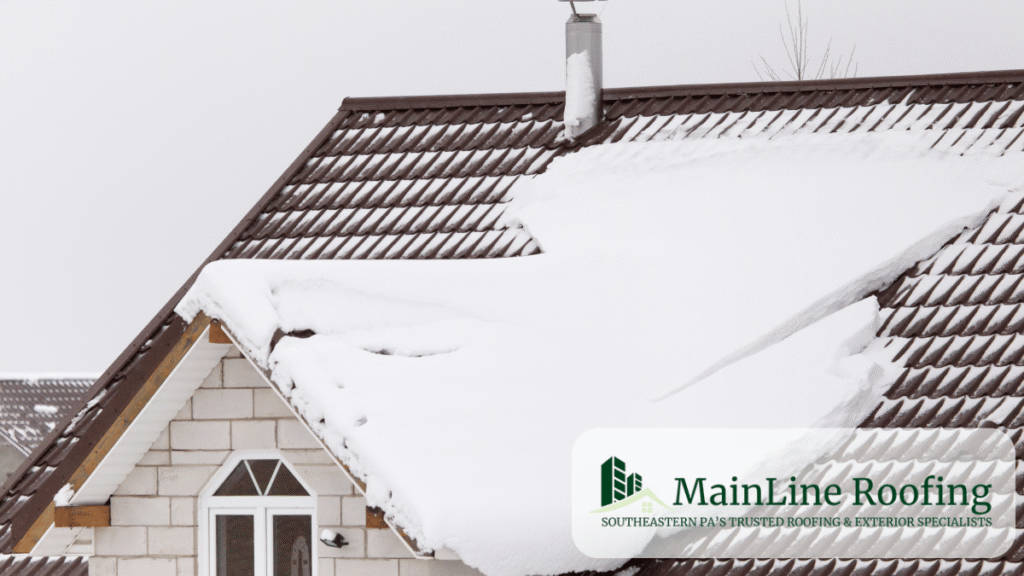
After a heavy snowstorm, a lot of homeowners in the Philadelphia area start wondering the same thing: how much is too much? At what point does the snow on the roof become a problem?
It is a fair question. Pennsylvania winters can drop a foot or more of snow at a time, and wet snow is much heavier than the fluffy kind. This guide gives you the real numbers, explains what affects your roof’s capacity, and tells you what to watch for so you know when to act.
The Short Answer: About 20 Inches of Fresh Snow
Most residential roofs in the United States are engineered to handle a minimum of 20 pounds per square foot of snow load. That translates to roughly 20 inches of fresh, light snow before you start approaching that limit.
But that number changes fast depending on the type of snow. Wet, heavy snow can weigh three to five times more than dry powder. And if you have multiple layers of snow and ice built up from several storms without any melt in between, the load adds up quickly.
General rule of thumb: 10 to 12 inches of wet, heavy snow or 18 to 24 inches of dry, light snow approaches the safe load limit for most standard residential roofs. Ice adds significantly more weight per inch than either type of snow.
How Much Does Snow Actually Weigh?
This is where most homeowners are surprised. Not all snow is the same weight.
| Snow Type | Weight per Cubic Foot | Pounds per Square Foot at 12 inches deep |
|---|---|---|
| Fresh dry powder | 3 to 5 lbs | 3 to 5 lbs/sq ft |
| Typical mixed snow | 7 to 12 lbs | 7 to 12 lbs/sq ft |
| Wet, heavy snow | 12 to 20 lbs | 12 to 20 lbs/sq ft |
| Packed snow | 20 to 40 lbs | 20 to 40 lbs/sq ft |
| Ice | 57 lbs | 57 lbs/sq ft at 12 inches |
A standard residential roof is designed to handle around 20 pounds per square foot of snow load, though many are built to handle more depending on local building codes and when the home was constructed. In Pennsylvania, building codes account for regional snow load expectations, so most newer homes are rated accordingly.
The problem is accumulated load. One storm drops 10 inches of wet snow. It partially melts and refreezes into ice. Another storm drops 8 more inches on top. Now you have layered weight that can exceed what a roof is designed to handle, even if no single storm looked alarming on its own.
What Affects How Much Snow Your Roof Can Hold?
The 20 pounds per square foot figure is a baseline for a structurally sound roof in good condition. Several factors push that number up or down.
Roof Pitch
Steeper roofs shed snow more easily and accumulate less total load. A 12/12 pitch sheds snow quickly. A 3/12 pitch holds snow much longer. Flat and low-slope roofs accumulate the most load because snow has nowhere to slide.
Most homes on the Main Line have moderate to steep pitches that help with shedding. Porch roofs, garage roofs, and rear additions with low slopes are more vulnerable after a heavy storm.
Roof Age and Structural Condition
An older roof with deteriorated decking, weakened rafters, or prior moisture damage cannot hold the same load as a structurally sound roof. Water damage and rot reduce the structural capacity of the framing over time. A roof that looks fine from the outside may have compromised framing underneath.
Roof Shape and Configuration
Snow does not accumulate evenly on complex rooflines. It drifts and piles in valleys, against dormers, and at wall transitions. A home with multiple roof levels, dormers, or additions can develop localized overloading in specific areas even when the overall load seems manageable.
Attic Insulation and Heat Loss
A poorly insulated attic lets heat escape through the roof, which melts the bottom layer of snow. That meltwater runs to the cold eaves and refreezes as ice. This is how ice dams form. The ice itself adds significant weight and also backs water under shingles. A well-insulated attic keeps the roof cold uniformly, which means snow slides off rather than melting and refreezing.
Existing Damage or Deferred Maintenance
A roof that already has soft decking, damaged rafters, or rot from prior leaks is not operating at its designed capacity. Heavy snow accelerates failures that were already waiting to happen. This is why a pre-winter inspection matters on older homes.
Concerned About Snow Load or Ice Dams?
Mainline Roofing Pros inspects roofs across the Main Line, Delco, Montco, and Chester County. We will tell you straight what condition your roof is in before winter becomes a problem.
Warning Signs Your Roof Is Under Too Much Load
You do not need to get on the roof to spot trouble. These are the signs to watch for from inside and outside the house.
Inside the House
- Creaking or cracking sounds from the ceiling or attic
- Interior doors that suddenly stick or will not close properly
- Cracks appearing in drywall or plaster, especially near the ceiling
- A ceiling that visibly bows or sags downward
- Popping or snapping sounds from the roof structure
Outside the House
- Visible roof sagging or a roofline that looks uneven
- Large icicles forming along the eaves (sign of ice damming)
- Water staining on exterior walls below the roofline
- Gutters pulling away from the fascia under ice weight
If you hear loud cracking or see a sagging ceiling, get everyone out of the affected area immediately and call a structural professional. These are signs of potential imminent failure, not a situation to monitor and wait on.
Ice Dams: The Hidden Weight Problem
In Pennsylvania, ice dams are often a bigger concern than raw snow accumulation. Here is how they form and why they add dangerous weight.
- Heat escapes from the living space into the attic
- That heat warms the roof deck and melts the snow above it
- Meltwater runs down to the cold eaves and overhang
- It refreezes at the cold edge, forming a ridge of ice
- Subsequent meltwater backs up behind that ice ridge
- Standing water on the roof forces its way under shingles
- The ice dam itself can weigh hundreds of pounds along a single eave
Ice dams cause two problems at once. They add concentrated structural load at the roof edge where rafters have less support. And they allow water infiltration that damages insulation, drywall, and framing from the inside.
The long-term fix for ice dams is better attic insulation and ventilation, not removing snow every winter. A properly ventilated attic keeps the roof surface uniformly cold so snow does not selectively melt.
How to Safely Remove Snow From a Roof
If snow accumulation is reaching concerning levels, here is the right way to approach it.
Use a Roof Rake From the Ground
A roof rake is a long-handled tool specifically designed to pull snow off a roof from the ground. You do not need to climb a ladder. Most roof rakes extend 16 to 21 feet, enough to reach the lower portion of most residential roofs.
Focus on the lower 3 to 4 feet of the roof near the eaves, which is where ice dams form and where the structural load is most concentrated. You do not need to remove every inch of snow from the entire roof.
What to Avoid
- Do not climb onto a snow-covered or icy roof — the fall risk is serious
- Do not use a standard shovel or metal tools that can damage shingles
- Do not chip at ice dams with an ice pick or chisel — you will damage the roofing
- Do not use rock salt or calcium chloride directly on shingles — it accelerates shingle deterioration
- Do not try to remove ice dams yourself if they are extensive — call a professional
Ice Dam Removal
If an ice dam has already formed, the safest approach is to call a roofing professional. Steam removal is the industry-preferred method — it melts the ice without damaging shingles, underlayment, or gutters. Mechanical chipping by an inexperienced person almost always causes shingle damage and sometimes punctures the underlayment.
In an emergency, calcium chloride-filled pantyhose or mesh tubes laid across the ice dam perpendicular to the eave will create channels for meltwater to escape. This is a temporary measure, not a solution.
Pennsylvania Snow Load Standards
Pennsylvania follows the International Building Code snow load requirements, which vary by region. In the Philadelphia suburbs, the ground snow load is generally in the 20 to 25 pounds per square foot range, meaning roofs in this area are designed with that baseline in mind.
Most homes built in Delaware County, Montgomery County, Chester County, and the Main Line after the 1980s are engineered to handle these regional loads. Older homes, especially pre-1960s construction, may have been built before modern load calculations were standard and may have less capacity.
The key phrase is “structurally sound.” Code minimum capacity assumes the roof framing is in good condition. A roof with rot, previous damage, or deferred maintenance does not perform to its original design specifications.
Roof Types and Their Snow Load Vulnerability
| Roof Type | Snow Shedding | Ice Dam Risk | Notes |
|---|---|---|---|
| Steep gable (8/12 or higher) | Good | Low to moderate | Snow slides off quickly; common on older Main Line homes |
| Moderate pitch Colonial (5/12 to 7/12) | Moderate | Moderate | Most common residential roof in the area |
| Low-slope Cape Cod or shed dormer | Poor | High | Snow sits; ice dams common without good insulation |
| Flat porch or garage roof | None | Very high | Accumulates full load; needs monitoring after heavy storms |
| Hip roof | Good on all sides | Low | Even shedding; fewer vulnerable transition points |
When to Call a Roofer After a Storm
Most roofs in good condition handle normal Pennsylvania winters without issue. But there are situations where a post-storm inspection is worth scheduling.
- You notice any of the interior warning signs listed above after a heavy storm
- You have a flat or low-slope section that accumulated significant snow or ice
- Your home is older and you are not sure about the structural condition of the framing
- You had a leak last winter that was never properly addressed
- Ice dams formed this season and you want to understand why
- You have dormers or complex roofline transitions where snow tends to pile up
- You are seeing gutters pulling away or separating under ice weight
A post-storm inspection is not just about the snow that just fell. It is an opportunity to find out if the storm revealed a weakness that was already there. Shingles that lifted, flashing that pulled away, and valleys that took on water are all easier to identify right after a storm than in dry conditions months later.
FAQs About Snow Load and Roofs
How many inches of snow can a roof hold?
Most residential roofs are designed to hold at least 20 pounds per square foot of snow load. That translates to roughly 20 inches of fresh dry snow, 10 to 12 inches of wet heavy snow, or significantly less if ice is involved. The actual limit depends on your roof’s pitch, age, structural condition, and whether loads have accumulated from multiple storms.
How much does snow weigh on a roof?
It depends entirely on the type of snow. Fresh dry powder weighs about 3 to 5 pounds per cubic foot, meaning 12 inches of it adds 3 to 5 pounds per square foot of load. Wet, heavy snow can weigh 12 to 20 pounds per cubic foot, so 12 inches of wet snow adds 12 to 20 pounds per square foot. Ice weighs about 57 pounds per cubic foot, making even a few inches of ice significantly heavier than any amount of snow.
Should I remove snow from my roof after a storm?
For most well-maintained homes with adequate pitch, you do not need to remove snow after a typical storm. Snow removal becomes worth considering when accumulations exceed 12 inches of heavy wet snow, when multiple storms have built up layers without significant melt between them, or when you have flat or low-slope sections that cannot shed load naturally. Use a roof rake from the ground — never climb onto a snow-covered roof.
What causes ice dams and are they dangerous?
Ice dams form when heat escaping from the living space melts snow on the roof, the meltwater runs to the cold eaves, and refreezes. The resulting ice ridge traps subsequent meltwater and backs it up under shingles. Ice dams are dangerous for two reasons: they add significant concentrated weight at the roof edge, and they allow water infiltration that damages insulation, framing, and interior finishes. The permanent solution is improving attic insulation and ventilation.
Can a roof collapse from snow in Pennsylvania?
It is rare on well-maintained homes but it does happen, most often on older structures, buildings with deferred maintenance, flat-roofed commercial or agricultural buildings, or roofs already weakened by rot or prior damage. The warning signs are creaking sounds, sticking doors, cracking drywall, and visible ceiling sag. If you notice any of these during or after a heavy snow event, take them seriously.
How do I know if my roof can handle heavy snow?
The best way to know is a professional inspection that evaluates the structural condition of your framing, decking, and rafters. A roofer who goes into the attic can spot rot, prior water damage, undersized framing, and other factors that reduce load capacity. If your home is older or has had leaks in the past, a pre-winter inspection is worth the cost.
Does roof pitch matter for snow load?
Yes, significantly. Steeper roofs shed snow quickly and accumulate far less total load than low-slope or flat roofs. A 10/12 pitch gable roof may shed most of a storm’s snowfall within hours. A flat porch roof or low-slope addition holds everything that lands on it until it melts or gets removed. Homes with multiple roof pitches, like a steep main roof and a low-slope addition, need attention paid specifically to the low-slope sections after heavy storms.
Is it safe to walk on a roof to remove snow?
No. Walking on a snow-covered or icy roof is one of the more dangerous things a homeowner can attempt. The combination of sloped surface, snow, and ice creates serious fall risk. Use a roof rake from the ground for the lower portion of the roof. For deep accumulation, heavy ice dams, or flat commercial roofs that need full clearing, hire a professional with the right equipment and safety gear.
More Helpful Roofing Guides from Mainline Roofing Pros
Serving homeowners across the Main Line, Delaware County, Montgomery County, and Chester County.
Bottom Line
Most residential roofs in the Philadelphia suburbs are built to handle normal Pennsylvania winters without issue. The real risks come from wet, heavy snow layering on top of partial ice from a previous storm, from flat or low-slope sections that cannot shed load, and from older roofs with structural damage that reduces their capacity below the original design.
Knowing the warning signs — cracking sounds, sticking doors, sagging ceilings — means you catch a problem before it becomes a failure. Keeping up with roof maintenance means your roof is operating at the capacity it was designed for, not something less.
If you had ice dams last winter, have a flat section that concerns you, or just have not had your roof looked at in a while, a pre-winter inspection is a straightforward and inexpensive way to go into the season with confidence.
Mainline Roofing Pros serves homeowners across the Main Line, Delaware County, Montgomery County, and Chester County. If you have questions about your roof’s condition heading into winter, reach out and we will take a look.
Worried About Snow Load or Ice Dams?
Mainline Roofing Pros inspects roofs across the Main Line, Delco, Montco, and Chester County. Get a straight answer on your roof’s condition before winter.

Founder & Owner of Main Line Roofing Pros. 22+ years of local roofing expertise serving Main Line, Delco, Montco & Chesco homeowners with honest, high-quality work.