
Single-Ply Membrane Roofing: TPO, EPDM & PVC Explained for Flat Roofs
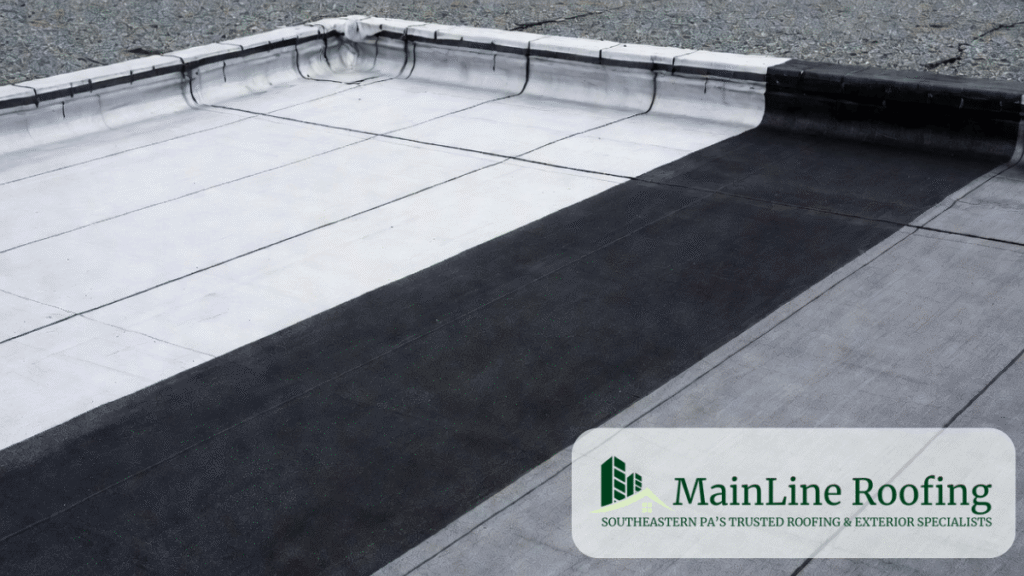
If you have a flat or low-slope roof, you have probably heard terms like TPO, EPDM, or PVC. Most of the time, what people are talking about is single-ply membrane roofing.
In this guide, I’ll walk you through what single-ply membrane roofing is, when it makes sense, and what I look for when helping someone choose or evaluate a flat roof system. The goal is simple: help you feel confident without burying you in roofing jargon.
Single-ply roofing is common on commercial buildings, apartment roofs, condo buildings, garages, porches, additions, and low-slope sections on homes throughout the Main Line. If your roof is too low for standard shingles, single-ply is usually part of the conversation.
Not Sure What Type of Flat Roof You Have?
Mainline Roofing Pros can inspect your roof, review the membrane, check drainage, and explain whether repair or replacement makes sense.
What Is Single-Ply Membrane Roofing?
Single-ply roofing is a single, flexible sheet of material that covers the roof deck and keeps water out. Instead of layers of hot tar and felt, you get one main membrane that does the waterproofing.
Most single-ply systems are one of three types: TPO, EPDM, or PVC.
TPO
A thermoplastic polyolefin membrane. It is often white or light gray, reflective, and common on commercial and residential flat roofs.
EPDM
A rubber-like membrane. It is often black, has a long track record, and is common on low-slope and flat roofs.
PVC
A polyvinyl chloride membrane. It is often white, heat-welded, and commonly used where chemical or grease resistance matters.
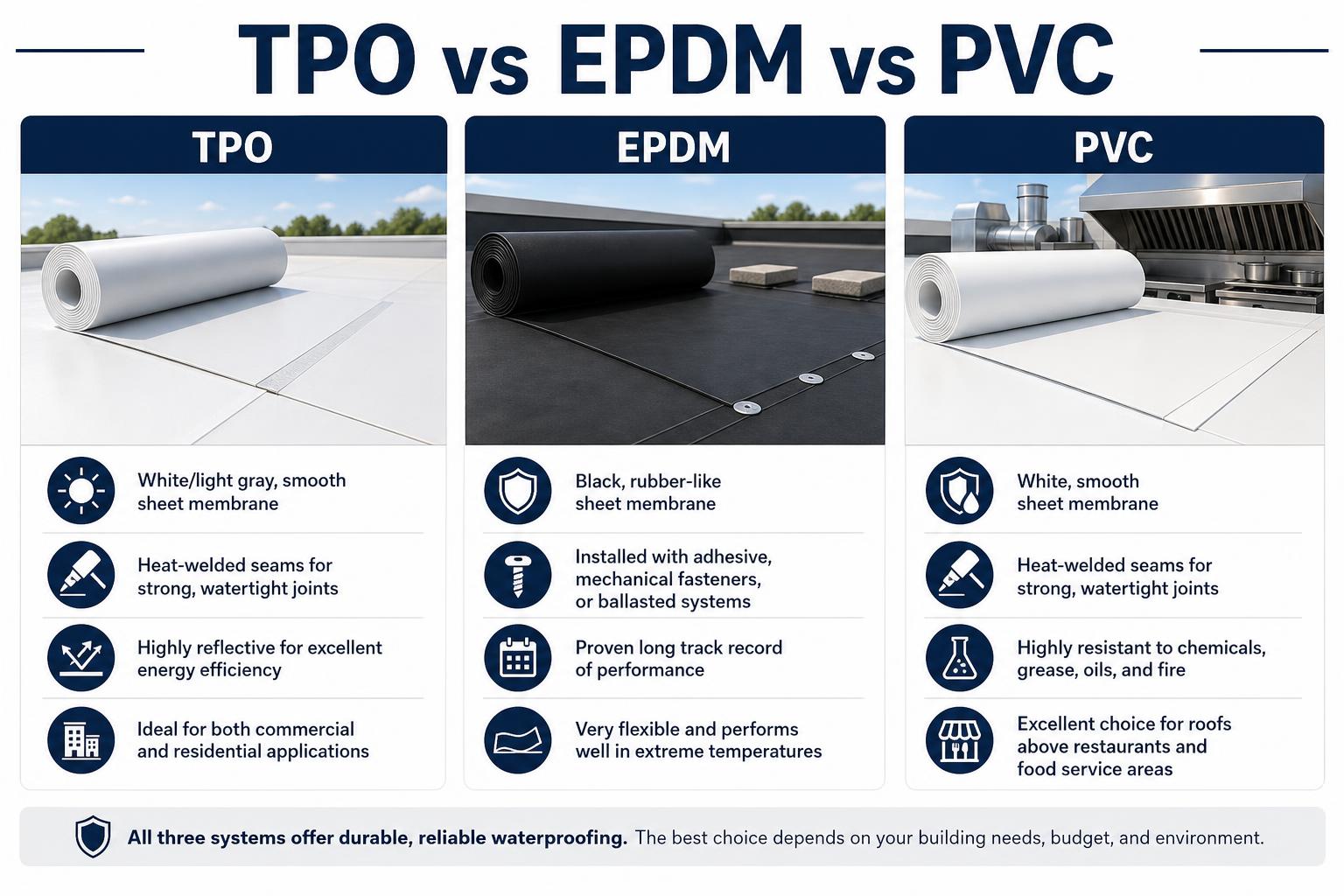
Each material has its own strengths and best uses, but they all follow the same basic idea: large sheets rolled out across the roof, seamed together, and attached to the deck.
If you are dealing with a roof that may be too flat for standard shingles, you may also want to read our guide on the different roof shapes and how they affect performance.
Why So Many Flat Roofs Use Single-Ply
Single-ply membranes give you wide, clean coverage with fewer seams than shingles or small rolls. Fewer seams can mean fewer places for water to sneak in, as long as the seams that do exist are done correctly.
Many TPO and PVC membranes are white or light colored. They reflect a lot of sunlight, which can keep the roof surface cooler and cut down on heat pushing into the building on hot days. That can help with comfort and energy costs.
These membranes are also lighter in weight than some older flat roof systems that use many layers of asphalt and felt. That can matter on older structures or roofs that were not designed to carry a lot of extra weight.
Important: A single-ply roof is only as good as the full system. The membrane matters, but so do the insulation, fasteners, seams, flashings, drains, edges, and installation details.
The Main Types: TPO, EPDM, and PVC
TPO Roofing
TPO is often white or light gray and looks like one smooth sheet. It is very common on both commercial and residential flat roofs. The seams are heat welded, which can create strong, uniform joints, and the reflective surface is one reason it has become popular.
EPDM Roofing
EPDM is usually black and feels like a thick rubber sheet. Sometimes it is white, but black is more common. It has a long track record on flat roofs. It often comes in large sheets, which can keep the number of seams down.
PVC Roofing
PVC is usually white and can look a lot like TPO from a distance. It also uses heat-welded seams and has good resistance to many chemicals and greases, which is why you often see it above restaurants or industrial spaces.
When I look at these systems, I am paying attention to the quality of the membrane, how the seams are made, and how edges, drains, and penetrations are detailed. The material name alone does not tell the whole story.
Flat Roof Leaking or Holding Water?
Start with a careful inspection before small membrane problems turn into insulation, deck, or interior damage.
How Single-Ply Roofs Are Attached
There are three main ways a single-ply membrane is attached: mechanically fastened, fully adhered, or ballasted.
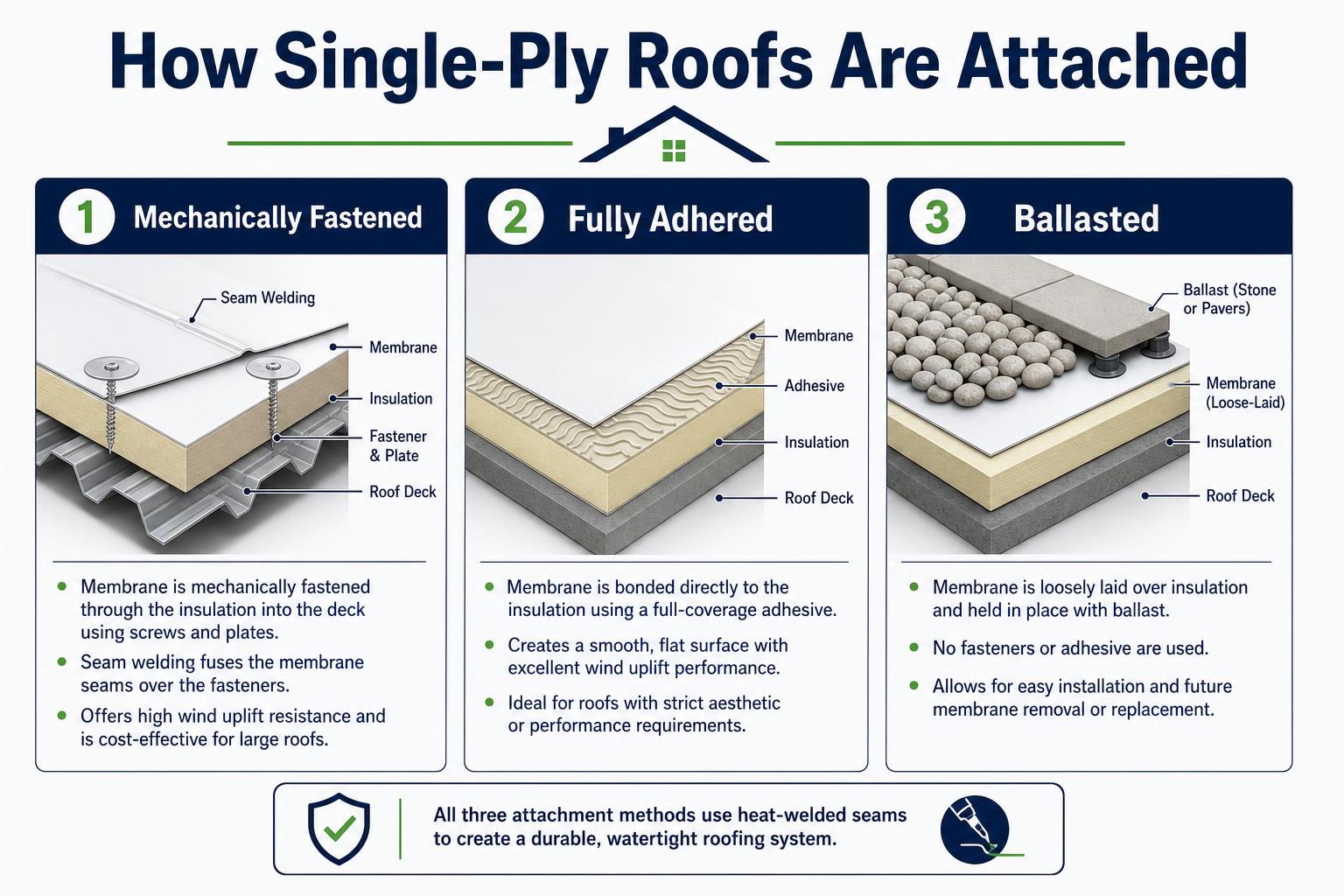
Mechanically Fastened
With a mechanically fastened system, the membrane is secured with screws and plates through the insulation and into the deck. The seams are then welded or adhered so the fasteners are covered.
Fully Adhered
With a fully adhered system, the membrane is glued directly to the insulation or deck with adhesive. This gives a smooth appearance and can provide strong resistance to wind uplift.
Ballasted
Ballasted systems are more common with EPDM. The membrane is laid loosely and held in place with stone or pavers. This can be fast to install in some settings, but the roof structure must be designed to handle the extra weight.
Common Weak Spots to Watch
No roof system is perfect, and single-ply has its own set of things I always check.
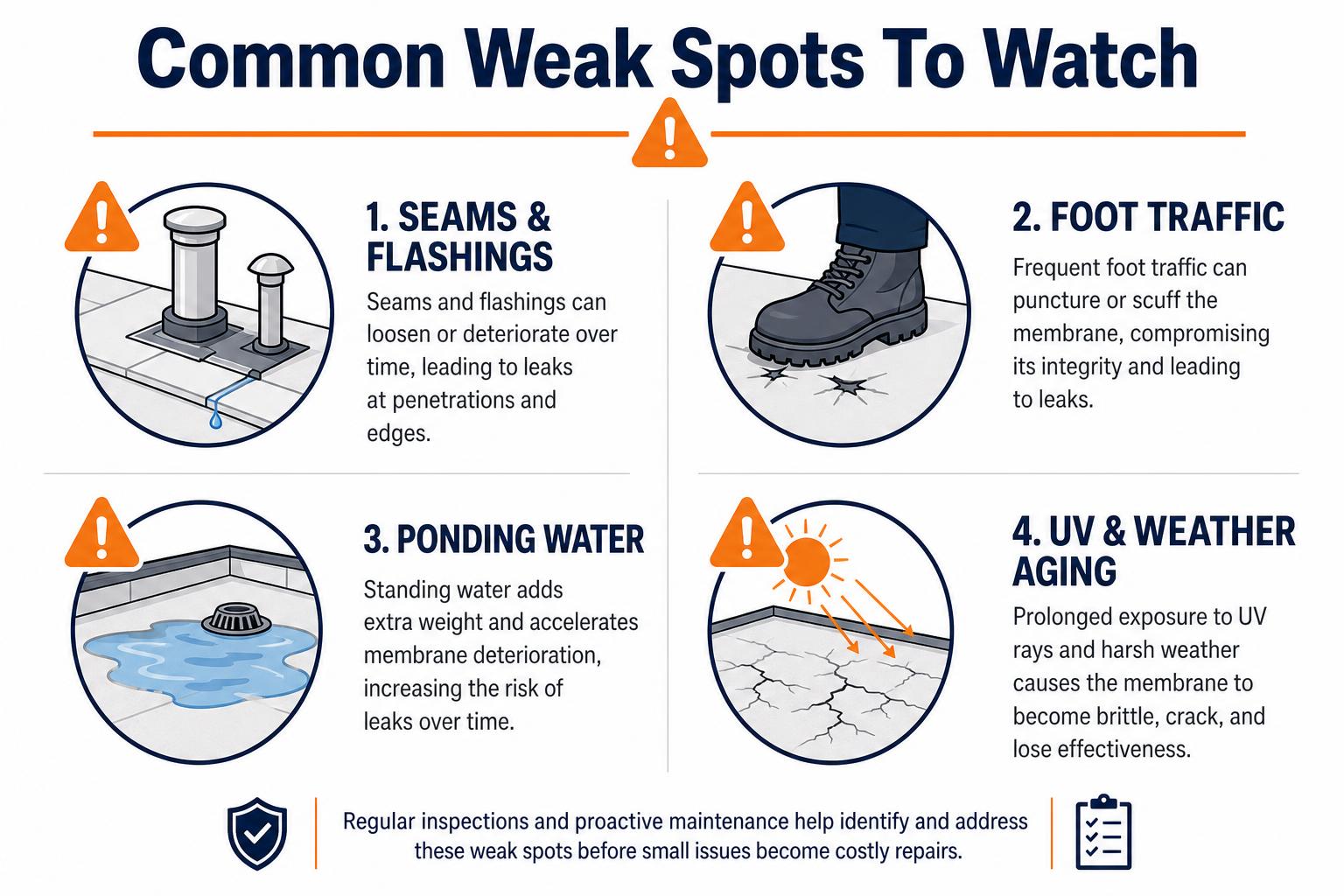
Seams and Flashings
Even when the big open areas of the roof look great, the small details around pipes, vents, walls, parapets, drains, and scuppers are often where leaks start.
Foot Traffic
Single-ply membranes can be punctured by dropped tools, sharp debris, or frequent walking in the same paths. On roofs where HVAC techs and maintenance crews are up there often, walk pads can make a big difference.
Ponding Water
Flat roofs should still have some slope so water can find a drain. If water sits in low spots for long periods, it can stress seams and shorten the life of the membrane.
UV and Weather Aging
Good products are built to handle sun and weather, but cheaper or poorly maintained systems can chalk, craze, or get brittle earlier than they should. Regular inspections help catch small issues before they become major failures.
If your roof keeps leaking in different areas, our guide on whether to repair or replace your roof can help you think through the bigger decision.
What I Check During a Single-Ply Roof Visit
When I am called to look at a flat or low-slope roof with a single-ply membrane, I start by asking about the age of the system. I want to know how long the membrane and insulation have been in place and whether we are seeing early failure or normal aging.
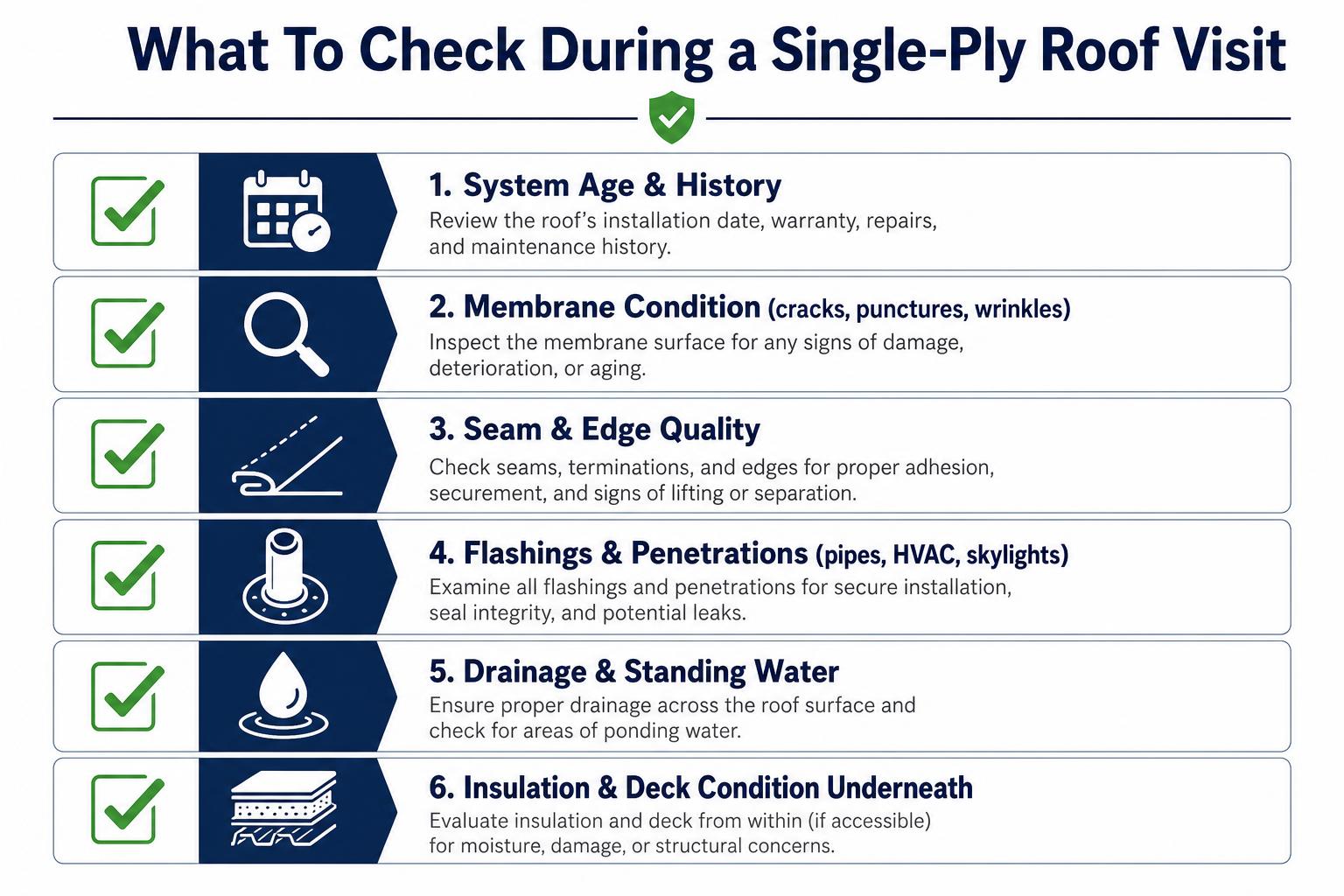
Then I look at the condition of the membrane itself. I check for cracks, splits, punctures, wrinkles, and signs of shrinkage or pulling at edges and corners.
I study the seams and edges to see if they are clean, tight, and properly welded or taped. I also check whether the terminations at walls and parapets are still secure.
Next, I walk the flashings and penetrations. That means every pipe, HVAC curb, skylight, drain, scupper, and other opening. If I see a lot of small patch jobs around those areas, it usually means there have been repeated leaks.
I also pay close attention to drainage. I look for standing water, blocked drains, and low spots that hold water longer than they should.
Once I have that picture, we can talk about whether repair is enough or whether it is time to start planning for replacement, just like we would with a pitched roof.
When Single-Ply Is a Good Fit
Single-ply is often a smart choice when the roof is flat or very low slope, you want a clean and low-profile look, and a reflective surface would help keep the building cooler.
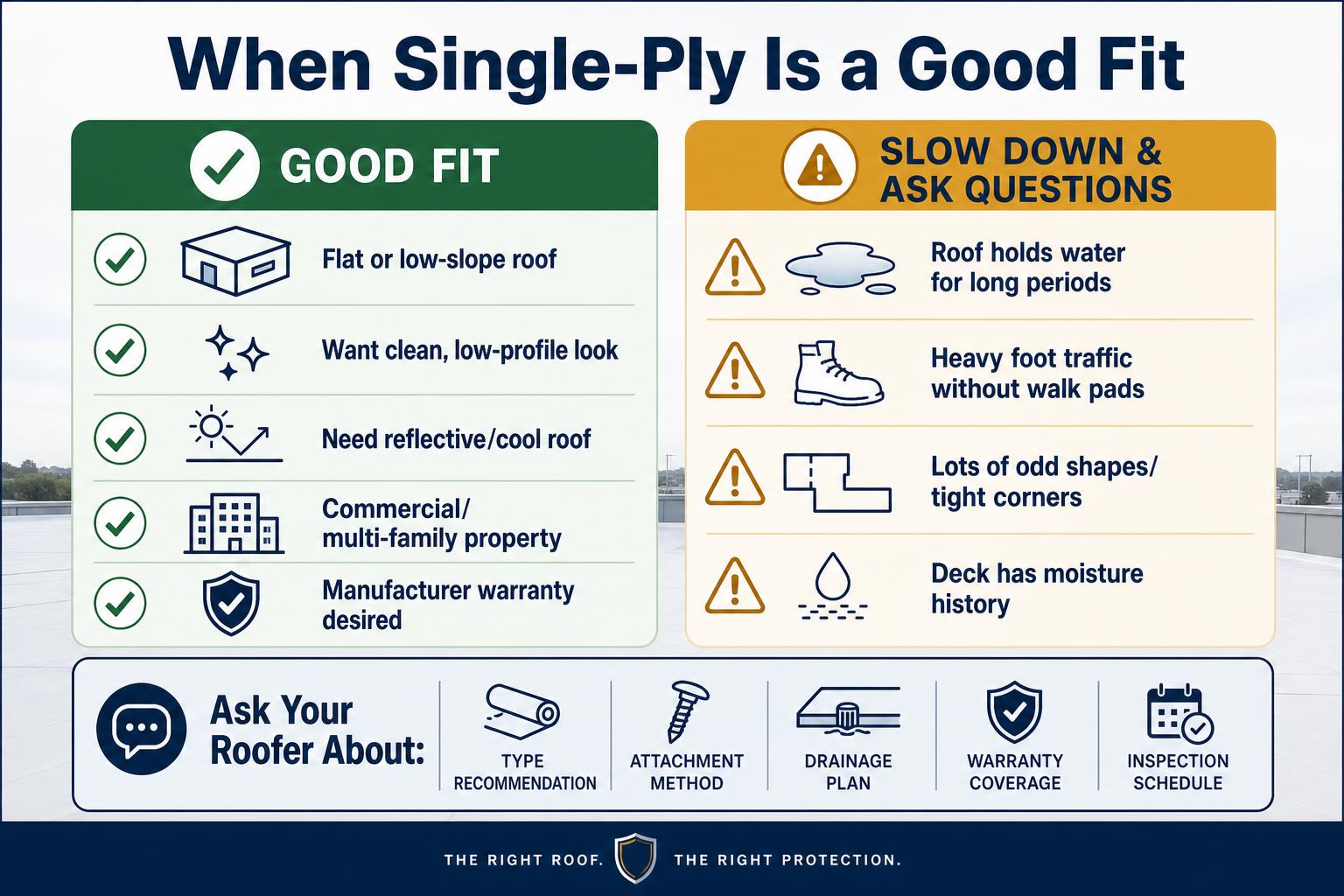
It can also be a good option when you want a system that comes with a manufacturer warranty, as long as the installation follows the specifications.
Single-ply systems work well on many commercial buildings, multi-family properties, garages, porches, and home additions. With a good drainage design, careful installation, and regular checkups, they can deliver many years of service.
When to Slow Down and Ask More Questions
I get more cautious when a roof holds water for long periods, when there is heavy foot traffic and no walk pads, when the building has lots of odd shapes and tight corners, or when the deck and insulation have a history of moisture issues.
In those cases, the design and small details matter even more than usual. Rushing the job is what leads to trouble later.
If you are thinking about a single-ply roof, ask your roofer:
- Which type of membrane do you recommend and why?
- How will it be attached?
- How will drains, scuppers, and edges be handled?
- What does the slope and drainage plan look like?
- What does the warranty cover, and what does it not cover?
- How often should the roof be inspected?
Good, clear answers to those questions matter more than any brand name.
Need a Flat Roof Estimate?
Use our estimate form to start the conversation. We can help with single-ply repair, inspection, and replacement planning.
Local Flat Roof Help Across the Main Line
Flat and low-slope roofs show up on homes and buildings across the area. We commonly see membrane roof sections on porches, additions, garages, commercial buildings, mixed-use properties, and multi-family buildings.
Mainline Roofing Pros helps property owners in Radnor, Wayne, Bryn Mawr, and Haverford inspect, repair, and replace flat and low-slope roofing systems.
If you are planning ahead, our guide on the best time for roof replacement can help you choose the right season. You can also use our instant roofing estimate calculator to get a starting point before scheduling an inspection.
Bringing It All Together
Single-ply membrane roofing is one of the main tools we use to protect flat and low-slope roofs. It is not magic, and it is not something to be afraid of. When it is designed well, installed with care, and checked over time, it can be a reliable, long-lasting system.
When it is rushed, installed with poor details, or ignored after the job is done, it will cause headaches.
If you have a flat or low-slope roof and you are not sure what type of system you have or how healthy it is, the best next step is a careful inspection and an honest conversation. From there, you can decide whether repair, upgrade, or full replacement makes the most sense for your roof and your plans for the building.
Helpful Roofing Resources
Use these related guides and local roofing pages to plan your next step.
Need Help With a Flat or Low-Slope Roof?
Mainline Roofing Pros can inspect your membrane roof, identify weak spots, review drainage, and explain your repair or replacement options clearly.
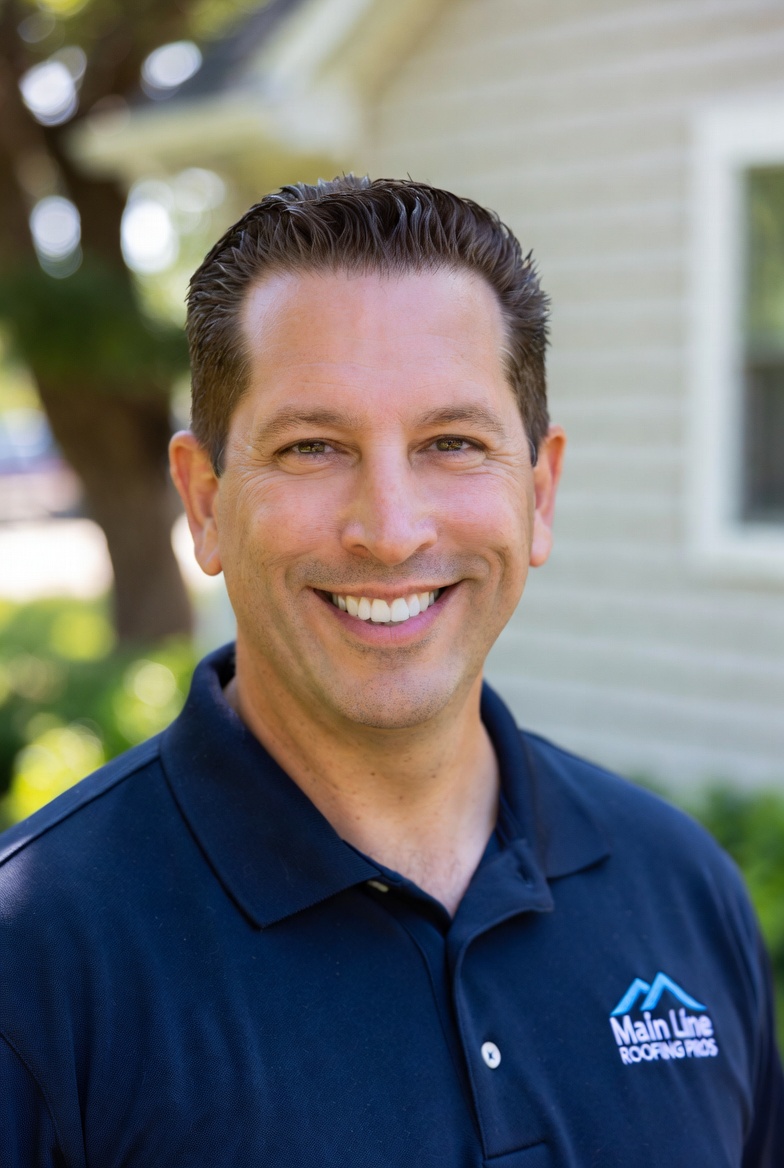
Founder & Owner of Main Line Roofing Pros. 22+ years of local roofing expertise serving Main Line, Delco, Montco & Chesco homeowners with honest, high-quality work.