
Weathered Wood Shingles: Which Brand Looks Best on Main Line Homes?
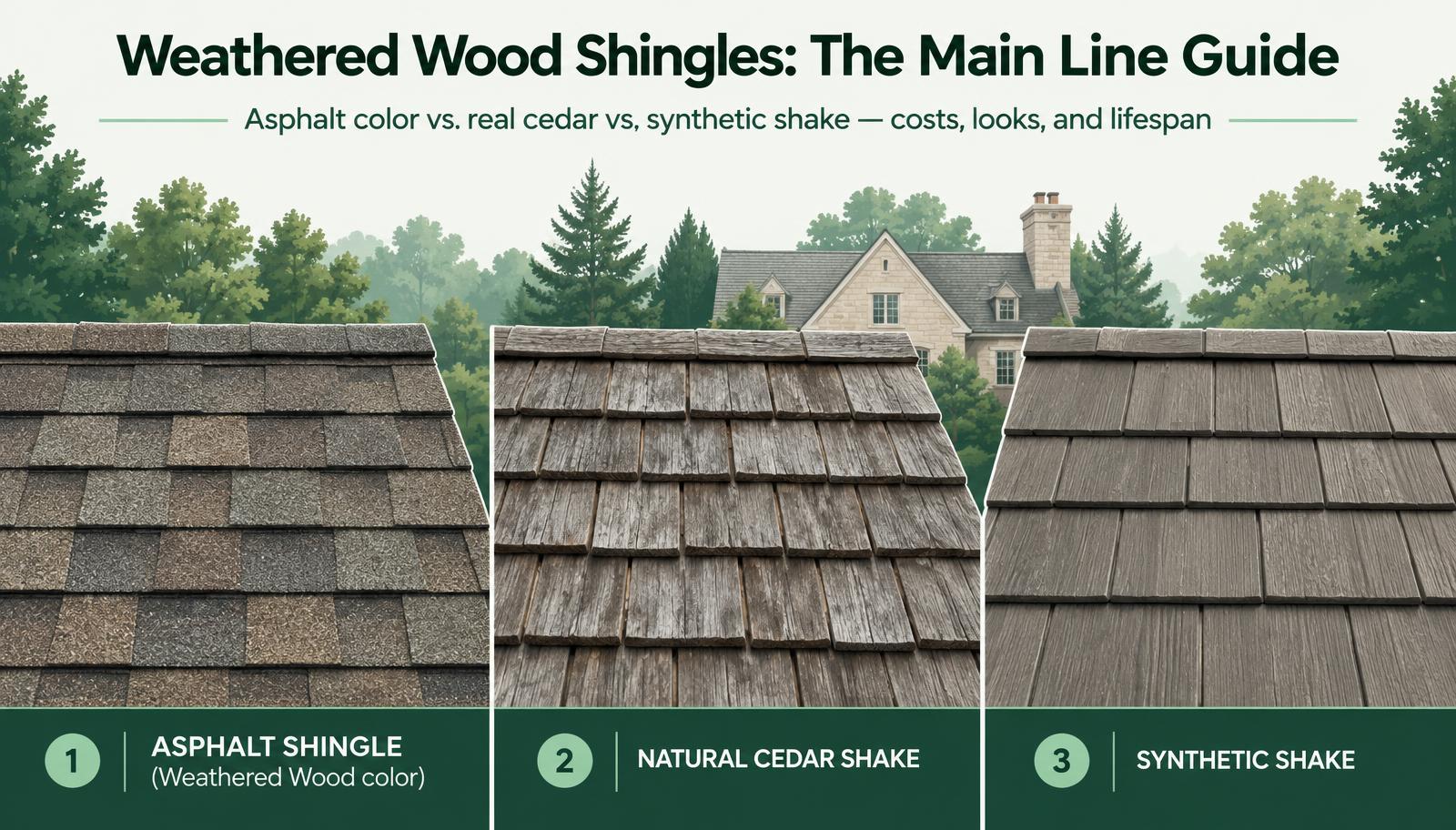
When homeowners on the Main Line ask about weathered wood shingles, they usually mean one of two things: either a specific asphalt shingle color designed to look like aged cedar, or actual cedar shake roofing that has naturally taken on that silver-gray weathered appearance over time. Both are common throughout Bryn Mawr, Villanova, Gladwyne, and across the Philadelphia suburbs.
Both have distinct looks, different maintenance requirements, and different long-term costs. This guide covers everything you need to make an informed decision — whether you are choosing a shingle color, planning a full roof replacement, or dealing with an aging cedar roof that has seen better days.
What Are Weathered Wood Shingles?
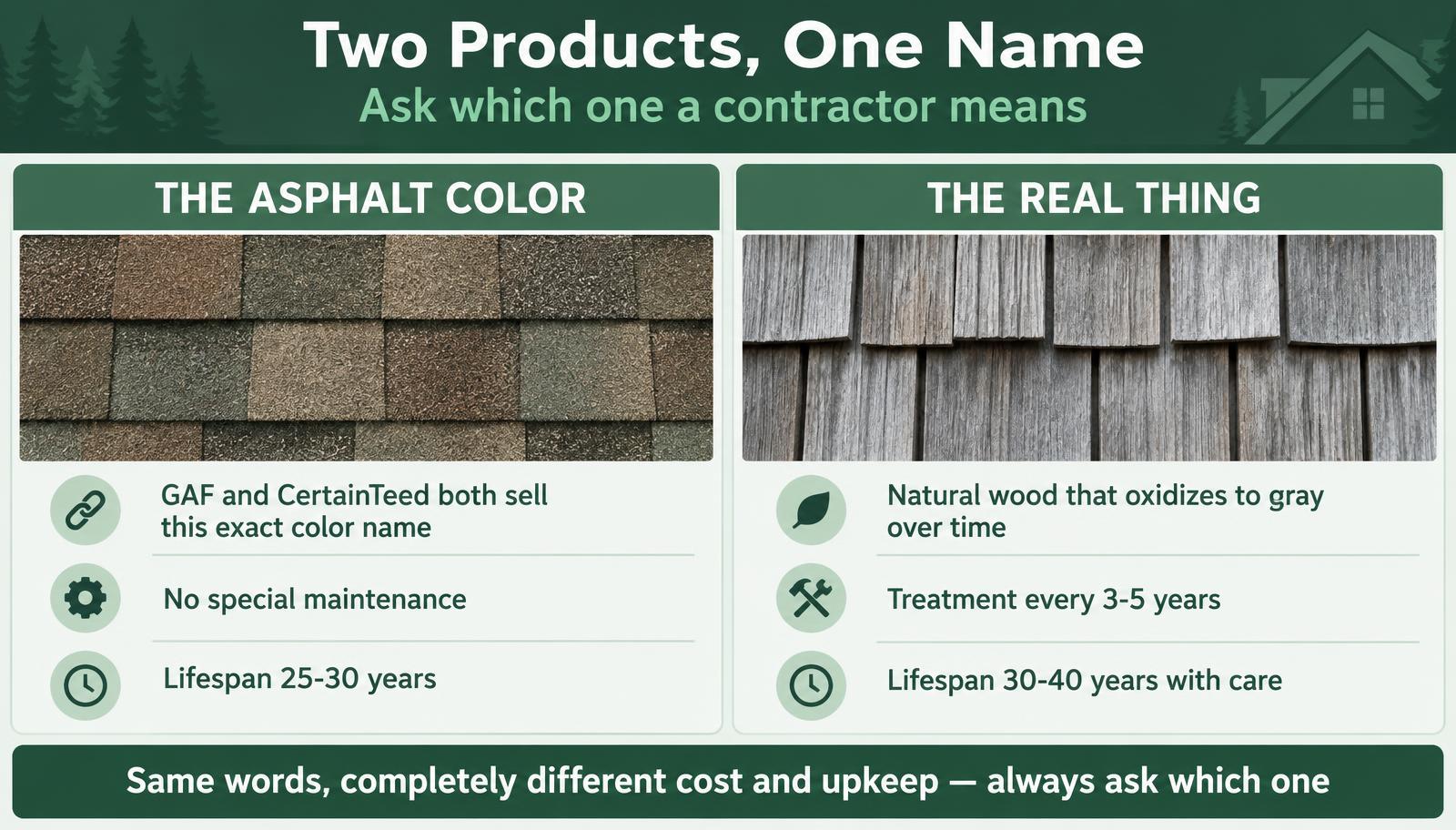
The term covers two genuinely different products, and the distinction matters when you are talking to a contractor or shopping for materials.
Weathered Wood as an Asphalt Shingle Color
The most common use of the term today refers to a specific color option offered by the two largest asphalt shingle manufacturers in North America: GAF and CertainTeed. Both offer a color in their flagship architectural shingle lines called “Weathered Wood,” and it is consistently one of their top-selling choices.
GAF offers Weathered Wood in their Timberline HD and Timberline HDZ lines. CertainTeed offers it in their Landmark series. Both use the same visual concept: a blend of warm brown, gray-green, and tan tones layered across a dimensional laminate shingle to mimic the look of naturally aged cedar shake.
What makes it work on so many houses is the neutrality of the color palette. It does not read as purely brown, purely gray, or purely green — it picks up undertones from whatever surrounds it, and tends to complement rather than clash. That versatility is a large part of why it has stayed popular across different architectural styles for years.
Naturally Weathered Cedar Shingles
The second meaning refers to real wood shingles or shakes that have been exposed to the elements long enough to develop a natural silver-gray or driftwood patina. Fresh cedar is a warm reddish-tan. Left untreated and exposed to UV light, rain, and temperature cycling, it gradually oxidizes and bleaches to that characteristic weathered gray.
Many older Main Line homes have cedar shake roofs that are either in this weathered state or were installed specifically for the desired look. Some homeowners seek out pre-weathered or factory-treated cedar that arrives already carrying the aged appearance, skipping the years it takes for natural weathering to occur.
Quick distinction: If a roofing salesperson or contractor says “weathered wood shingles,” ask whether they mean the asphalt color or actual cedar. The installation, cost, maintenance, and lifespan are completely different products.
GAF Timberline Weathered Wood vs CertainTeed Landmark Weathered Wood
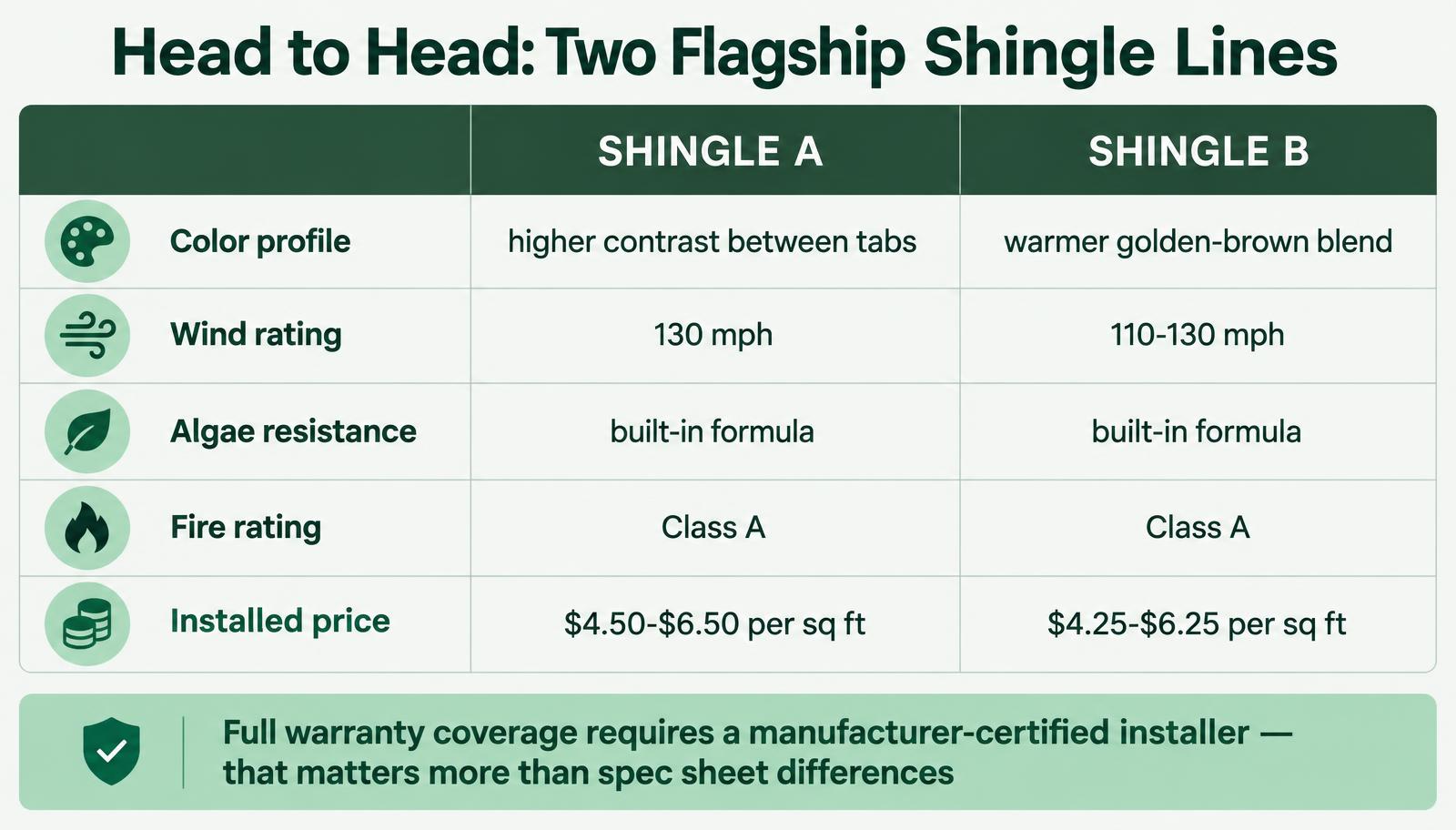
If you are going the asphalt route, these two products represent the lion’s share of what gets installed in the Philadelphia area. Here is how they compare.
| Feature | GAF Timberline HDZ Weathered Wood | CertainTeed Landmark Weathered Wood |
|---|---|---|
| Color profile | Warm brown-gray blend, slightly more contrast between tabs | Warmer, slightly more golden-brown undertones, softer blend |
| Warranty | Limited Lifetime (prorated after 10 years) | Limited Lifetime (prorated after 10 years) |
| Wind rating | 130 mph (HDZ) | 110 mph (Landmark), 130 mph (Landmark Pro) |
| Algae resistance | Yes — StainGuard Plus technology | Yes — StreakFighter technology |
| Fire rating | Class A | Class A |
| Price range (installed) | $4.50–$6.50 per sq ft | $4.25–$6.25 per sq ft |
In practice, both products perform very similarly on a residential roof in Pennsylvania. The choice often comes down to which manufacturer your roofer is certified with — full warranty coverage including the labor component requires installation by a manufacturer-certified contractor. A GAF Master Elite contractor can offer the enhanced System Plus warranty. A CertainTeed ShingleMaster contractor can offer the SureStart Plus warranty. That certification matters more than minor color or feature differences between the two.
Comparing Shingle Colors for Your Roof?
Mainline Roofing Pros works with both GAF and CertainTeed products and can bring weathered wood color samples to your home before you commit.
What Does Weathered Wood Look Like on a House?
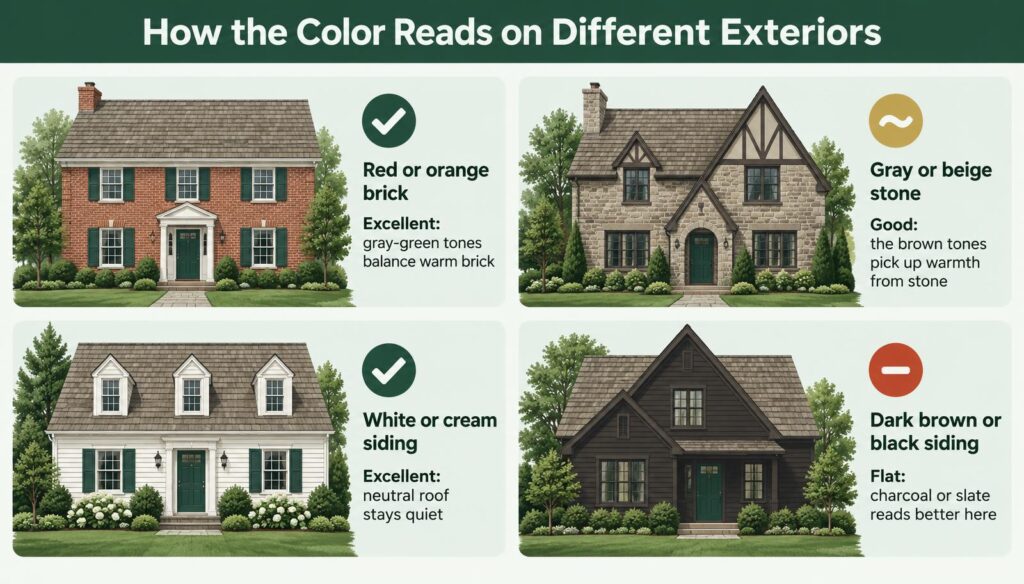
The weathered wood color reads differently depending on what it sits next to.
- Against red or orange brick: The gray-green tones in weathered wood balance warm brick beautifully. It is one of the best color pairings for the older Colonial and Tudor homes common in Ardmore, Bala Cynwyd, and Merion Station.
- Against gray or beige stone: Weathered wood picks up warmth from the brown tones in the shingle. It softens stone rather than competing with it.
- Against white or cream siding: Works well on Colonials and Cape Cods. The neutral color keeps the roof from dominating the exterior.
- Against dark brown or black siding: Can look slightly flat. Charcoal or slate shingle colors often work better against very dark siding.
The dimensional laminate construction of both GAF and CertainTeed weathered wood shingles creates shadow lines across the roof surface, adding visual depth and more closely resembling the layered look of real cedar shake compared to older three-tab shingles. From street level on a two-story Colonial, the difference between weathered wood asphalt and actual cedar can be surprisingly subtle.
Natural Cedar Shake: When You Want the Real Thing
For homeowners who want genuine weathered wood character rather than an asphalt approximation, natural cedar shake is still available and still gets installed on Main Line homes. It requires more investment, more maintenance, and more knowledgeable installation — but the look is genuinely different from anything asphalt produces.
What Makes Cedar Distinctive
- Natural variation in texture, grain, and color that no manufactured shingle replicates
- Dimensional depth that creates real shadows, not printed or embossed ones
- The genuine weathering process produces a patina that evolves over years
- Well-suited to the architectural scale of larger stone and brick Main Line homes
- When properly maintained, can last 30 to 40 years
Cedar Maintenance Requirements
Natural cedar requires more than asphalt. This is the honest trade-off — it is not a set-it-and-forget-it material.
- Treatment every 3 to 5 years: Cedar needs cleaning and application of a preservative or water repellent to prevent rot, mold, and accelerated splitting. Untreated cedar in a shaded or wet environment degrades noticeably faster.
- Moss and algae removal: The Main Line’s tree canopy means cedar roofs accumulate organic debris and moisture. Moss and algae accelerate deterioration and should be treated promptly.
- Individual shingle replacement: Cracked, split, or missing shakes need prompt replacement to prevent water from getting into the deck below. Unlike asphalt, you can replace individual cedar shingles cleanly without disturbing the whole roof.
- Ventilation: Cedar performs best with proper attic ventilation. Poor airflow traps moisture against the underside of the shingles and accelerates rot from below.
DaVinci Synthetic Shake: The Middle Ground
A third option worth discussing is synthetic shake — specifically DaVinci Roofscapes, which is what most Main Line roofers mean when they recommend a synthetic alternative to real cedar.
DaVinci synthetic shake is molded from real cedar shake samples, which gives it a level of dimensional realism that basic asphalt architectural shingles do not match. It ships in the weathered gray-brown color tones homeowners associate with aged cedar, and the color is built into the material rather than surface-applied, so it does not fade the same way coatings do.
The appeal for Main Line homeowners specifically:
- Looks like weathered cedar at street level from most approaches
- No preservative treatments required
- Resistant to rot, insects, and mold
- Class A fire rating (natural cedar without treatment is typically Class C)
- 50-year limited transferable warranty from DaVinci
- Heavier than asphalt but lighter than slate — most older framing handles it without modification
The trade-off is cost. DaVinci typically runs 30 to 50 percent more than a premium asphalt replacement. For a home where the weathered wood aesthetic genuinely matters — older stone properties, historic Colonials, homes in neighborhoods where curb appeal and property value are closely tied — that premium is often worth it.
What Works on Main Line Architecture
Not every roof color works on every house. Here is how weathered wood shingles tend to fit the most common roof types and architectural styles in the area.
| Home Style | Weathered Wood Asphalt | Natural or Synthetic Cedar | Notes |
|---|---|---|---|
| Brick Colonial | Excellent | Very good | Warm gray-green tones balance red brick well |
| Stone Tudor or Manor | Good | Excellent | Cedar scale suits the architectural weight of stone |
| Cape Cod | Excellent | Good | Classic pairing; weathered wood reads as traditional |
| White Colonial or Georgian | Good | Good | Both work; charcoal or slate also strong options |
| Craftsman or Bungalow | Very good | Excellent | Natural materials are authentic to the style |
| Contemporary or transitional | Fair | Fair | Charcoal or slate colors typically suit modern lines better |
Weathered Wood Shingles Cost: What to Expect in the Philadelphia Area
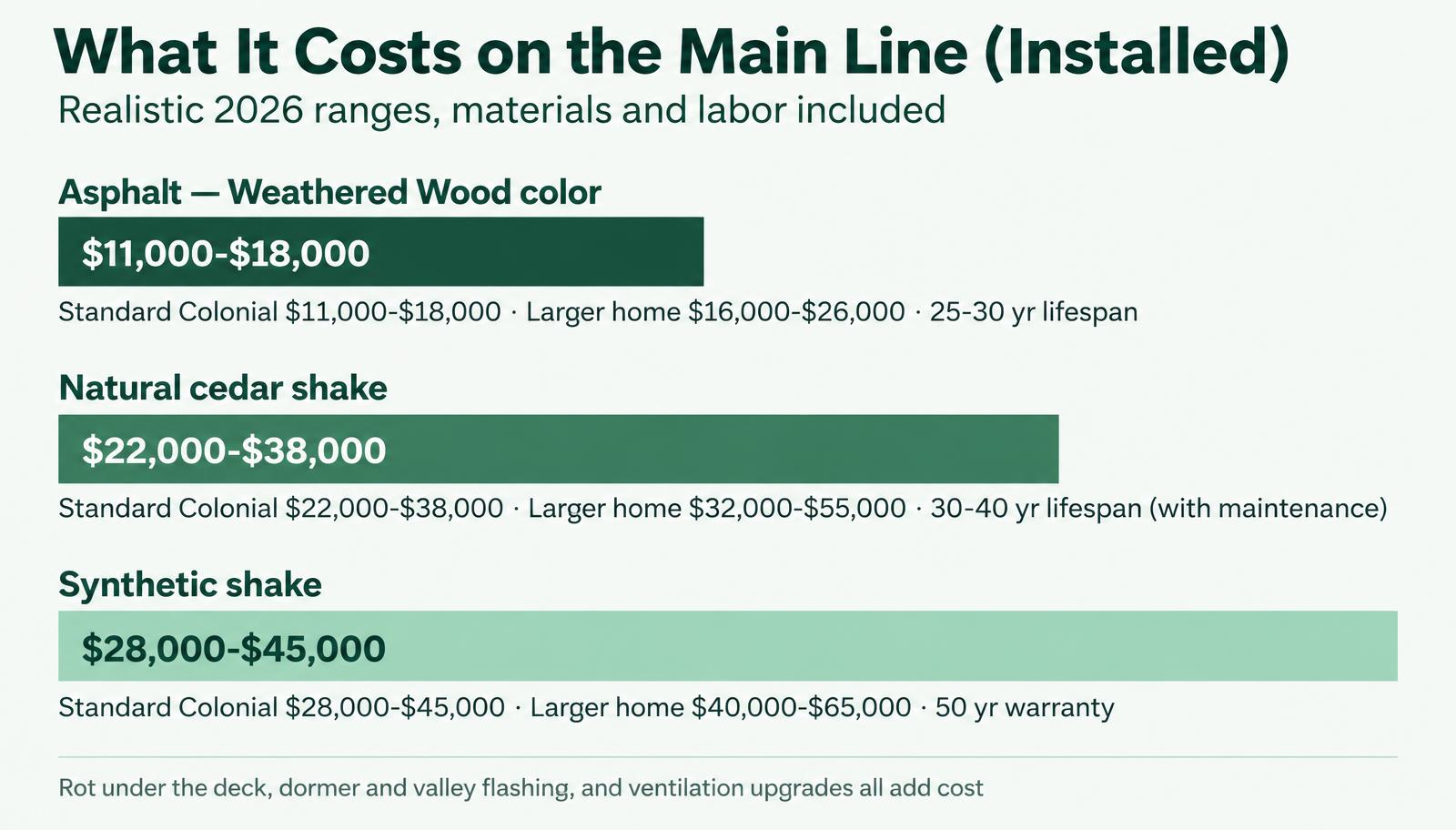
Costs vary by material, home size, and roof complexity. Here are realistic installed cost ranges for the Main Line and surrounding suburbs in 2026.
| Material | Standard Colonial (20–26 squares) | Larger Home (26–40 squares) | Lifespan |
|---|---|---|---|
| GAF / CertainTeed Weathered Wood asphalt | $11,000–$18,000 | $16,000–$26,000 | 25–30 years |
| Natural cedar shake | $22,000–$38,000 | $32,000–$55,000 | 30–40 years (with maintenance) |
| DaVinci synthetic shake | $28,000–$45,000 | $40,000–$65,000 | 50 years (warranty) |
These ranges include materials, labor, tear-off, standard flashing replacement, and disposal. Deck replacement if rot is found underneath, complex dormer or valley flashing, and ventilation upgrades all add cost. For a more precise starting point, our roofing cost calculator gives you a useful ballpark before anyone comes out to measure.
Algae and Moss: The Main Line Reality
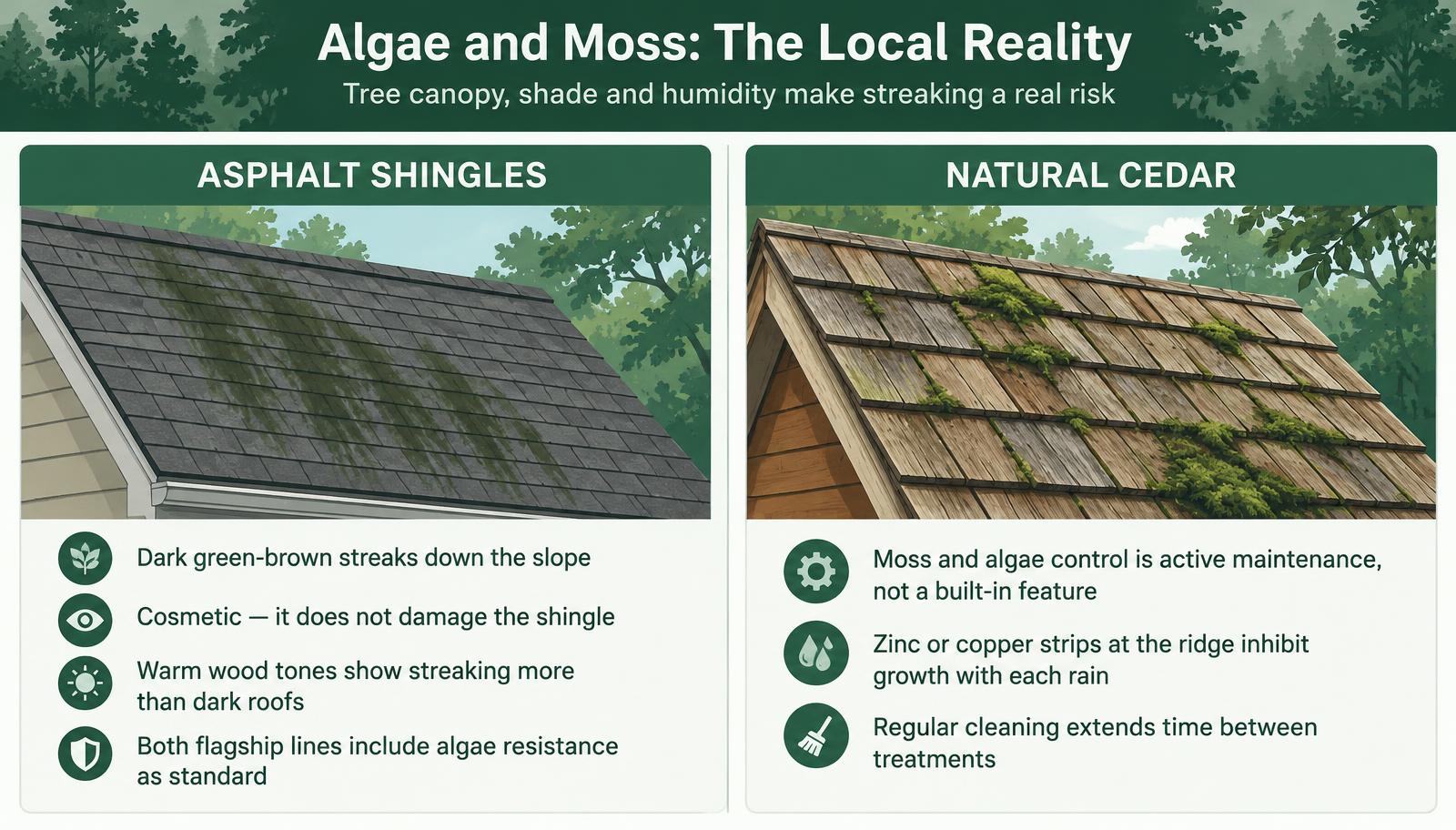
One thing that surprises homeowners who do not think about it until after installation: weathered wood shingles, with their warm brown and green tones, can show algae streaking more visibly than darker shingle colors on heavily wooded lots.
Algae staining on asphalt shingles looks like dark streaks — often black or green-brown — running down the roof. It does not damage the shingles structurally, but it changes the appearance, and on a roof chosen specifically for its warm wood tones, the contrast can be noticeable.
Both GAF Timberline HDZ and CertainTeed Landmark include algae-resistant technology in their standard products. On heavily shaded lots with significant tree cover — common throughout Haverford, Newtown Square, and Gladwyne — upgrading to the algae-resistant version is worth the modest additional cost.
For natural cedar, moss and algae control is an active maintenance task, not a built-in feature. Zinc or copper strips installed at the ridge release small amounts of metal ions with each rain event, naturally inhibiting moss and algae growth down the slope. Combined with regular cleaning and treatment, they extend the time between manual cleanings significantly.
Questions to Ask Your Roofer About Weathered Wood Shingles
- Are you a GAF Master Elite or CertainTeed ShingleMaster certified installer, and does the full system warranty apply?
- Can I see a physical color sample against my house exterior before committing?
- Does the algae-resistant version of this shingle cost more, and is it worth it given my tree coverage?
- If I am considering cedar, what is your maintenance recommendation and what does a typical treatment cost?
- If I am considering DaVinci, does my existing framing support the added weight?
- Are there neighborhood or HOA guidelines that affect my shingle color choice?
Ready to See Weathered Wood on Your Home?
Mainline Roofing Pros installs GAF, CertainTeed, natural cedar, and DaVinci synthetic shake on homes across the Main Line, Delco, Montco, and Chester County. We bring samples to your home before you decide.
FAQs About Weathered Wood Shingles
What color is weathered wood shingles?
Weathered wood is a multi-tone color that blends warm brown, gray-green, and tan. It mimics the appearance of naturally aged cedar, which takes on a silver-gray patina over time. Both GAF and CertainTeed offer it as a named color in their flagship architectural shingle lines. The exact tone reads slightly different depending on the surrounding exterior — it tends to pull warmer against brick and stone, and cooler against light siding.
Are weathered wood shingles the same as cedar shingles?
No. Weathered wood shingles most commonly refers to an asphalt shingle color designed to look like aged cedar. Actual cedar shingles or shakes are a natural wood product that genuinely weathers over time. The asphalt version requires no maintenance beyond what any asphalt roof needs. Actual cedar requires ongoing preservation treatments, moss control, and individual shingle replacement as needed.
Does GAF make a weathered wood shingle?
Yes. GAF offers Weathered Wood as a color option in their Timberline HD and Timberline HDZ architectural shingle lines. It is one of their top-selling colors. The HDZ version includes StainGuard Plus algae-resistant technology and carries a 130 mph wind warranty.
Does CertainTeed make a weathered wood shingle?
Yes. CertainTeed offers Weathered Wood in their Landmark and Landmark Pro series. The color profile is similar to GAF’s version but tends to read slightly warmer with more golden-brown undertones. It includes StreakFighter algae-resistant technology and is available through CertainTeed ShingleMaster certified contractors for full warranty coverage.
How long do weathered wood asphalt shingles last?
Both GAF Timberline and CertainTeed Landmark carry limited lifetime warranties, though these are prorated after the first 10 years. In practice, a well-installed architectural shingle roof in the Philadelphia area should last 25 to 30 years under normal conditions. Proper attic ventilation, quality underlayment, and full replacement of flashing at installation all contribute significantly to reaching that lifespan.
What houses look good with weathered wood shingles?
Weathered wood is particularly well-suited to brick Colonials, stone homes, Cape Cods, and Craftsman-style houses. The warm brown-gray tone complements red and orange brick beautifully and sits naturally against stone. It is one of the most popular color choices for older Main Line homes for this reason. It tends to be less suited to very contemporary architecture, where charcoal or slate tones often read better.
How does weathered wood asphalt compare to actual cedar shake?
At a distance, a dimensional asphalt shingle in weathered wood reads similarly to aged cedar. Up close, the differences are visible — natural cedar has genuine variation in texture, depth, and color that no asphalt product fully replicates. For homes where the look matters and the budget supports it, DaVinci synthetic shake is a closer visual match than asphalt and carries significantly less maintenance burden than real cedar. The right choice depends on budget, the scale and style of the home, and how much maintenance you are willing to commit to.
What is the difference between weathered wood and driftwood shingles?
Both are warm neutral tones in the gray-brown family, but they read differently on a roof. Driftwood tends to pull cooler and grayer, with less of the brown warmth that weathered wood carries. Weathered wood has more visible brown and green undertones, while driftwood reads closer to a true gray-brown. On brick homes, weathered wood typically complements better. On light gray or beige exteriors, driftwood can be a strong alternative. Both are available from CertainTeed in the Landmark line.
Should I get the algae-resistant version of weathered wood shingles?
On the Main Line and across the Philadelphia suburbs, yes in most cases. The region has significant tree canopy, shade, and humidity that create favorable conditions for algae growth on roof surfaces. Both GAF Timberline HDZ and CertainTeed Landmark include algae resistance as a standard feature. The warmer tones of weathered wood show algae streaking more visibly than dark charcoal or slate shingles, which is an additional reason the algae-resistant formulation matters here.
More Helpful Roofing Guides from Mainline Roofing Pros
Serving homeowners across the Main Line, Delaware County, Montgomery County, and Chester County.
Bottom Line
Weathered wood is one of the most reliable shingle color choices for Main Line architecture precisely because it is not one specific tone — it adapts. On brick it goes warm, on stone it stays earthy, on light siding it reads as a classic neutral. That flexibility is why it has been a top seller for years and why it keeps appearing on roofs from Havertown to Newtown Square to Upper Darby.
If you want the genuine article — real cedar with a natural weathered patina — it is still available and still looks exceptional on the right home. Just go in with clear eyes on the maintenance commitment. And if you want the cedar look without the upkeep, DaVinci synthetic shake sits between the two in cost and delivers a convincing result.
Mainline Roofing Pros installs all three options across the Main Line and surrounding Philadelphia suburbs. If you are trying to decide which direction makes the most sense for your home, reach out and we will give you a straight answer and bring samples so you can see the color against your actual exterior before you commit.
Choosing a Weathered Wood Roof for Your Home?
Mainline Roofing Pros installs GAF, CertainTeed, cedar, and DaVinci across the Main Line, Delco, Montco, and Chester County. We bring samples to you before you decide.
Founder & Owner of Main Line Roofing Pros. 22+ years of local roofing expertise serving Main Line, Delco, Montco & Chesco homeowners with honest, high-quality work.