
Signs You Need a New Roof: How to Know Before It’s Too Late
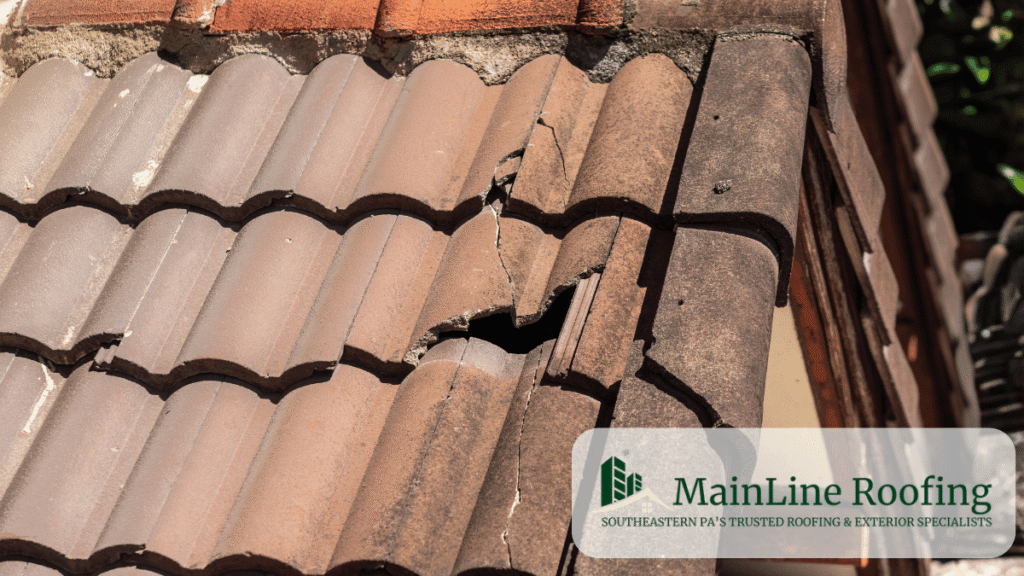
Most roofs don’t fail without warning. They give you signals first – some subtle, some obvious – and the homeowners who act on those signals early spend far less than the ones who wait until water is coming through the ceiling. This guide walks through every meaningful warning sign, where to look for it, and what it tells you about whether you need a repair or a full replacement.
The signs below are organized by where you’ll find them: outside from the ground, inside the attic, and inside your living space. You don’t need to get on the roof to identify most of them.
Seeing Any of These Signs?
Don’t wait for a leak to confirm what the warning signs are already telling you. Mainline Roofing Pros offers free inspections across the Main Line, Delaware County, Montgomery County, and Chester County.
Signs You Need a New Roof: From the Ground Outside
You can identify most serious roof problems without leaving your yard. Walk around your home with good lighting – morning or late afternoon light from a low angle makes surface conditions easier to read. Binoculars help.
Shingles That Are Curling, Cupping, or Clawing
Curling takes two forms. Cupping is when the edges of a shingle turn upward, creating a concave shape. Clawing is when the middle buckles up while the edges stay flat. Both indicate advanced aging, moisture absorption, or a ventilation problem baking the shingles from below. Either condition across a significant area of the roof means replacement is overdue – curled shingles are actively allowing water infiltration and have lost their protective function.
Missing Shingles
Individual missing shingles can often be repaired if the surrounding roof is in good condition. But missing shingles after a wind event frequently signal that the adhesive strips holding shingles down have failed across a wider area – and you’re seeing the ones that already blew off. The ones still on the roof may be barely attached. Have the full roof evaluated, not just the gaps.
Visible Sagging or Dipping Sections
Any area of the roof that visibly sags, dips, or waves when the surrounding surface is flat indicates a structural problem below the shingles – typically compromised roof decking, damaged framing, or both. This is not a cosmetic issue. A sagging roof is structurally compromised and needs immediate professional evaluation. Do not walk on a sagging roof section.
Granules in the Gutters or at Downspout Exits
Asphalt shingles are coated with mineral granules that protect the asphalt layer underneath from UV degradation. As shingles age, these granules loosen and wash off in rain. Finding heavy granule accumulation in your gutters or at the base of downspouts – looking like coarse dark sand – tells you your shingles are losing their protective layer. Light granule loss is normal early in a roof’s life; heavy loss on a roof over 12 to 15 years old signals it’s approaching end of life.
Bald Spots or Exposed Asphalt
Areas where granules have completely worn away leave bare, dark gray or black patches of exposed asphalt visible from the ground. These spots have lost their UV protection entirely. Rain, freeze-thaw cycles, and direct sun are now degrading the asphalt itself. Once you can see bare asphalt, that section of shingle is failing – and the material around it is not far behind.
Cracked, Broken, or Brittle Shingles
Shingles that crack are a different problem from granule loss – cracking indicates the asphalt has dried out and become rigid, losing its flexibility. This is often a sign of poor ventilation trapping heat in the attic or simply advanced age. Brittle shingles break in wind events rather than flexing. If you can see cracking from the ground, the problem is significant enough to warrant a full evaluation.
Moss, Algae, or Lichen Growth
Green or black streaking and surface growth on shingles is primarily an aesthetic issue initially, but it can become a functional problem over time. Moss in particular holds moisture against the shingle surface, accelerating freeze-thaw damage in Pennsylvania winters. Black streaking is typically Gloeocapsa magma algae – unsightly but less immediately damaging. Lichen (crusty, flat growths) is the most difficult to remove and causes more surface damage than algae. None of these require immediate replacement, but they indicate the need for cleaning and evaluation of underlying moisture conditions.
Damaged or Missing Flashing
Flashing is the metal material that seals roof transitions – around chimneys, along walls, in valleys, and around skylights. From the ground you can often see whether chimney flashing is intact, whether counter flashing is pulling away from the masonry, or whether valley metal is deteriorating. Failed roof flashing is the source of the majority of active roof leaks – more than shingle failure. Damaged flashing on an otherwise good roof can often be repaired. Damaged flashing on an aging roof is usually addressed as part of a full replacement.
Shingle Tabs That Are Lifting or Not Lying Flat
On a calm day, shingles should lie flat and tight against the roof surface. Tabs that are lifting, bubbling, or not sealed down indicate the adhesive strip has failed – usually from heat damage or age. These shingles are vulnerable to wind uplift in any significant storm. This is different from full curling and can be harder to see from the ground, but is visible on moderate or steep pitches when viewed from an angle.
Signs You Need a New Roof: From Inside the Attic
The attic is the best diagnostic location in your home. Go in with a good flashlight on a bright day and check these things. Do not go during or immediately after rain – wait for dry conditions so you can see staining patterns clearly without active dripping obscuring what’s old versus new.
Daylight Visible Through the Roof Deck
Any point of daylight visible through the decking or at a ridge, hip, or eave means there is a gap in the weather barrier above you. Water, insects, and outside air are entering through that opening. This is not a monitor-and-wait situation. Find the source of every daylight gap and address it.
Active Leaking or Fresh Water Stains on the Decking
Dark staining, wet spots, or active dripping in the attic indicates an ongoing leak. Trace the water source carefully – water travels along framing members before dripping, so the stain is often not directly below the entry point. Even a small active leak needs immediate attention. Wet insulation loses all thermal value and becomes a mold growth medium within 24 to 48 hours.
Soft, Spongy, or Deteriorated Decking
Press gently on the underside of the roof decking in several locations. Healthy decking is firm and solid. Soft, spongy, or springy areas indicate moisture damage and early rot. Once plywood or OSB becomes spongy, it no longer holds nails effectively – which means any shingles above it are inadequately fastened. Soft decking visible in the attic must be replaced before new shingles are installed. See our guide on roof decking for what to look for.
Dark Staining Patterns Across the Decking Boards
Brown or black staining that follows a pattern across the decking surface – often in streaks or spreading rings – indicates past or recurring moisture intrusion. Even if the staining appears dry, the pattern tells you where water has been getting in. Old stains can mask active problems, and repeated wetting and drying accelerates decking deterioration. Document the staining and have it evaluated – some of it may be old, but the entry point should still be found and sealed.
Frost or Condensation on Decking in Winter
If you go into your attic on a cold morning and find frost on the underside of the roof deck, your attic ventilation is not working. Humid air from the living space is rising into the attic, hitting the cold decking surface, and freezing. When temperatures rise during the day, that frost melts – and the water drips onto your insulation and framing. This is a ventilation problem that will eventually produce decking damage if not addressed. See our guide on ridge vents for how proper ventilation prevents this.
Mold or Mildew on Framing or Decking
Visible mold growth – dark gray, green, or black patches on framing members or the underside of decking – confirms that the attic has experienced sustained moisture. Mold requires moisture and time to establish, so its presence tells you the moisture problem is not new. The mold must be treated, the moisture source identified and fixed, and ventilation corrected before any new roofing work is done. Installing a new roof over an actively moldy attic creates a warranty problem and a health concern.
Insulation That Is Wet, Matted, or Displaced
Attic insulation should be dry, fluffy, and evenly distributed. Wet or matted insulation has lost its thermal value and is holding moisture against the decking above it. Insulation pushed against the eaves blocking soffit vents is also a problem – it cuts off the intake side of your ventilation system. Both conditions affect roof performance even if the roof surface itself is intact.
Signs You Need a New Roof: Inside Your Home
By the time you’re seeing signs inside your living space, the problem is advanced. These signs should be treated as urgent.
Water Stains on Ceilings or Walls
The classic brown ring stain on a ceiling is a roof leak until proven otherwise. Water can travel a long way from the entry point to where it shows up in your living space, following the path of joists and framing. A ceiling stain directly below an attic access or plumbing fixture may have another explanation, but a stain in the middle of a ceiling or in an upper-floor room with no plumbing above it is almost always roof-related. Do not ignore it and hope it resolves – water damage to drywall, insulation, and structural framing compounds quickly.
Active Dripping During or After Rain
Active water intrusion requires immediate action. Contain the water to prevent damage to finishes and structural components, then get a roofing contractor out as quickly as possible. Do not wait to see if it stops on its own – it will not. A temporary tarp may be appropriate if the leak is significant and a contractor cannot come immediately.
Peeling Paint or Blistering on Exterior Walls Near the Roofline
Paint peeling or blistering on exterior walls near the fascia, soffit, or upper story is often a sign of moisture escaping from an inadequately ventilated attic rather than a direct roof leak. Hot, humid attic air finds its way out through any gap it can, and it often does so at the eaves and soffits, causing damage to the exterior paint and eventually to the wood trim below. This points to a ventilation problem that needs to be addressed during or before any roofing work.
Higher Energy Bills Without an Obvious Cause
A poorly ventilated attic significantly increases cooling costs in summer. When the attic reaches 140 to 160 degrees Fahrenheit – which happens on hot days without adequate ventilation – that heat radiates down through the ceiling into the living space. Your air conditioning works harder to compensate. If your energy bills have climbed without a change in usage patterns, an attic inspection is worth doing. Our guide on how hot an attic gets on a 100-degree day explains this dynamic in detail.
Ice Dams Forming at the Eaves in Winter
Icicles along the gutterline are visually dramatic but not always a problem. A true ice dam is different: a buildup of ice at the roof edge that creates a barrier trapping meltwater. That trapped water has nowhere to go except backward under the shingles. If you’ve had ice dams form and then noticed interior staining the following spring, water got in. Ice dams indicate a ventilation problem – warm attic air is melting snow on the upper roof, and that meltwater refreezes when it hits the cold overhang. The fix starts with ventilation, not just better shingles.
Age as a Warning Sign: When to Start Watching
Regardless of how your roof looks today, age is the most reliable predictor of remaining life. Here’s a simple reference:
| Roof Age | Recommended Action | What to Watch For |
|---|---|---|
| Under 10 years | Normal maintenance – inspect after major storms | Flashing issues, isolated storm damage |
| 10 to 15 years | Annual inspection, check attic ventilation | Granule loss beginning, any curling or cracking |
| 15 to 20 years | Professional inspection, budget for replacement | Widespread granule loss, first signs of curling, flashing condition |
| 20 to 25 years | Expect replacement in this window | Any repair cost should be weighed against replacement |
| Over 25 years | Replace – most systems are at or past end of life | High risk of accelerating failure; insurer may require replacement |
Don’t know your roof’s age? Check your home’s purchase inspection report, prior insurance claims, or any past permit records through your township. If none of those are available, a professional can estimate age from the shingle style, granule pattern, and overall condition.
Signs Specific to Main Line Home Types
The Philadelphia suburbs have distinct housing patterns that create specific warning signs worth knowing for your home type.
Older Stone Colonials and Victorian Homes
Many older homes in Villanova, Gladwyne, and Bryn Mawr have slate roofs or original copper detailing. For these homes, watch for slipped or cracked slate tiles visible from the ground, deteriorated copper flashing turning dark green and pulling away from masonry, and ridge lines that are no longer straight. Slate repairs are specialized work – not every roofer should be working on a historic slate roof.
Twins and Rowhomes
In Havertown, Upper Darby, Drexel Hill, and other dense Delaware County communities, common walls between attached homes create a specific problem: water from a neighbor’s failing roof can travel through shared structural elements and appear as a leak in your home. If you’re seeing water infiltration but your roof looks intact, investigate whether your neighbor’s roof is the source.
Homes with Porch Roofs and Rear Additions
Flat or low-slope sections over porches, rear additions, and garages fail on a different timeline from the main sloped roof. EPDM and modified bitumen flat roofing typically lasts 15 to 20 years, which may be shorter than your main roof’s lifespan. Watch for pooling water that doesn’t drain within 48 hours of rain, bubbling or blistering on the flat surface, and cracks or splits at seams and edges. A flat roof that has failed will eventually allow water into the rooms below.
Not Sure What You’re Looking At?
The signs above give you a starting framework, but a professional inspection removes the guesswork entirely. We’ll tell you exactly what we find – including whether you need repair, replacement, or just monitoring.
When Signs Point to Repair vs. Full Replacement
Not every warning sign means you need a new roof. Here’s a general decision framework:
| What You’re Seeing | Likely Conclusion |
|---|---|
| Leak from a single identifiable source (chimney, skylight, one valley) | Targeted repair if roof is under 15 years old and otherwise sound |
| A few missing shingles, rest of roof in good condition | Repair – replace missing shingles and inspect surrounding area |
| Widespread curling, cracking, or granule loss across the whole roof | Replacement – system-wide failure is approaching |
| Leaks in multiple locations over the same season | Replacement – multiple failure points signal end-of-life condition |
| Soft or damaged decking under a localized area | Repair may be possible if source is fixed and damage is isolated |
| Widespread soft or stained decking visible in attic | Replacement with full decking assessment |
| Roof over 20 years old with any of the above signs | Replacement – repair costs should be weighed against replacement value |
| Sagging or structural movement visible from outside | Immediate inspection – may involve structural repair beyond roofing |
For a deeper look at the repair vs. replacement decision, including cost analysis and how the 25 percent rule for roofing affects your options under Pennsylvania code, see our dedicated guide on when to repair vs. replace your roof.
Wondering what a replacement actually costs for your home type? Our guide on roof replacement cost in Main Line PA breaks it down by home type and material with real project ranges from this area.
Frequently Asked Questions About Signs You Need a New Roof
What are the first signs you need a new roof?
The earliest visible signs are granule accumulation in gutters, shingles beginning to curl at the edges, and dark staining or algae streaks on the surface. These indicate aging but not necessarily immediate failure. More urgent signs include missing shingles, visible cracking, soft spots on the roof surface, ceiling stains inside the home, and any visible sagging.
How do I know if I need a roof repair or full replacement?
The key factors are the age of the roof, how widespread the damage is, and whether leaks are coming from one identifiable source or multiple locations. A roof under 15 years old with isolated damage is usually a repair candidate. A roof over 20 years old showing widespread wear, curling, or multiple leak sources is typically a replacement. Our repair vs. replace guide walks through this decision with a full framework.
Can I tell if my roof needs replacement without getting on it?
Yes, for most signs. From the ground with binoculars you can identify curling, missing shingles, granule loss, sagging, and flashing problems. From inside the attic you can see staining, soft decking, and daylight penetration. From inside the home you can see ceiling stains. A professional inspection adds a close-up surface assessment, but most homeowners can identify warning signs without leaving the ground or attic.
How long can I wait if I see a warning sign?
It depends on the sign. Visible sagging or an active interior leak – address immediately. Curling shingles or significant granule loss on a 20-year-old roof – plan a replacement within the next season. Mild algae streaking or a few lifted tabs on a 12-year-old roof – schedule an inspection and monitor. The longer you wait after a serious warning sign, the more likely secondary damage (decking, insulation, framing, interior finishes) compounds the repair cost.
What causes shingles to curl?
The two main causes are age and poor attic ventilation. As shingles age, the asphalt layer dries out and contracts, pulling the edges. Poor ventilation accelerates this by trapping heat that bakes the underside of the shingles. Improper installation – particularly incorrect nailing or using the wrong underlayment – can also cause early curling. Widespread curling across a roof surface is almost always a sign of system-wide failure, not a repair situation.
Are granules in the gutter always a sign of a failing roof?
Not always. Some granule shedding is normal in the first few months after new shingles are installed as excess surface granules wash off. After that initial period, heavy granule accumulation in gutters on a roof that is more than 8 to 10 years old signals meaningful aging. The question is quantity and trajectory – a small amount occasionally is different from a consistent heavy buildup after every rain.
My roof looks fine from the ground but I had a small leak. Should I be worried?
A roof can appear intact from the ground and still have active leak points – especially at flashing transitions around chimneys, skylights, dormers, and wall intersections. These areas fail independently of the shingles themselves. A leak that seems minor often indicates a flashing problem that can be repaired, but it should be investigated thoroughly rather than assumed to be isolated. Water that has entered once will find its way in again if the source isn’t fixed properly.
How often should I have my roof inspected?
Once a year is a reasonable baseline, with an additional check after any major storm – high winds above 50 mph, hail, or heavy branch falls. If your roof is over 15 years old, twice a year is worth doing – spring and fall – to catch any damage before winter ice and summer heat compound it. A quick self-inspection from the ground and a look in the attic takes 15 minutes and can catch problems early enough to keep repair costs manageable.
More Helpful Roofing Guides from Mainline Roofing Pros
Serving homeowners across the Main Line, Delaware County, Montgomery County, and Chester County.
Bottom Line
Most roof failures give you plenty of warning. Curling shingles, granule loss, attic staining, and ceiling spots are all telling you something before a full failure forces the decision. Homeowners who act on those signals early typically spend significantly less than those who wait – both because repairs are cheaper before secondary damage sets in, and because replacements planned ahead of failure are less expensive than emergency work.
If you’re seeing any of the signs in this guide on your home in Haverford, Ardmore, Newtown Square, Media, or anywhere else in the area, the right next step is a professional inspection. We’ll tell you exactly what we find, what it means, and what it costs to address – without pressure and without inflated numbers.
Seeing Warning Signs on Your Roof?
Mainline Roofing Pros offers free inspections across the Main Line, Delaware County, Montgomery County, and Chester County. We’ll give you a straight assessment of what we find and what it means.

Founder & Owner of Main Line Roofing Pros. 22+ years of local roofing expertise serving Main Line, Delco, Montco & Chesco homeowners with honest, high-quality work.