
What Is a Gable Roof? Types, Benefits & Why It Matters

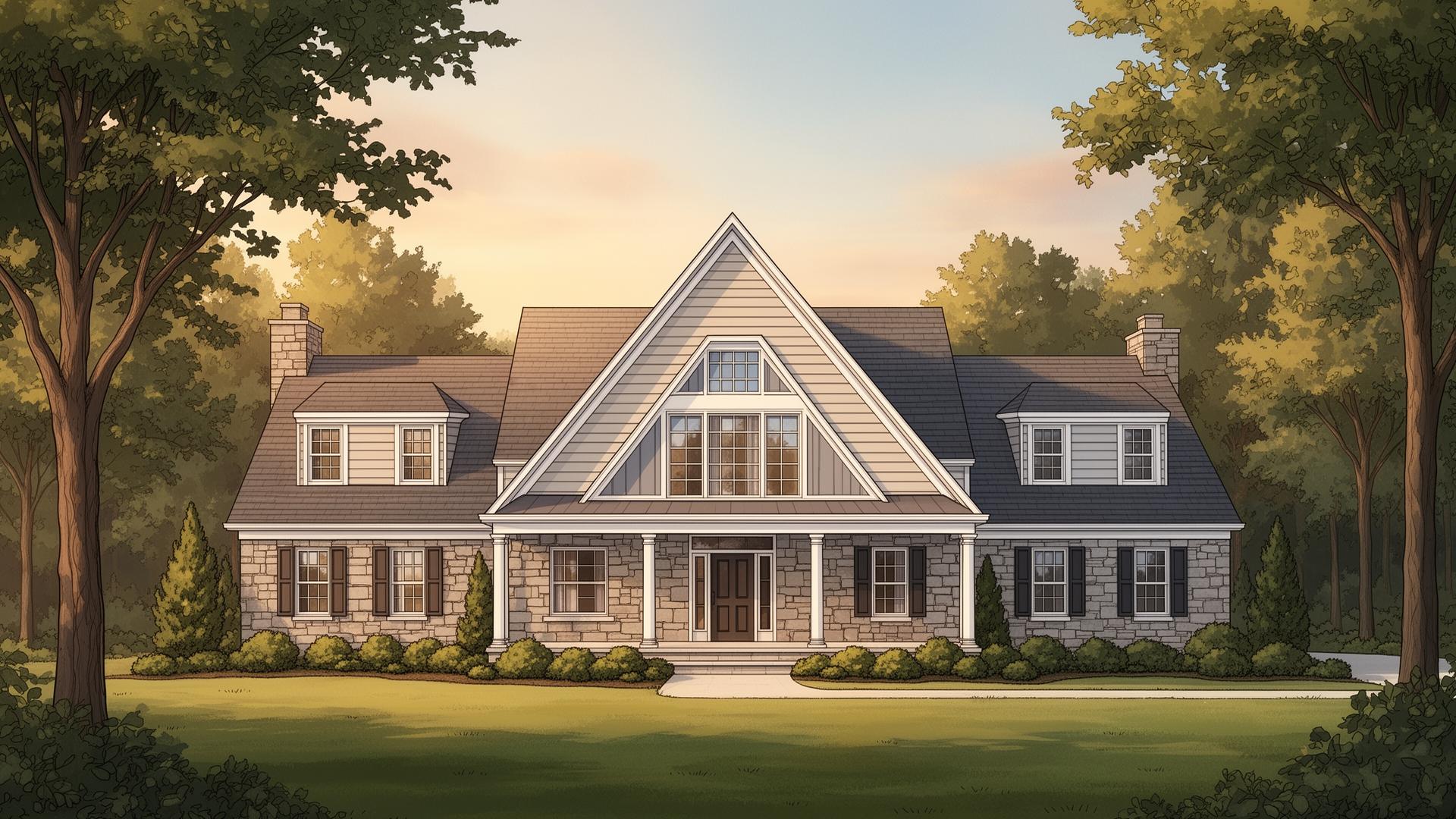
If you’ve ever described your house as looking like a “classic little drawing with a triangle roof,” you’ve already described a gable roof, even if you didn’t know the name for it.
As a roofer working on Main Line homes every day, I talk about gable roofs all the time with homeowners in Bryn Mawr, Merion Station, Ardmore, and nearby towns.
Understanding what a gable roof is, and what it is not, helps you make better decisions about roof repairs, replacements, ventilation, attic health, and where your home may be more vulnerable to wind and water.
Not Sure What Type of Roof You Have?
Mainline Roofing Pros can inspect your roof shape, materials, flashing, attic ventilation, and problem areas.
The Simple Definition: What Is a Gable Roof?
A gable roof is one of the most common roof shapes you’ll see in our area. In plain language, a gable roof has two sloping sides that meet in a ridge at the top, forming a triangle-shaped wall at each end of the house.
Those triangle-shaped walls are called gables. When you stand at the end of a house and see that full triangle of siding, stone, brick, or stucco beneath the roof line, you’re looking at a gable.
If your kids drew a picture of a house with a pointed roof and two sloping sides, they probably drew a gable roof.
How to Tell If You Have a Gable Roof
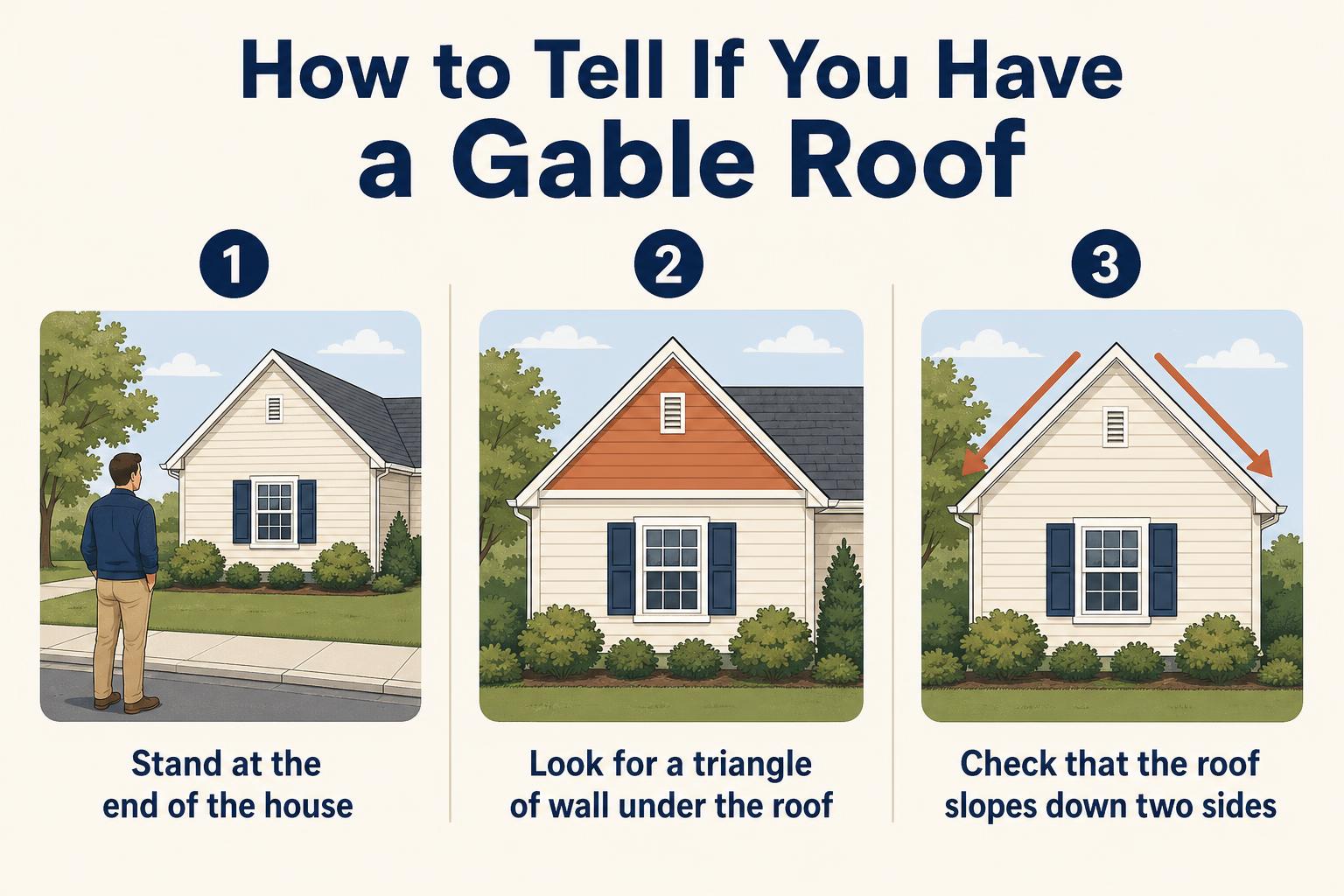
When I’m on site in Bryn Mawr or Merion Station, here’s how I help homeowners figure it out.
Stand on the street and look at each end of your home:
- Do you see a full triangle shape of wall area between the top of your exterior wall and the peak of the roof?
- Does the roof slope down in two directions from that peak?
If yes, you’re almost certainly looking at a gable roof, or at least a roof with gable sections.
If your roof looks more like a pyramid, sloping down on all four sides with no big triangle walls, that is likely a hip roof, not a gable roof.
Many Main Line homes mix roof styles. For example, a home may have a hip roof on the main structure with gable dormers or gable ends on additions.
Why Builders Like Gable Roofs
There’s a reason gable roofs are everywhere, from classic twins in Bryn Mawr to newer Colonials and renovated homes across the Main Line.
1. They’re straightforward to build
Compared to more complex roof shapes, gable roofs are relatively simple in structure.
- Two main sloping planes
- A ridge along the top
- Gable walls at the ends
This simplicity usually means clean framing, easier detailing, and less chance for certain types of installation mistakes.
2. They shed water and snow well
In our climate, where we see heavy rain, snow, and freeze-thaw cycles, gable roofs do a good job of moving water down and away quickly.
They can also help snow slide or melt off more easily, depending on the pitch.
3. They create usable attic space
Many Bryn Mawr and Main Line homes with gable roofs have full attics, finished third floors, or bonus rooms under those slopes.
That extra volume can be a real asset if it is ventilated and insulated correctly. Poor attic conditions can lead to heat buildup, moisture issues, and roof aging. For more on attic heat, see our guide on how hot an attic gets on a 100-degree day.
Common Types of Gable Roofs You’ll See
Not all gable roofs look exactly the same. Here are a few you’ll recognize once you know what to look for.

1. Simple or Side Gable
This is the classic version. It has two equal roof slopes, a ridge running the length of the house, and gable walls on the left and right ends.
Many smaller Colonials and twins in Bryn Mawr use this basic form.
2. Front Gable
With a front gable, the gable end faces the street. You’ll see the triangle shape above the front door or main façade.
This is common on older stone homes with a strong central gable and homes with porches or entryways tucked under that front-facing gable.
3. Cross Gable
A cross gable is where two gable roof sections intersect at a right angle. You get multiple ridges and valleys where those roof planes meet.
Many larger Main Line homes, especially homes with additions, end up with cross-gable arrangements.
4. Gable Dormers
Gable dormers are small gables that pop out of the main roof. They are used to add headroom, bring in natural light, and improve curb appeal.
They look great, but they also add roof complexity. More dormers mean more valleys, flashings, and transitions that need careful attention.
Planning a Roof Repair or Replacement?
Use our calculator to get a helpful starting range, then schedule a local inspection for an exact recommendation.
Use the Roofing Cost CalculatorHow Gable Roofs Affect Ventilation
One of the big reasons I care about whether a roof is gabled has nothing to do with looks. It has to do with ventilation.
Gable roofs often make it easier to design a proper ventilation system because you usually have clear intake options along the soffits and good exhaust options at the ridge or sometimes at gable vents.
For many Bryn Mawr and Main Line homes with gable roofs, we aim for:
- Soffit vents drawing cooler outside air low on the roof
- A continuous ridge vent or properly placed roof vents exhausting hot, moist air at the top
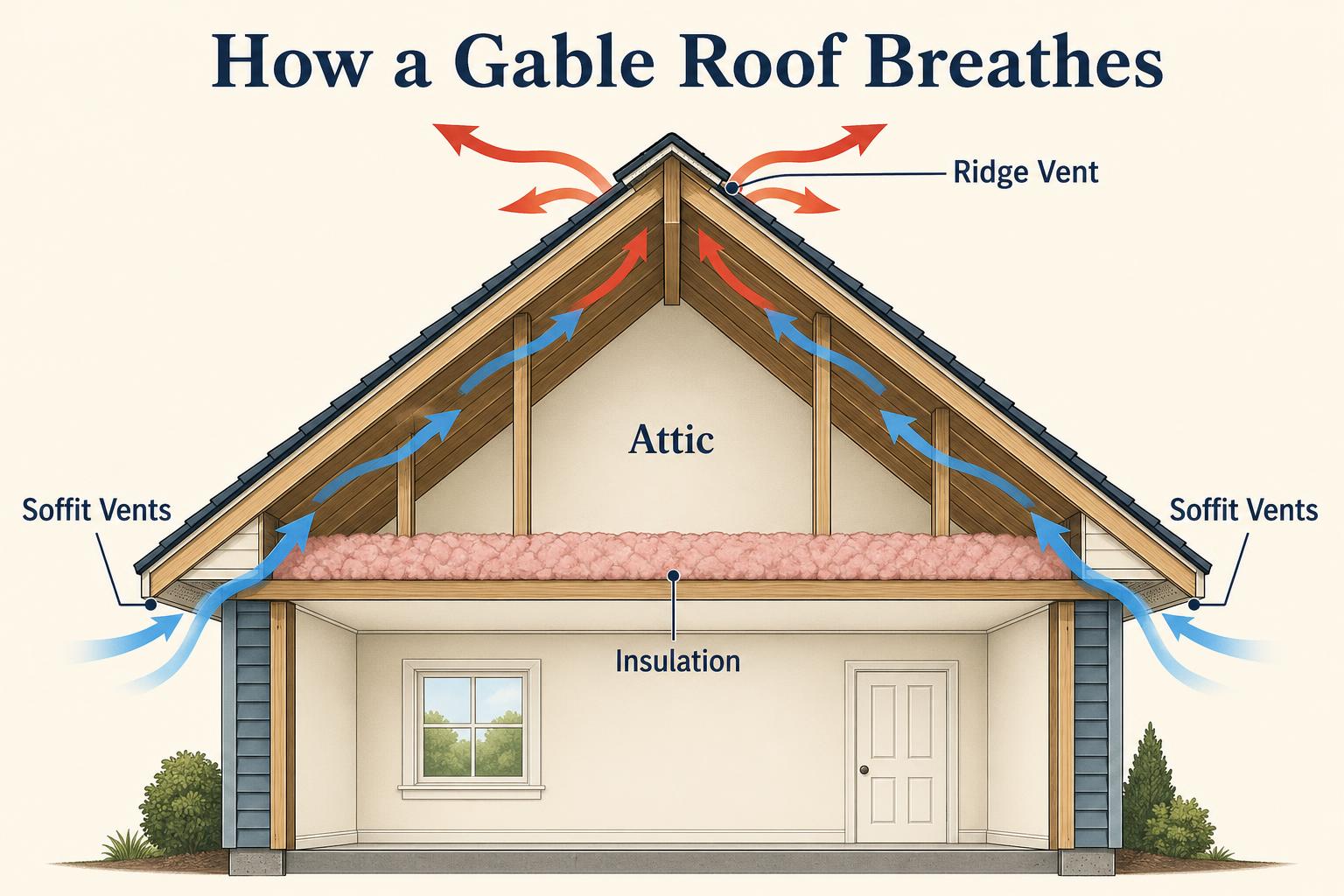
That airflow helps keep attic temperatures more manageable in summer, reduce the risk of condensation and rot in winter, and extend the life of shingles, cedar, and other materials.
When I inspect a gable roof, I’m always looking at both the outside shape and the inside attic conditions. A beautiful gable roof with poor ventilation will age much faster than it should.
Gable Roofs: Strengths and Vulnerabilities
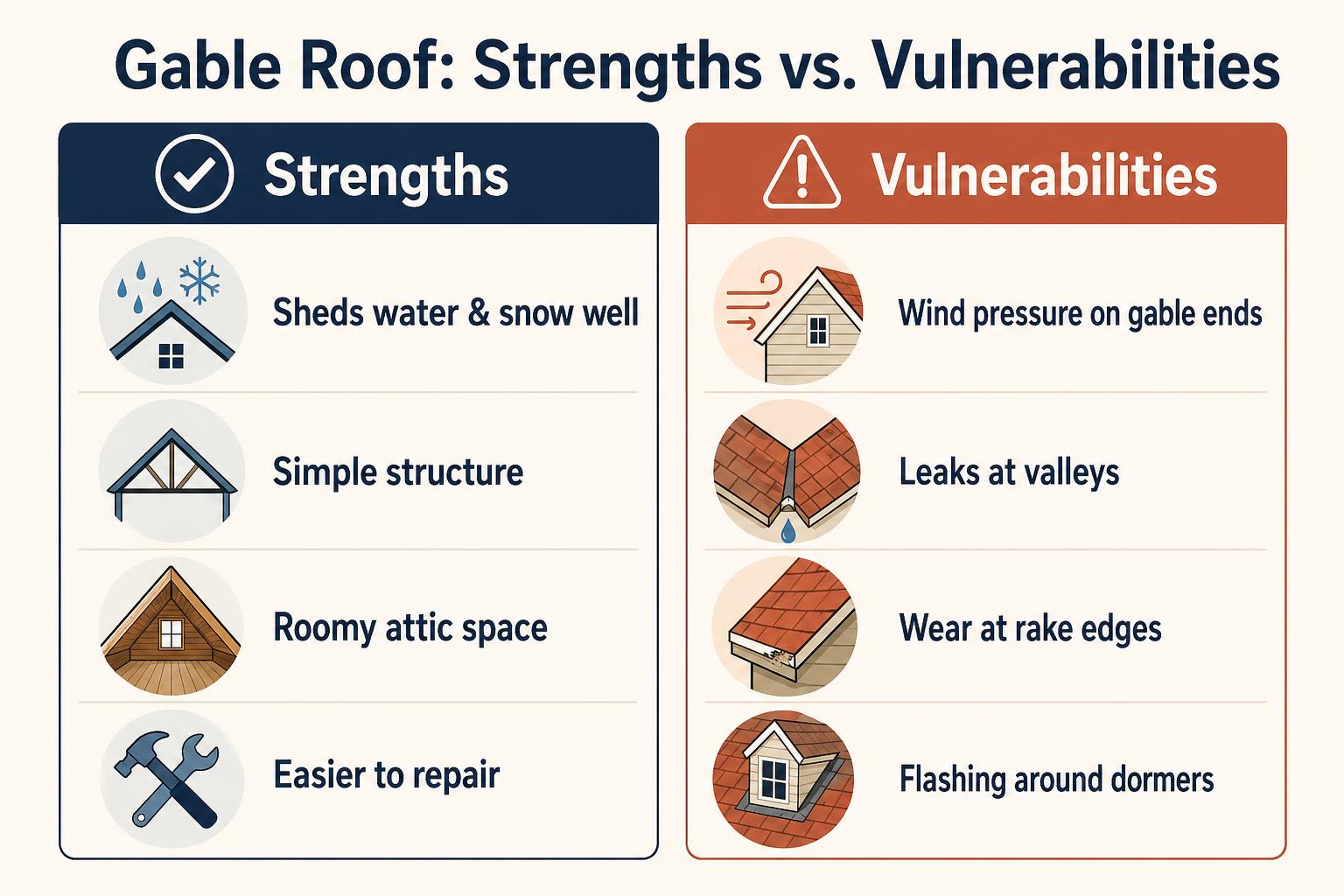
Like any roof shape, gable roofs have both advantages and weak spots.
Strengths
- Efficient water shedding if properly pitched and flashed
- Simpler structure than many complex roof combinations
- Good attic volume for storage or living space
- Often easier to repair single sections or slopes
Vulnerabilities
The biggest concern with gable roofs, especially in storms, is wind. Strong winds can put pressure on the gable end walls and the roof edges where the overhangs are.
On Main Line homes, I also see common issues like:
- Leaks where gable roofs meet lower roofs, porches, or additions
- Wear at rake edges and bargeboards along the sloping gable edges
- Water staining or leaks around gable dormers where flashing was not done correctly
When you know you have a gable roof, you know to pay extra attention to those edges and intersections.
Real Examples From Bryn Mawr and the Main Line
Example 1: Simple Gable, Hidden Attic Issues
A Bryn Mawr twin had a straightforward side gable roof with asphalt shingles. From the street, it looked fine.
Inside the attic, though, we found almost no soffit ventilation, a couple of old gable vents that were not enough for the space, and signs of past condensation on the underside of the roof decking.
The homeowner assumed a simple roof meant no worries. Once we explained how the gable shape made ventilation easier to improve, we added proper soffit vents and a ridge vent during the next re-roof. The house stayed cooler upstairs, and the attic dried out.
Example 2: Cross Gable With Valley Leaks
In Merion Station, a stone home had a cross-gable roof. One gable sat over the main house, and another sat over an addition. They met in a tucked-away valley.
The valley between those two gables was the problem. It had aging flashing, improper shingle installation, and debris collecting where the two roof planes met.
Water was finding the weak point and showing up as a ceiling stain two rooms away from where anyone expected.
Because we understood the roof shape, we went straight to that cross-gable valley, opened things up, and rebuilt the flashing and shingle layout properly.
Does Having a Gable Roof Change Your Repair or Replacement Options?
Yes, in a few practical ways.
When we’re planning a repair on a gable roof, we’re thinking about:
- How water moves down each slope
- Where gables intersect with other roof sections, walls, and chimneys
- Whether we can isolate the issue on one slope or valley
When we’re planning a full roof replacement, we look at:
- Whether overhangs, rakes, and trim need repair
- Whether the attic ventilation plan matches the home’s size and layout
- Whether gable ends, dormers, and valleys have proper flashing and underlayment
The good news is that a well-designed gable roof can be more straightforward to maintain and upgrade than some very complex roof shapes.
Helpful Main Line Roofing Resources
Explore more roofing guides and local service pages from Mainline Roofing Pros.
In Plain Language: Why You Should Care
You do not need to become a roof designer. But knowing that you have a gable roof gives you a few advantages as a homeowner.
- You can describe your roof more clearly when you call a roofer.
- You’ll understand why gables, valleys, and dormers need extra attention.
- You’ll be better prepared to talk about ventilation, attic comfort, and long-term roof health.
When you hear me or another roofer say, “You’ve got a gable roof,” now you know exactly what that means and why it matters.
If You Have a Gable Roof in Bryn Mawr or the Main Line
If your home has a gable roof and you’re seeing stains or leaks near gable ends, valleys, or dormers, dealing with hot upper floors, or unsure whether to repair or replace aging shingles, slate, cedar, or DaVinci, it’s worth having a proper inspection.
When I inspect a gable roof, I do not just glance at the shingles. I look at the overall shape, how water moves off it, the gable ends, rakes, overhangs, flashing, attic conditions, insulation, and ventilation.
From there, we can talk through what’s working, what is not, and what makes sense for your home and your long-term plans.
Once you understand your roof’s shape, including those gables, the rest of the roofing decisions start to feel a lot less mysterious.
Need Help With a Gable Roof?
Mainline Roofing Pros can inspect your roof shape, flashing, ventilation, materials, and problem areas across Bryn Mawr and the Main Line.

Founder & Owner of Main Line Roofing Pros. 22+ years of local roofing expertise serving Main Line, Delco, Montco & Chesco homeowners with honest, high-quality work.