
How Hot Is an Attic on a 100°F Day?
When I walk into attics in the middle of a summer heat wave, homeowners often ask me, half-joking and half-serious: “Is it supposed to be this hot up here?”
If it’s 100°F outside in Bryn Mawr or anywhere along the Main Line, it’s completely normal for your attic to be much hotter than that. Sometimes dangerously so.
In this article, I’ll break down how hot attics really get, what’s considered normal, and when those temperatures start to put your roof, your home, and even your health at risk.
All the ranges below are based on well-documented building science and industry guidance, not guesses.
Worried Your Attic Is Too Hot?
Mainline Roofing Pros can inspect your roof, ventilation, attic conditions, and roofing materials to help you understand what is normal and what needs attention.
Typical Attic Temperatures on a 100°F Day
On a 100°F day, a typical unfinished, unconditioned attic can reach:
- 120–130°F in relatively well-ventilated attics with lighter roofs
- 130–150°F in many standard attics with dark shingles and average ventilation
- Up to 160°F or more in poorly ventilated attics with dark roofing and lots of sun exposure
Those numbers aren’t unique to our area. They line up with common findings from roofing manufacturers, home inspectors, and building science research. Attic temperatures often run 20–60°F hotter than the outdoor air on a sunny summer afternoon.
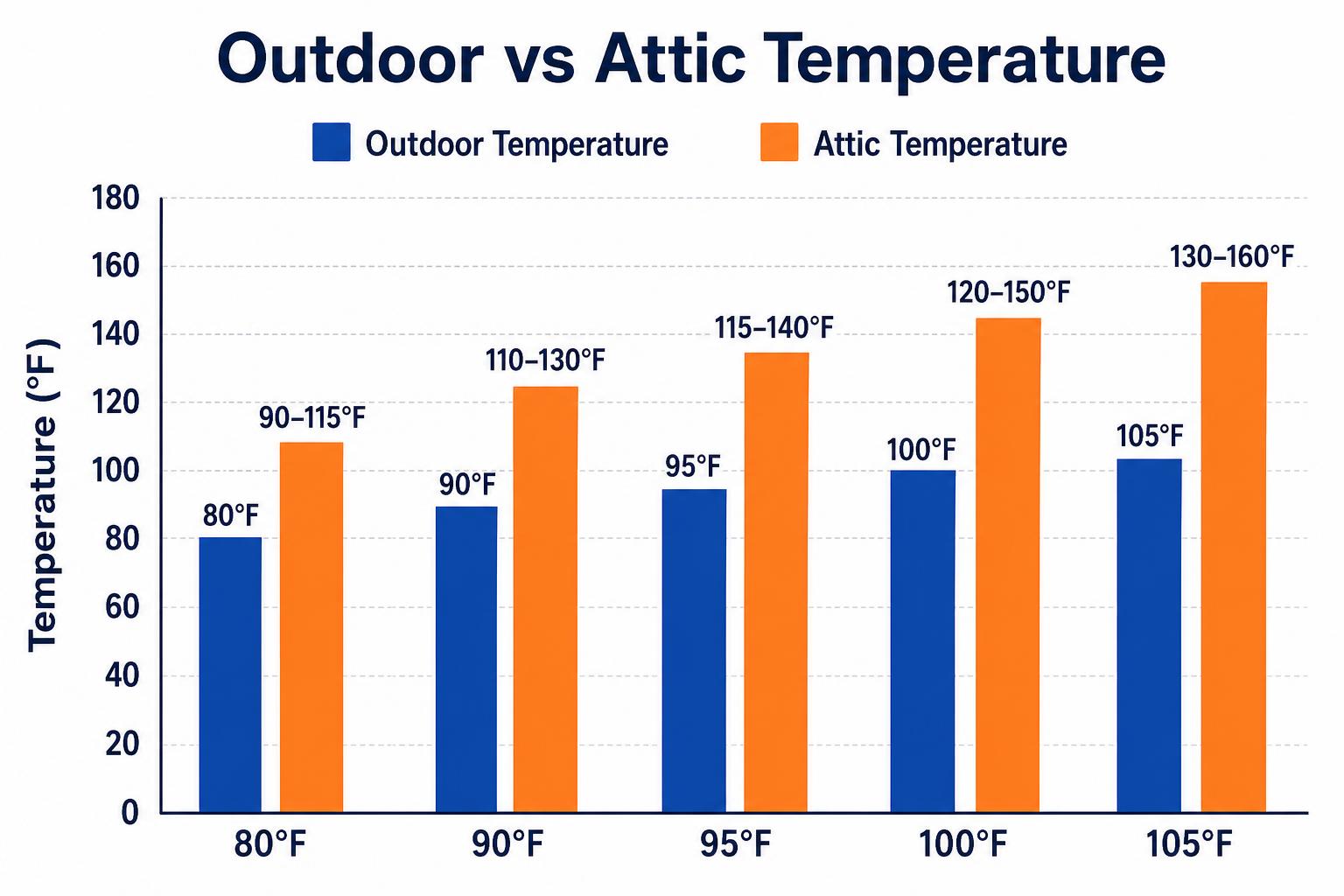
Attic vs Outdoor Temperature: Comparison Chart
Here’s a simple comparison for a clear summer day with full sun, a dark asphalt shingle roof, and average ventilation.
| Outdoor Air Temperature | Typical Attic Temperature Range |
|---|---|
| 80°F | 90–115°F |
| 90°F | 110–130°F |
| 95°F | 115–140°F |
| 100°F | 120–150°F+ |
| 105°F | 130–160°F+ |
These are typical ranges, not exact promises. Your attic’s actual temperature depends on several real-world factors.
What Makes an Attic So Much Hotter Than Outside?
There are three big reasons your attic can feel like an oven on a 100°F day.
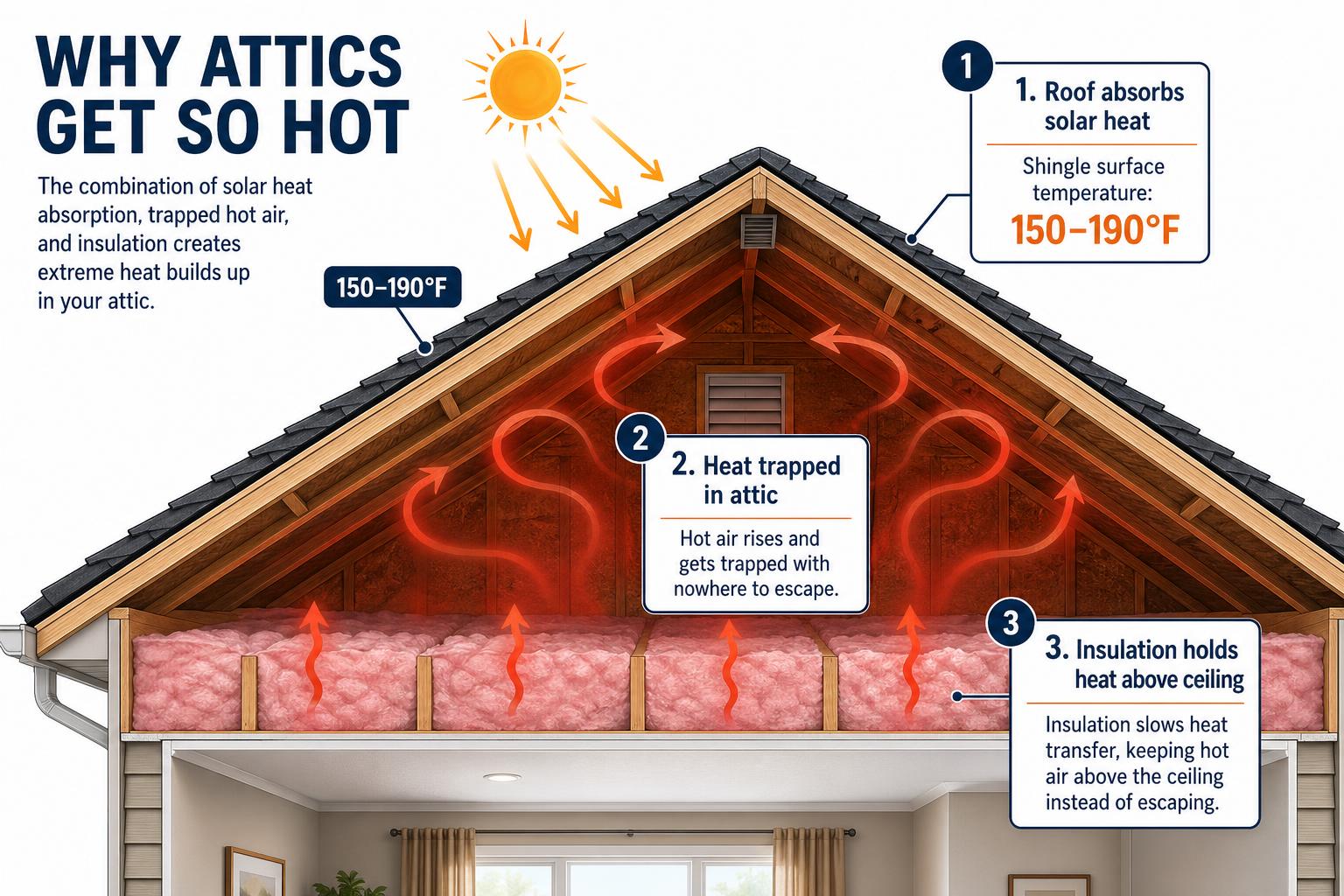
1. The Roof Surface Absorbs Solar Heat
Your roof sits in direct sunlight for hours. Dark roofing materials, like many asphalt shingles, absorb a large amount of that solar energy.
- Dark shingles can hit 150–190°F or more in full sun on a hot day.
- That heat transfers into the roof decking and radiates into the attic space.
So even if the air outside is only 100°F, your roof surface may be far hotter.
2. Heat Gets Trapped in the Attic
Most attics are enclosed spaces with limited airflow. Without good ventilation, hot air rises into the attic and then has nowhere easy to go.
That trapped hot air keeps getting reheated by the roof above it. As the day goes on, attic temperatures can climb higher and higher.
3. Insulation Holds Heat Below, Not Above
Insulation on your attic floor is meant to protect the living space below. It is not designed to keep the attic itself cool.
- It slows heat from moving down into your home.
- It does not stop the attic air itself from heating up.
That creates a hot buffer zone above your ceilings. It can help with energy efficiency when managed well, but it can become uncomfortable and potentially damaging when attic temperatures spike too high.
Factors That Change How Hot Your Attic Gets
Not every 100°F day produces the same attic temperatures. Here’s what makes a big difference.
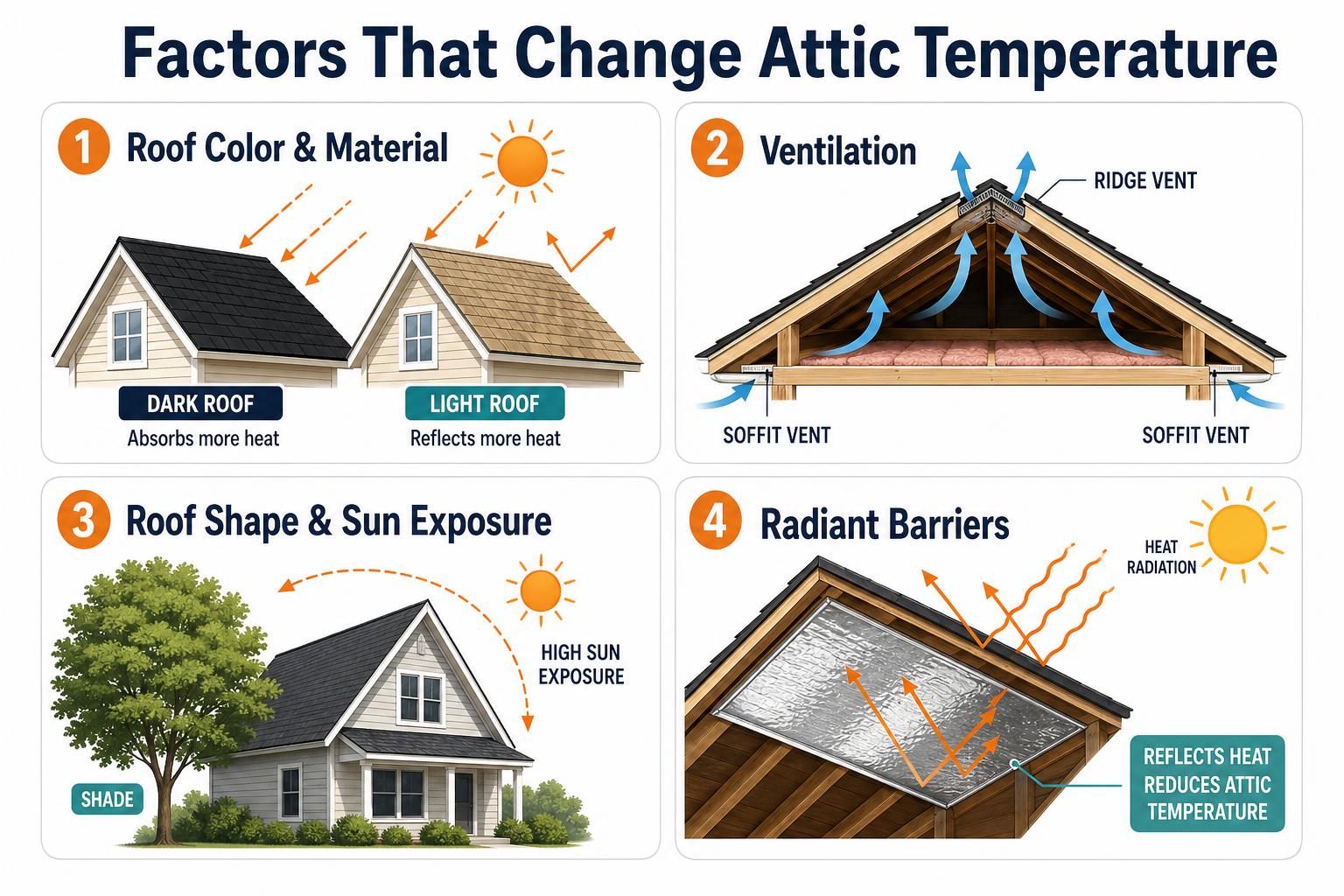
1. Roof Color and Material
- Darker roofs, such as black, dark gray, or deep brown, absorb more solar energy.
- Lighter roofs, such as light gray, tan, lighter slate, or certain metal finishes, reflect more sunlight.
- Cool roofing materials, reflective shingles, and reflective coatings can lower attic temperatures compared with standard dark asphalt shingles.
If you are planning a roof replacement in Villanova, Haverford, or another Main Line town, color and material choice can play a role in attic performance.
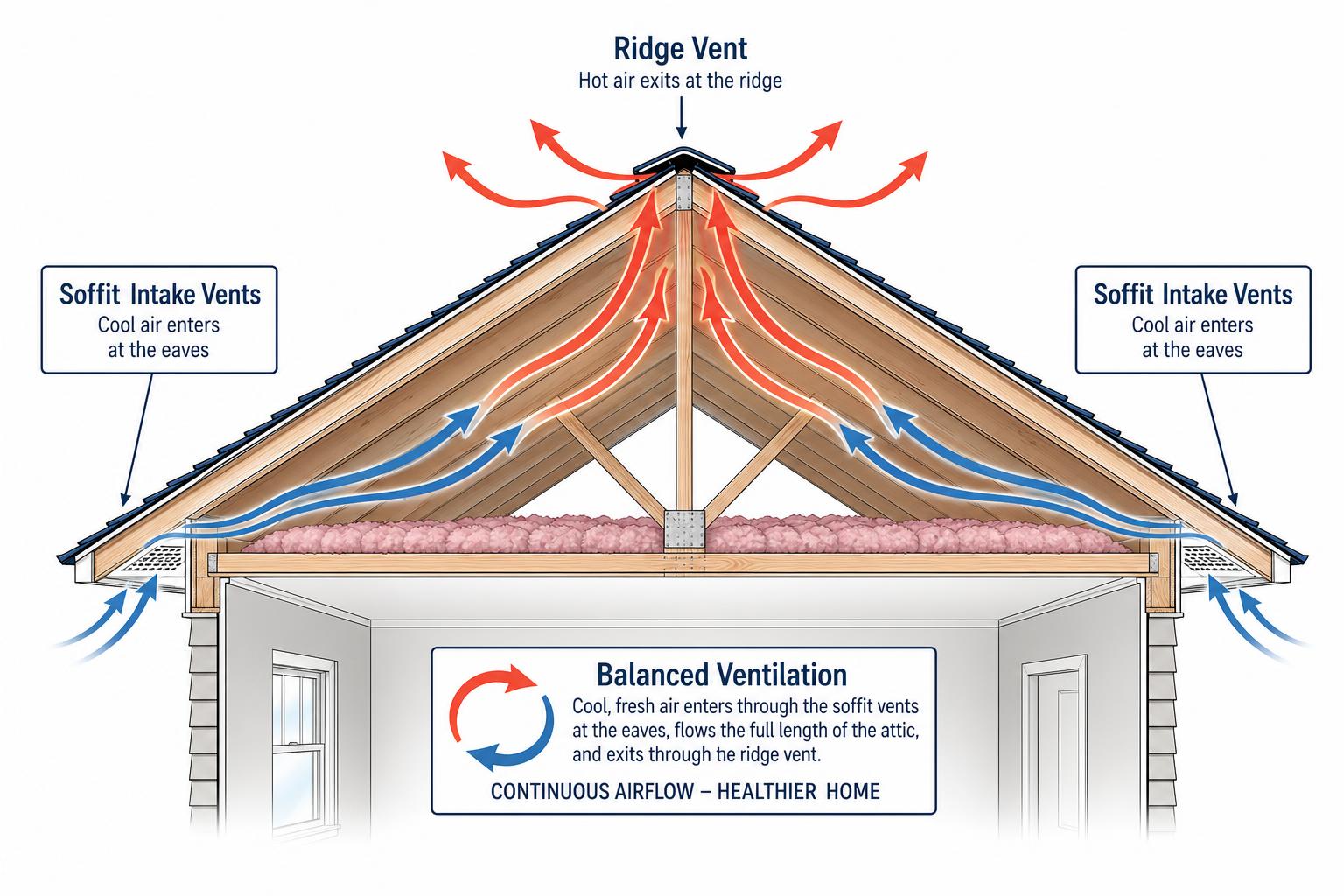
2. Ventilation
Attic ventilation is one of the biggest drivers of how hot your attic gets.
- Well-ventilated attics can stay closer to the lower end of the temperature range.
- Poorly ventilated or blocked attics often run at the upper end or higher.
- Balanced intake and exhaust are both important.
Ventilation does not make your attic cool on a 100°F day. But it can help keep it from turning into a 160°F heat trap.
3. Roof Shape and Sun Exposure
- Steep, south-facing, and west-facing roofs often see higher heat gain.
- Complex roofs with valleys and dormers can create hot pockets where air does not move as easily.
- Shade from large trees or nearby buildings can reduce peak attic temperatures.
4. Radiant Barriers and Reflective Surfaces
Some homes use radiant barrier sheathing or foil-type barriers facing the attic. These can reduce radiant heat transfer from the underside of the roof into the attic air.
They’re not magic, but they can be part of a smart attic and roofing system.
Planning a Roof Replacement?
Material choice, roof color, and ventilation can affect comfort and long-term roof performance. Start with a quick estimate.
Use the Roofing Cost CalculatorWhy Attic Heat Matters Beyond Comfort
You might never set foot in your attic in August, but the temperature up there still affects your home.
1. Roofing Lifespan and Performance
Consistent, extreme heat can:
- Accelerate aging of shingles, underlayment, and certain synthetic materials
- Dry out asphalt shingles faster, contributing to granule loss and cracking over time
- Stress flashings, sealants, and other roofing components
Well-designed ventilation and roofing choices help manage those temperatures and extend the practical life of your roof system.
2. Comfort and Energy Bills
A very hot attic increases the heat load on your upper floors. Even with good insulation, some of that heat tries to move downward.
That can lead to:
- Upper floors that are noticeably warmer than lower levels
- Higher cooling costs as your AC works harder
- Rooms near attics or under complex rooflines feeling stuffy or uncomfortable
3. Moisture and Ventilation Interactions
Attic heat on its own is one challenge. Heat plus moisture is worse.
Poor ventilation can mean:
- Trapped humid air from bathrooms, kitchens, or living spaces
- Condensation on roof framing and decking during certain weather patterns
- Wood decay, mold, mildew, and indoor air quality concerns over time
How to Tell If Your Attic Is Too Hot
Some heat is expected. The danger is when temperatures are consistently extreme and causing side effects.
Here are a few signs your attic may be hotter than it should be:
- Upper floors are much hotter than the rest of the house, even with the AC running
- Shingles are aging faster than expected for their rated lifespan
- Roof components show rusting, warping, or premature wear
- Insulation feels extremely hot to the touch well into the evening
- Attic heat lingers late into the night, long after outdoor temperatures drop
If you’re curious, you can use a basic digital thermometer with a probe or an infrared thermometer to spot-check attic temperatures on a hot, sunny afternoon.
Safety note: Be careful when entering an attic during extreme heat. Attics can be physically demanding spaces, and temperatures can climb quickly.
Practical Ways to Reduce Attic Heat
If you’re concerned about how hot your attic gets on a 100°F day, there are several proven steps that can help.
1. Improve Attic Ventilation
A balanced system usually includes:
- Intake vents at the soffits or lower roof edges
- Exhaust vents at or near the ridge, such as ridge vents or box vents
The goal is to let cooler outside air enter low and hotter air rise and exit high. This creates a continuous flushing of hot attic air.
2. Protect and Correct Insulation
Insulation does not cool the attic, but it does reduce heat transfer into your living space and helps your AC system work more efficiently.
Making sure insulation is properly installed, at the right depth, and not blocking soffit vents is key.
3. Consider Roofing Material Choices
When it’s time for roof replacement, you can tilt the odds toward a cooler attic by choosing:
- Lighter-colored or more reflective roofing materials
- Cool roof rated shingles or membranes where appropriate
- Metal or other systems with reflective finishes and proper underlayments
For homes in Gladwyne, Bryn Mawr, and the Main Line with slate, cedar, DaVinci, and complex rooflines, we focus on solutions that respect the home’s character while improving performance.
4. Address Heat Sources That Do Not Belong in the Attic
Make sure:
- Bathroom fans and dryer vents do not exhaust into the attic
- Ductwork in the attic is well-sealed and insulated
- Recessed lights and ceiling penetrations are properly air sealed
This prevents extra heat and moisture from being dumped into an already hot space.
Is It Safe to Be in the Attic on a 100°F Day?
From a homeowner comfort and safety standpoint, be cautious.
On a 100°F day, with attic temperatures in the 120–150°F+ range, even a short visit can:
- Lead to overheating or dehydration
- Make breathing feel difficult for some people
- Become physically exhausting, especially if you are crawling over joists and insulation
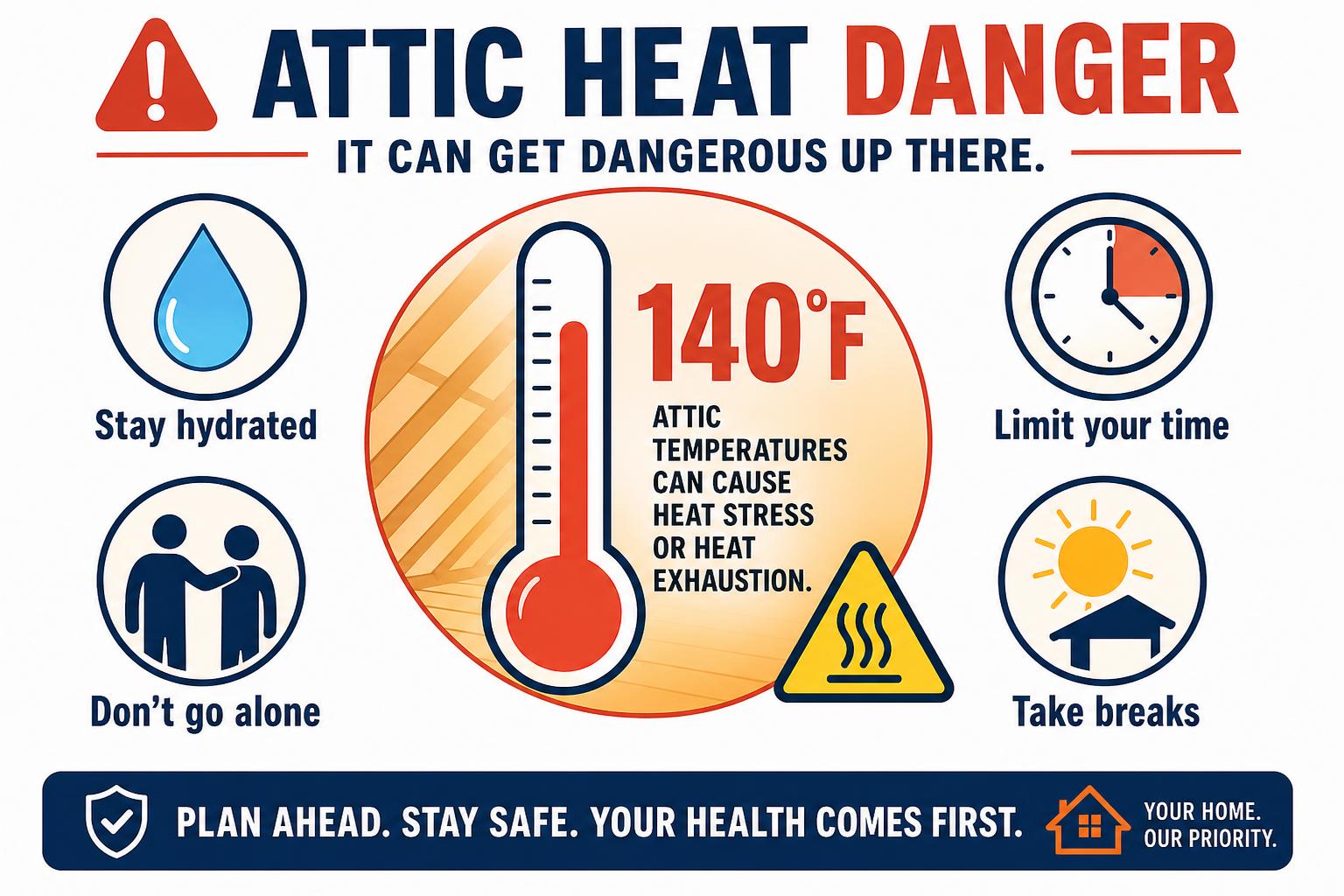
If you need to go into the attic in that kind of heat:
- Limit your time up there
- Stay hydrated
- Take breaks in cooler areas
- Avoid going alone if you are not used to working in hot environments
Professionals are trained and equipped to handle those conditions, but we still plan our time carefully and watch for signs of heat stress.
Helpful Main Line Roofing Resources
Explore more roofing guides and local service pages from Mainline Roofing Pros.
Bringing It All Together
So, how hot is an attic on a 100°F day?
- Expect at least 20–40°F hotter than outside in many homes.
- 120–150°F+ is common in unconditioned, sun-exposed attics with standard dark roofing.
- Good ventilation, thoughtful material choices, proper insulation, and air sealing can help keep temperatures more manageable.
If you’re in Bryn Mawr or along the Main Line and you’re worried your attic feels way hotter than it should, or your upper floors never seem to cool down, it’s worth having a professional look at the whole roofing system, not just the shingles.
We can review your roof material and color, ventilation layout, attic conditions, insulation, and moisture signs. From there, we can talk honestly about what’s normal for a 100°F day and where smart upgrades might help your roof perform better for years to come.
Need Help With Attic Heat or Roof Ventilation?
Mainline Roofing Pros can inspect your roofing system, ventilation, attic conditions, and material options across Bryn Mawr and the Main Line.

Founder & Owner of Main Line Roofing Pros. 22+ years of local roofing expertise serving Main Line, Delco, Montco & Chesco homeowners with honest, high-quality work.